
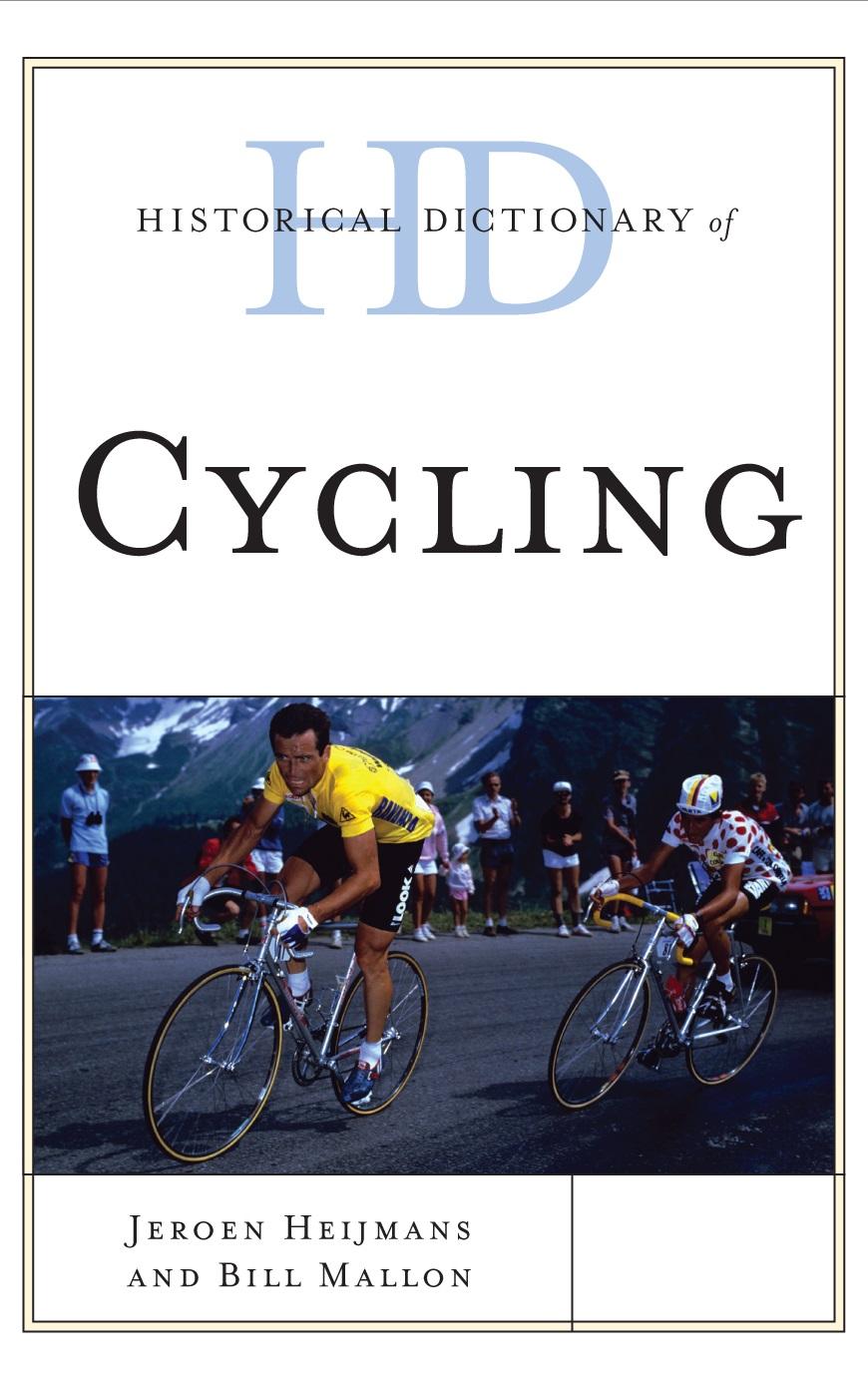
The nearly 150-year-old sport of cycling had its first competition in France in 1868. Soon afterward, the need arose for purpose-built cycling tracks because of poor road conditions at the time. Racing on blocked off pieces of street or grass soon evolved into racing on special tracks called velodromes. This development marked the split into what are still the two main forms of cycling competition: road racing and track racing. Initially, track cycling was more popular in terms of public attention and money to be earned by racers, but this gradually changed in favor of road racing, which has been the most popular form of cycling since at least the end of World War II.
The Historical Dictionary of Cycling takes a closer look at the sport, as well as discussing the use of bicycles as a means of fitness, touring, and commuting. This is done through a chronology, an introductory essay, appendixes, photos, a bibliography, and over 500 cross-referenced dictionary entries on cycling's two main disciplines-road and track-as well as brief overviews of the other forms of cycling. This book is an excellent access point for students, researchers, and anyone wanting to know more about cycling.
The Historical Dictionary of Cycling takes a closer look at the sport, as well as discussing the use of bicycles as a means of fitness, touring, and commuting. This is done through a chronology, an introductory essay, appendixes, photos, a bibliography, and over 500 cross-referenced dictionary entries on cycling's two main disciplines-road and track-as well as brief overviews of the other forms of cycling. This book is an excellent access point for students, researchers, and anyone wanting to know more about cycling.
Pay easily by card, Klarna, Apple Pay or Google Pay. Not happy? You always have a 14-day money-back guarantee. Read more in our terms. If you have any questions, email us at hello@memmo.org.
Memmo makes studying easier – wherever you are in the world. We bring your course books and smart study tools together in one place: summaries, quizzes, podcasts and flashcards. Plus Ted, your study buddy who answers anything you wonder. Over 75,000 students already study here – built to help you learn faster and stress less.