
While the idea of human rights and humanitarian assistance has ancient roots-evidence can be seen in such examples as the Ten Commandments, the Bhagavad Gita, and the teachings of Confucius and Socrates-it wasn't until the 1800s that the first modern humanitarian and human rights organizations came to be. The 19th century saw the beginning of the abolitionist movement, the forming of a variety of women's suffrage organizations, the formation and consolidation of national labor unions, and the founding of the Red Cross. This was followed by the inextricably intertwined story of war, persecution, violence, and the growth of human rights and humanitarian organizations in the 20th century. Bearing witness to some of the most horrific and blatant violations of human dignity, the 20th century also beheld the first sustained global efforts to promote human rights at the international level.
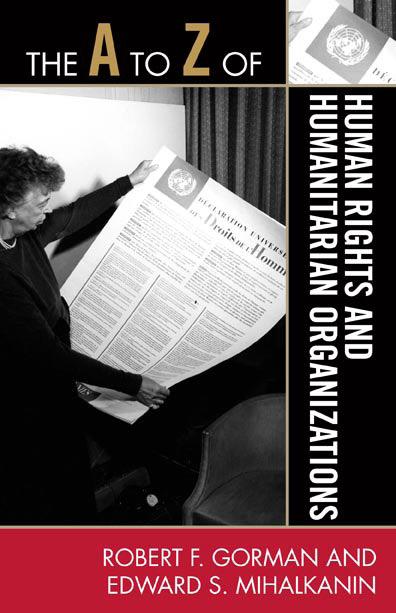
The A to Z of Human Rights and Humanitarian Organizations follows major developments in the arena of human rights, including the emergence of terrorism and international responses to it; the establishment of an international criminal court; the evolution of regional human rights bodies in Africa, Europe, and Latin America; and the proliferation of new non-governmental organizations and foundations dedicated to the promotion of human rights. This is accomplished through a chronology, an introduction, appendixes, photographs, a bibliography, and hundreds of cross-referenced dictionary entries covering many of the key treaties, agreements, and definitions of human rights concepts; important humanitarian organizations, whether private, governmental, national, or international; and significant persons and events. This realistic assessment of the advances in protection of human rights and the major difficulties still facing them is an excellent tool for students, practitioners, and libraries.
The A to Z of Human Rights and Humanitarian Organizations follows major developments in the arena of human rights, including the emergence of terrorism and international responses to it; the establishment of an international criminal court; the evolution of regional human rights bodies in Africa, Europe, and Latin America; and the proliferation of new non-governmental organizations and foundations dedicated to the promotion of human rights. This is accomplished through a chronology, an introduction, appendixes, photographs, a bibliography, and hundreds of cross-referenced dictionary entries covering many of the key treaties, agreements, and definitions of human rights concepts; important humanitarian organizations, whether private, governmental, national, or international; and significant persons and events. This realistic assessment of the advances in protection of human rights and the major difficulties still facing them is an excellent tool for students, practitioners, and libraries.
Pages: 488
Category: Statsvetenskap & Politik
e-ISBN: 9780810870376
Shipping weight: 1.2 kg
Ships in: 1-2 days
Pay easily by card, Klarna, Apple Pay or Google Pay. Not happy? You always have a 14-day money-back guarantee. Read more in our terms. If you have any questions, email us at hello@memmo.org.
Memmo makes studying easier – wherever you are in the world. We bring your course books and smart study tools together in one place: summaries, quizzes, podcasts and flashcards. Plus Ted, your study buddy who answers anything you wonder. Over 50,000 students already study here – built to help you learn faster and stress less.