
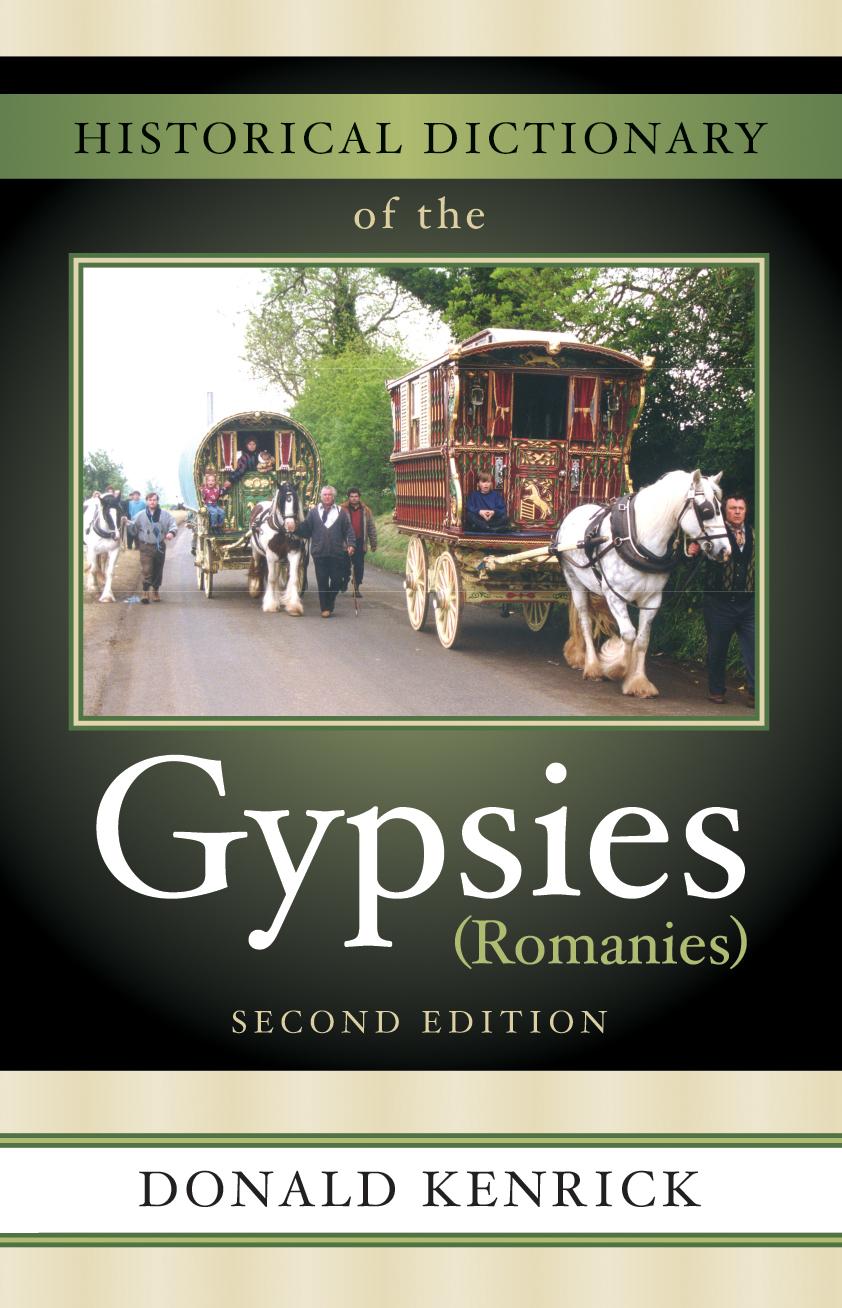
Originating in India, the Gypsies arrived in Europe around the 14th century, spreading not only across the entirety of the continent but also immigrating to the Americas. The first Gypsy migration included farmworkers, blacksmiths, and mercenary soldiers, as well as musicians, fortune-tellers, and entertainers. At first, they were generally welcome as an interesting diversion to the dull routine of that period. Soon, however, they attracted the antagonism of the governing powers, as they have continually done throughout the following centuries.
The second edition of the Historical Dictionary of the Gypsies (Romanies) seeks to end such prejudice by clarifying the facts about this nomadic people. Through a list of acronyms, a chronology, an introductory essay, a bibliography, and hundreds of cross-referenced dictionary entries on significant persons, places, events, institutions, and aspects of culture, society, economy, and politics, the history of the Gypsies and their culture is told.
The second edition of the Historical Dictionary of the Gypsies (Romanies) seeks to end such prejudice by clarifying the facts about this nomadic people. Through a list of acronyms, a chronology, an introductory essay, a bibliography, and hundreds of cross-referenced dictionary entries on significant persons, places, events, institutions, and aspects of culture, society, economy, and politics, the history of the Gypsies and their culture is told.
Pay easily by card, Klarna, Apple Pay or Google Pay. Not happy? You always have a 14-day money-back guarantee. Read more in our terms. If you have any questions, email us at hello@memmo.org.
Memmo makes studying easier – wherever you are in the world. We bring your course books and smart study tools together in one place: summaries, quizzes, podcasts and flashcards. Plus Ted, your study buddy who answers anything you wonder. Over 50,000 students already study here – built to help you learn faster and stress less.