
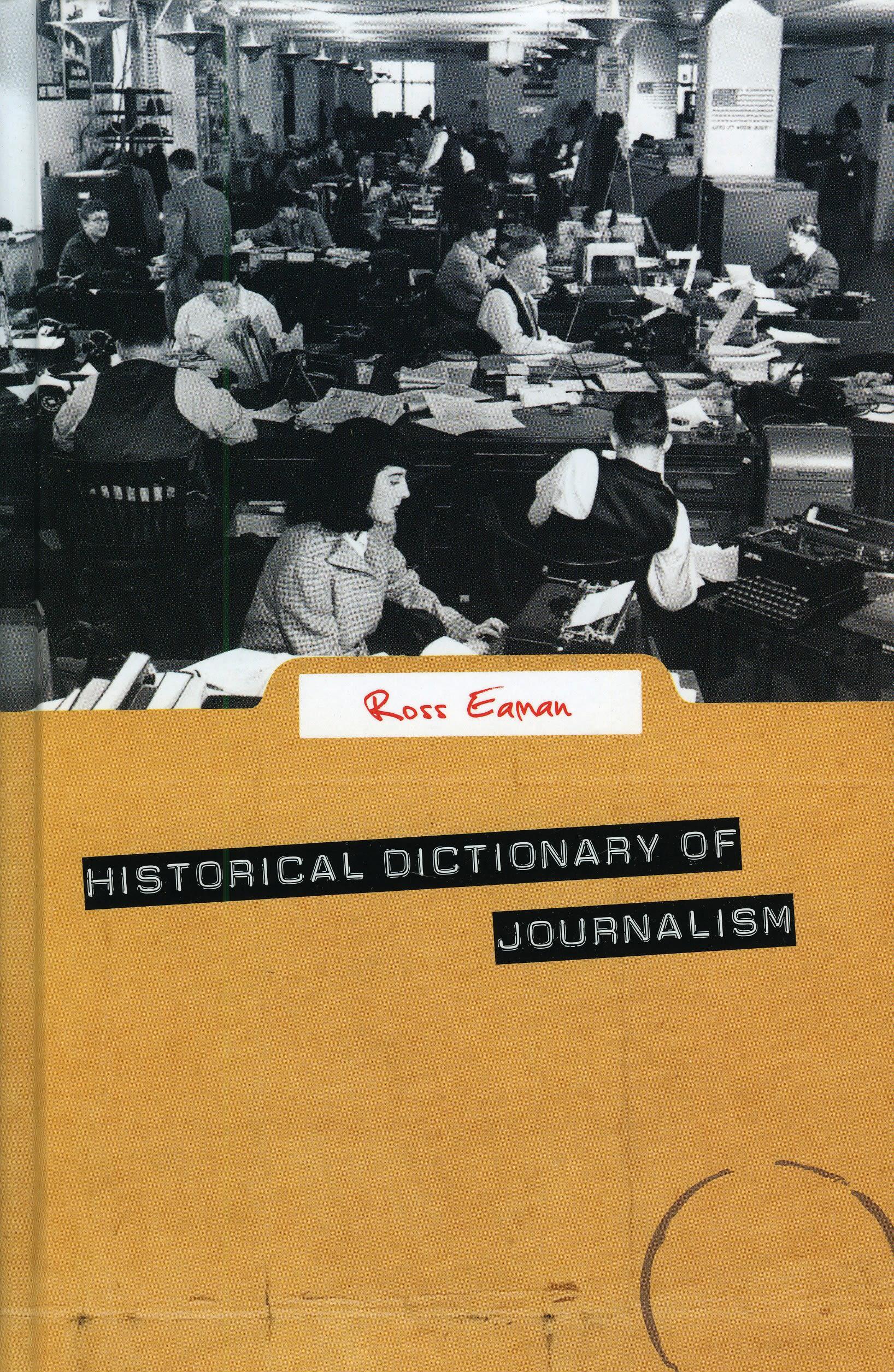
Journalism is the discipline of gathering, writing, and reporting news, and it includes the process of editing and presenting news articles. Journalism applies to various media, including but not limited to newspapers, magazines, radio, television, and the internet. The word 'journalist' started to become common in the early 18th century to designate a new kind of writer, about a century before 'journalism' made its appearance to describe what those writers produced. Though varying in form from one age and society to another, it gradually distinguished itself from other forms of writing through its focus on the present, its eye-witness perspective, and its reliance on everyday language.
The Historical Dictionary of Journalism relates how journalism has evolved over the centuries. This is done through a chronology, an introductory essay, a bibliography, and hundreds of cross-referenced dictionary entries on the different styles of journalism, the different types of media, and important writers and editors.
The Historical Dictionary of Journalism relates how journalism has evolved over the centuries. This is done through a chronology, an introductory essay, a bibliography, and hundreds of cross-referenced dictionary entries on the different styles of journalism, the different types of media, and important writers and editors.
Pay easily by card, Klarna, Apple Pay or Google Pay. Not happy? You always have a 14-day money-back guarantee. Read more in our terms. If you have any questions, email us at hello@memmo.org.
Memmo makes studying easier – wherever you are in the world. We bring your course books and smart study tools together in one place: summaries, quizzes, podcasts and flashcards. Plus Ted, your study buddy who answers anything you wonder. Over 75,000 students already study here – built to help you learn faster and stress less.