
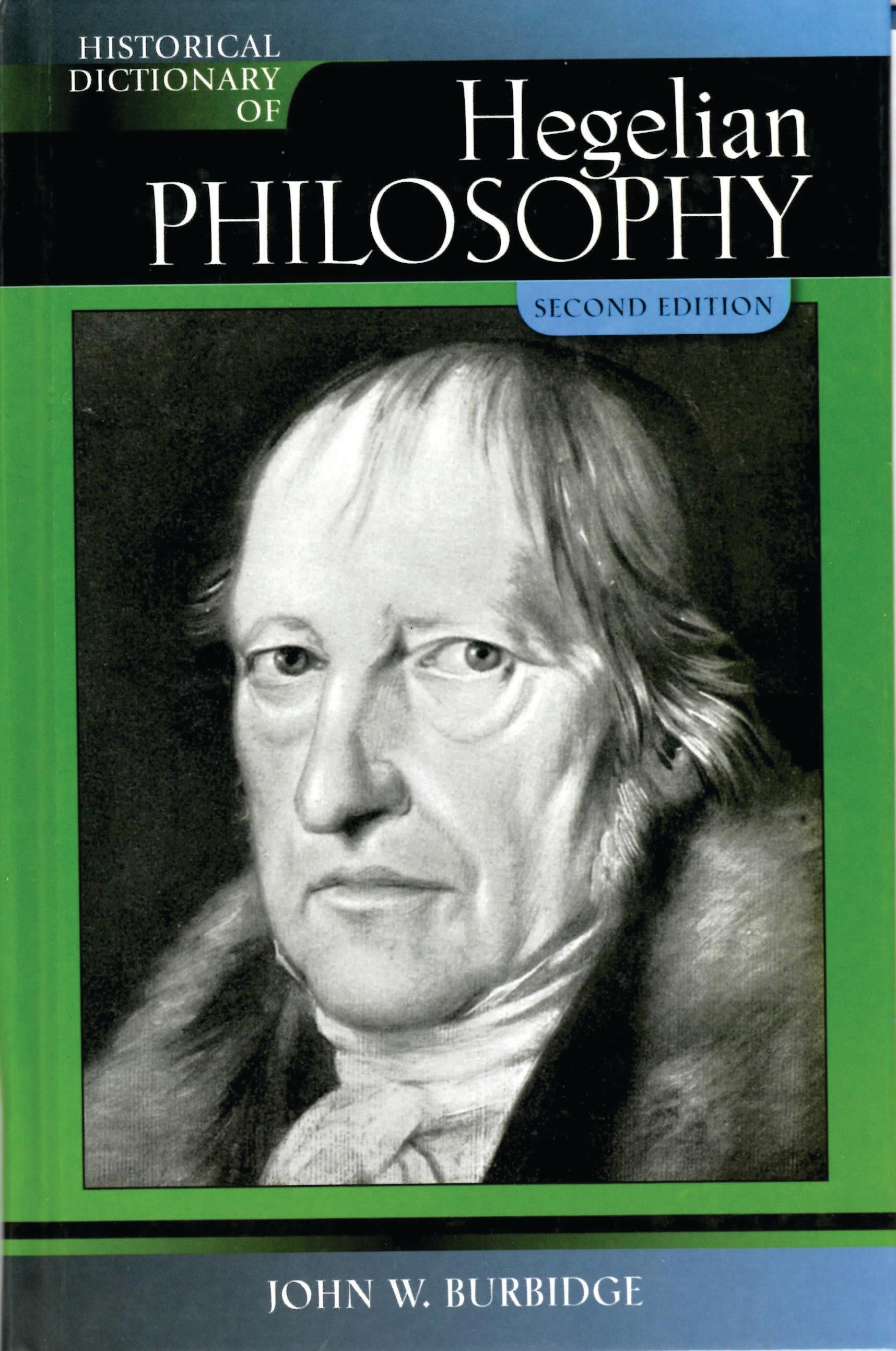
George Wilhelm Friedrich Hegel evoked passionate discipleship, as well as equally passionate opposition. He was praised by the likes of Karl Marx and John Dewey but scorned by Karl Popper and Bertrand Russell. He has been charged with being a proponent of an authoritarian state by some, and he has been accused of instigating the dissolution of the state by others. Notoriously difficult to understand, Hegel's keen insights continue his legacy today.
The second edition of the Historical Dictionary of Hegelian Philosophy covers all aspects of Hegel's thought. It discusses his students and colleagues, as well as key figures who either adopted (and adapted) his thought or attempted to explicate it for later generations. This is done through a chronology, an introductory essay, a glossary of German terms, a bibliography, and over 500 cross-referenced dictionary entries.
The second edition of the Historical Dictionary of Hegelian Philosophy covers all aspects of Hegel's thought. It discusses his students and colleagues, as well as key figures who either adopted (and adapted) his thought or attempted to explicate it for later generations. This is done through a chronology, an introductory essay, a glossary of German terms, a bibliography, and over 500 cross-referenced dictionary entries.
Pay easily by card, Klarna, Apple Pay or Google Pay. Not happy? You always have a 14-day money-back guarantee. Read more in our terms. If you have any questions, email us at hello@memmo.org.
Memmo makes studying easier – wherever you are in the world. We bring your course books and smart study tools together in one place: summaries, quizzes, podcasts and flashcards. Plus Ted, your study buddy who answers anything you wonder. Over 50,000 students already study here – built to help you learn faster and stress less.