
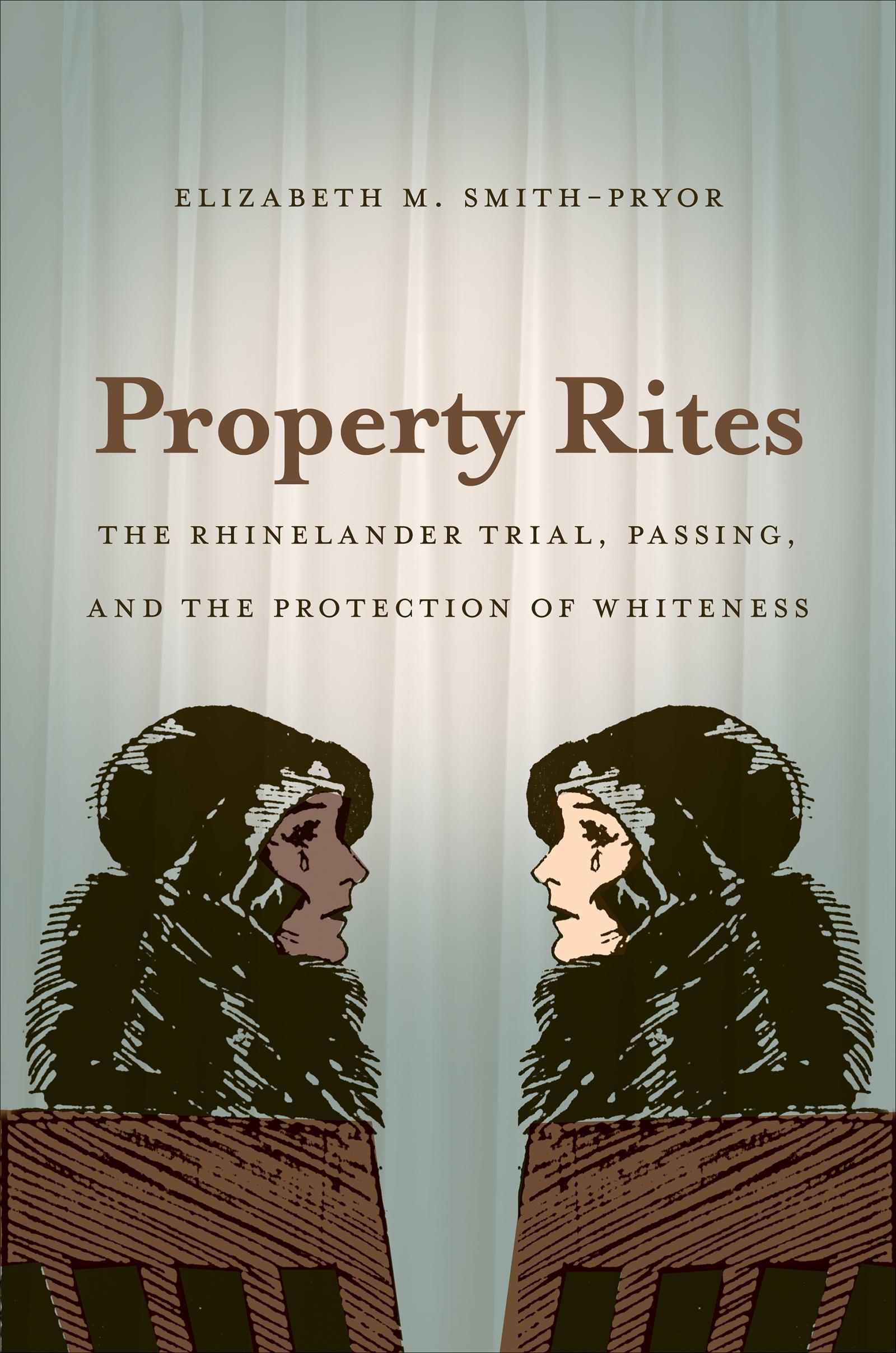
In 1925 Leonard Rhinelander, the youngest son of a wealthy New York society family, sued to end his marriage to Alice Jones, a former domestic servant and the daughter of a “colored” cabman. After being married only one month, Rhinelander pressed for the dissolution of his marriage on the grounds that his wife had lied to him about her racial background. The subsequent marital annulment trial became a massive public spectacle, not only in New York but across the nation — despite the fact that the state had never outlawed interracial marriage.
Elizabeth Smith-Pryor makes extensive use of trial transcripts, in addition to contemporary newspaper coverage and archival sources, to explore why Leonard Rhinelander was allowed his day in court. She moves fluidly between legal history, a day-by-day narrative of the trial itself, and analyses of the trial’s place in the culture of the 1920s North to show how notions of race, property, and the law were — and are — inextricably intertwined.
Elizabeth Smith-Pryor makes extensive use of trial transcripts, in addition to contemporary newspaper coverage and archival sources, to explore why Leonard Rhinelander was allowed his day in court. She moves fluidly between legal history, a day-by-day narrative of the trial itself, and analyses of the trial’s place in the culture of the 1920s North to show how notions of race, property, and the law were — and are — inextricably intertwined.
Pay easily by card, Klarna, Apple Pay or Google Pay. Not happy? You always have a 14-day money-back guarantee. Read more in our terms. If you have any questions, email us at hello@memmo.org.
Memmo makes studying easier – wherever you are in the world. We bring your course books and smart study tools together in one place: summaries, quizzes, podcasts and flashcards. Plus Ted, your study buddy who answers anything you wonder. Over 50,000 students already study here – built to help you learn faster and stress less.
You might also like
Buy the book0