
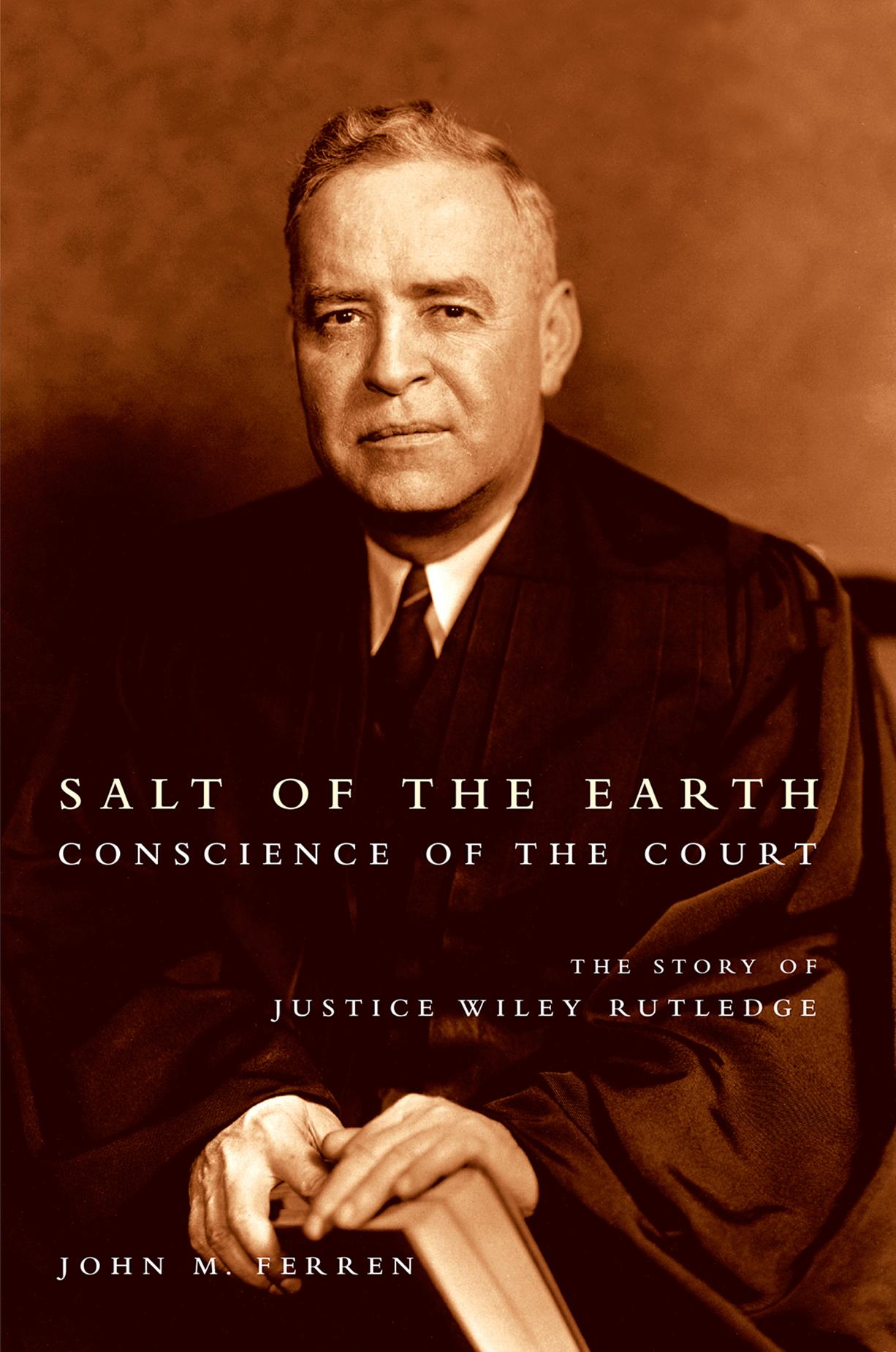
The Kentucky-born son of a Baptist preacher, with an early tendency toward racial prejudice, Supreme Court Justice Wiley Rutledge (1894–1949) became one of the Court’s leading liberal activists and an early supporter of racial equality, free speech, and church-state separation. Drawing on more than 160 interviews, John M. Ferren provides a valuable analysis of Rutledge’s life and judicial decisionmaking and offers the most comprehensive explanation to date for the Supreme Court nominations of Rutledge, Felix Frankfurter, and William O. Douglas.
Rutledge was known for his compassion and fairness. He opposed discrimination based on gender and poverty and pressed for expanded rights to counsel, due process, and federal review of state criminal convictions. During his brief tenure on the Court (he died following a stroke at age fifty-five), he contributed significantly to enhancing civil liberties and the rights of naturalized citizens and criminal defendants, became the Court’s most coherent expositor of the commerce clause, and dissented powerfully from military commission convictions of Japanese generals after World War II. Through an examination of Rutledge’s life, Ferren highlights the development of American common law and legal education, the growth of the legal profession and related institutions, and the evolution of the American court system, including the politics of judicial selection.
Pay easily by card, Klarna, Apple Pay or Google Pay. Not happy? You always have a 14-day money-back guarantee. Read more in our terms. If you have any questions, email us at hello@memmo.org.
Memmo makes studying easier – wherever you are in the world. We bring your course books and smart study tools together in one place: summaries, quizzes, podcasts and flashcards. Plus Ted, your study buddy who answers anything you wonder. Over 50,000 students already study here – built to help you learn faster and stress less.