
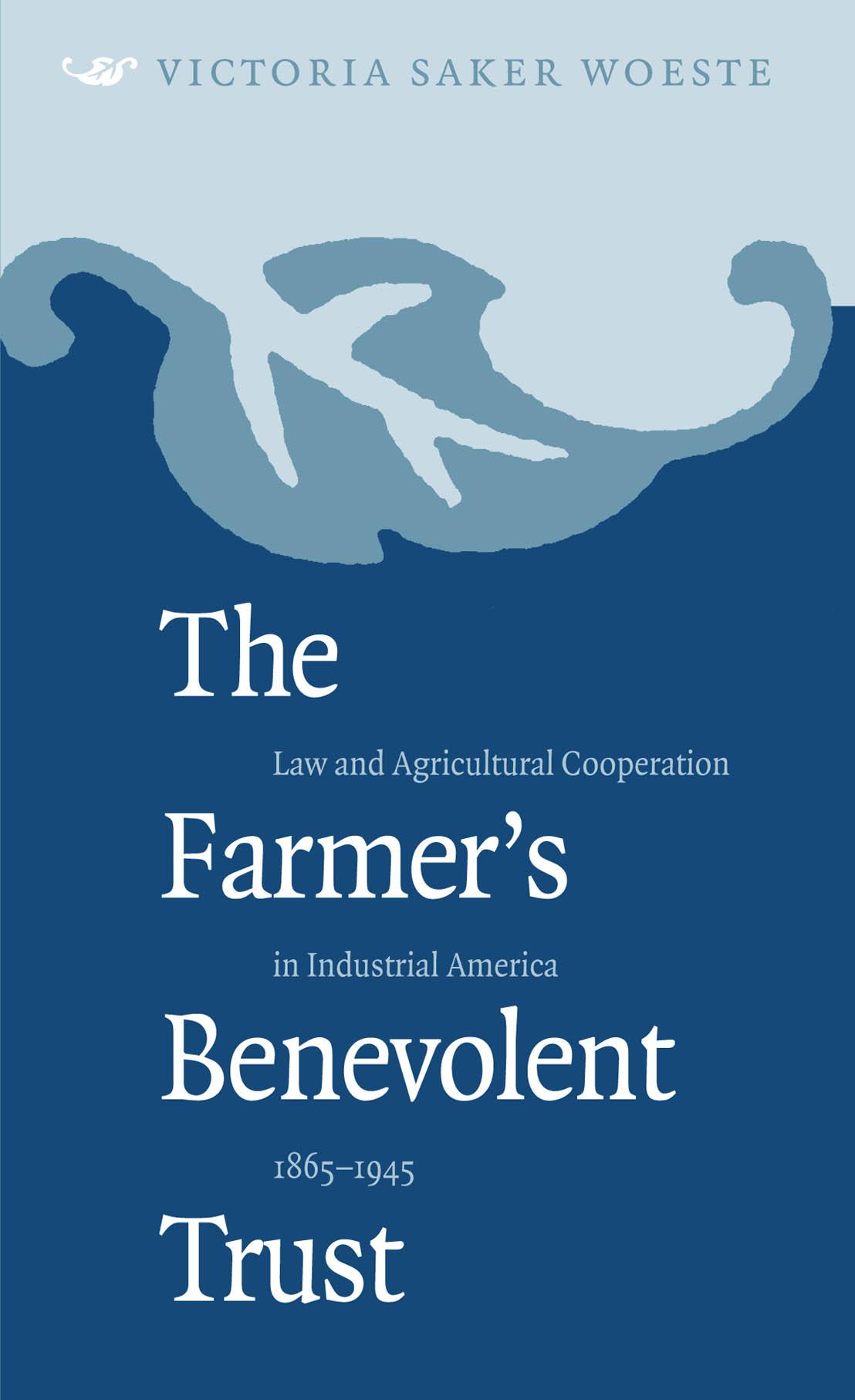
Americans have always regarded farming as a special calling, one
imbued with the Jeffersonian values of individualism and self-
sufficiency. As Victoria Saker Woeste demonstrates, farming’s
cultural image continued to shape Americans' expectations of
rural society long after industrialization radically transformed
the business of agriculture. Even as farmers enthusiastically
embraced cooperative marketing to create unprecedented industry-
wide monopolies and control prices, they claimed they were simply
preserving their traditional place in society. In fact, the new
legal form of cooperation far outpaced judicial and legislative
developments at both the state and federal levels, resulting in a
legal and political struggle to redefine the place of agriculture
in the industrial market.
Woeste shows that farmers were adept at both borrowing such
legal forms as the corporate trust for their own purposes and
obtaining legislative recognition of the new cooperative style.
In the process, however, the first rule of capitalism — every
person for him- or herself — trumped the traditional principle of
cooperation. After 1922, state and federal law wholly endorsed
cooperation’s new form. Indeed, says Woeste, because of its
corporate roots, this model of cooperation fit so neatly with the
regulatory paradigms of the first half of the twentieth century
that it became an essential policy of the modern administrative
state.
imbued with the Jeffersonian values of individualism and self-
sufficiency. As Victoria Saker Woeste demonstrates, farming’s
cultural image continued to shape Americans' expectations of
rural society long after industrialization radically transformed
the business of agriculture. Even as farmers enthusiastically
embraced cooperative marketing to create unprecedented industry-
wide monopolies and control prices, they claimed they were simply
preserving their traditional place in society. In fact, the new
legal form of cooperation far outpaced judicial and legislative
developments at both the state and federal levels, resulting in a
legal and political struggle to redefine the place of agriculture
in the industrial market.
Woeste shows that farmers were adept at both borrowing such
legal forms as the corporate trust for their own purposes and
obtaining legislative recognition of the new cooperative style.
In the process, however, the first rule of capitalism — every
person for him- or herself — trumped the traditional principle of
cooperation. After 1922, state and federal law wholly endorsed
cooperation’s new form. Indeed, says Woeste, because of its
corporate roots, this model of cooperation fit so neatly with the
regulatory paradigms of the first half of the twentieth century
that it became an essential policy of the modern administrative
state.
Pay easily by card, Klarna, Apple Pay or Google Pay. Not happy? You always have a 14-day money-back guarantee. Read more in our terms. If you have any questions, email us at hello@memmo.org.
Memmo makes studying easier – wherever you are in the world. We bring your course books and smart study tools together in one place: summaries, quizzes, podcasts and flashcards. Plus Ted, your study buddy who answers anything you wonder. Over 50,000 students already study here – built to help you learn faster and stress less.
You might also like
Buy the book0