
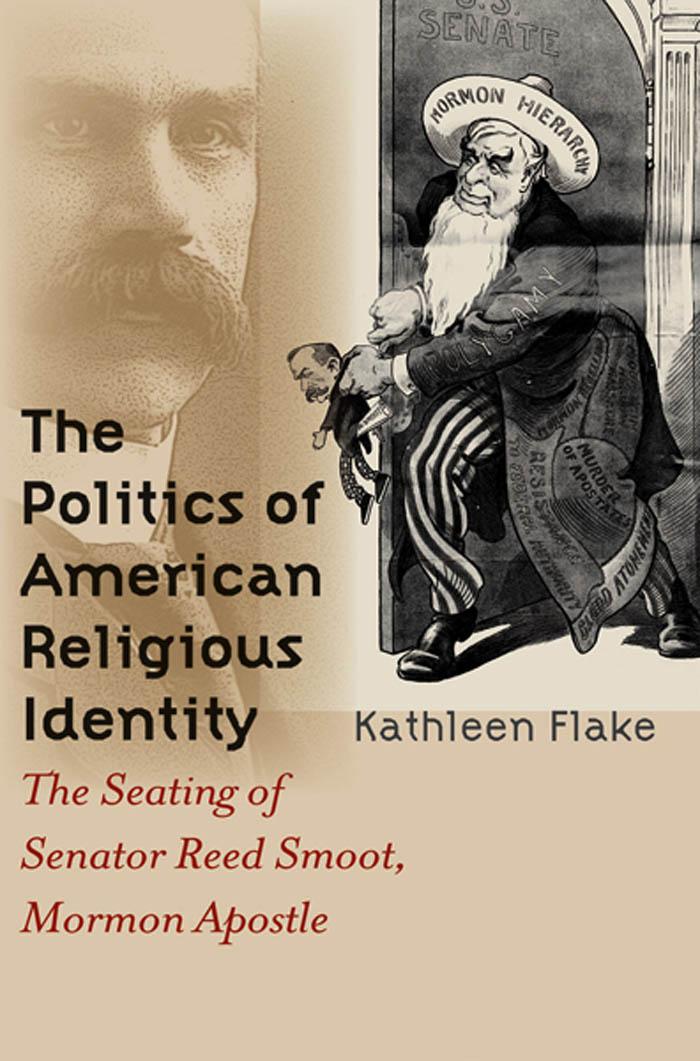
Between 1901 and 1907, a broad coalition of Protestant churches sought to expel newly elected Reed Smoot from the Senate, arguing that as an apostle in the Church of Jesus Christ of Latter-day Saints, Smoot was a lawbreaker and therefore unfit to be a lawmaker. The resulting Senate investigative hearing featured testimony on every peculiarity of Mormonism, especially its polygamous family structure. The Smoot hearing ultimately mediated a compromise between Progressive Era Protestantism and Mormonism and resolved the nation’s long-standing “Mormon Problem.” On a broader scale, Kathleen Flake shows how this landmark hearing provided the occasion for the country — through its elected representatives, the daily press, citizen petitions, and social reform activism — to reconsider the scope of religious free exercise in the new century.
Flake contends that the Smoot hearing was the forge in which the Latter-day Saints, the Protestants, and the Senate hammered out a model for church-state relations, shaping for a new generation of non-Protestant and non-Christian Americans what it meant to be free and religious. In addition, she discusses the Latter-day Saints' use of narrative and collective memory to retain their religious identity even as they changed to meet the nation’s demands.
Pay easily by card, Klarna, Apple Pay or Google Pay. Not happy? You always have a 14-day money-back guarantee. Read more in our terms. If you have any questions, email us at hello@memmo.org.
Memmo makes studying easier – wherever you are in the world. We bring your course books and smart study tools together in one place: summaries, quizzes, podcasts and flashcards. Plus Ted, your study buddy who answers anything you wonder. Over 50,000 students already study here – built to help you learn faster and stress less.