
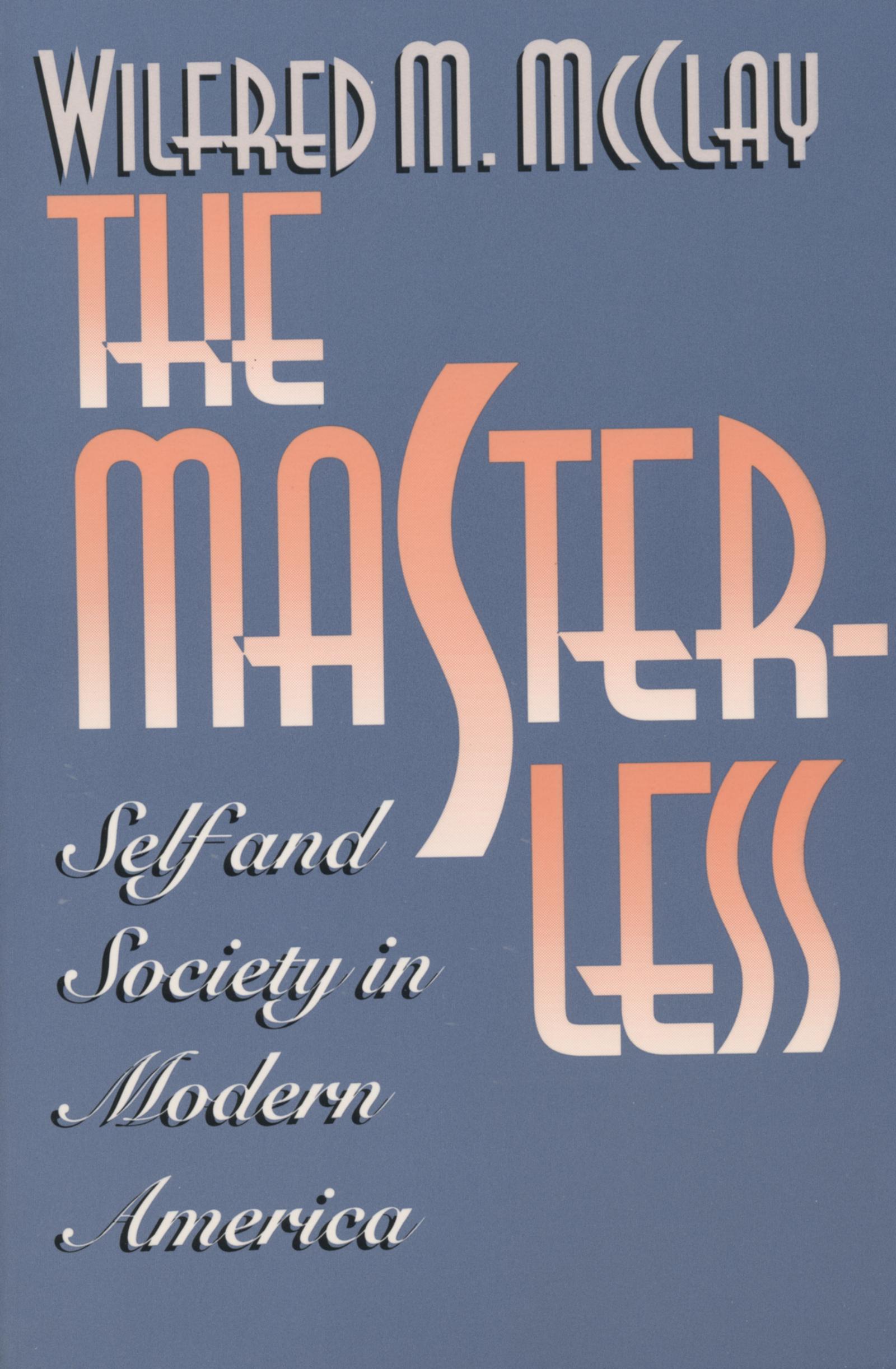
In this provocative book, Wilfred McClay considers the long-standing tension between individualism and social cohesion in conceptions of American culture. Exploring ideas of unity and diversity as they have evolved since the Civil War, he illuminates the historical background to our ongoing search for social connectedness and sources of authority in a society increasingly dominated by the premises of individualism. McClay borrows D. H. Lawrence’s term 'masterless men' — extending its meaning to women as well — and argues that it is expressive of both the promise and the peril inherent in the modern American social order.
Drawing upon a wide range of disciplines — including literature, sociology, political science, philosophy, psychology, and feminist theory — McClay identifies a competition between visions of dispersion on the one hand and coalescence on the other as modes of social organization. In addition, he employs intellectual biography to illuminate the intersection of these ideas with the personal experiences of the thinkers articulating them and shows how these shifting visions are manifestations of a more general ambivalence about the process of national integration and centralization that has characterized modern American economic, political, and cultural life.
Pay easily by card, Klarna, Apple Pay or Google Pay. Not happy? You always have a 14-day money-back guarantee. Read more in our terms. If you have any questions, email us at hello@memmo.org.
Memmo makes studying easier – wherever you are in the world. We bring your course books and smart study tools together in one place: summaries, quizzes, podcasts and flashcards. Plus Ted, your study buddy who answers anything you wonder. Over 50,000 students already study here – built to help you learn faster and stress less.