
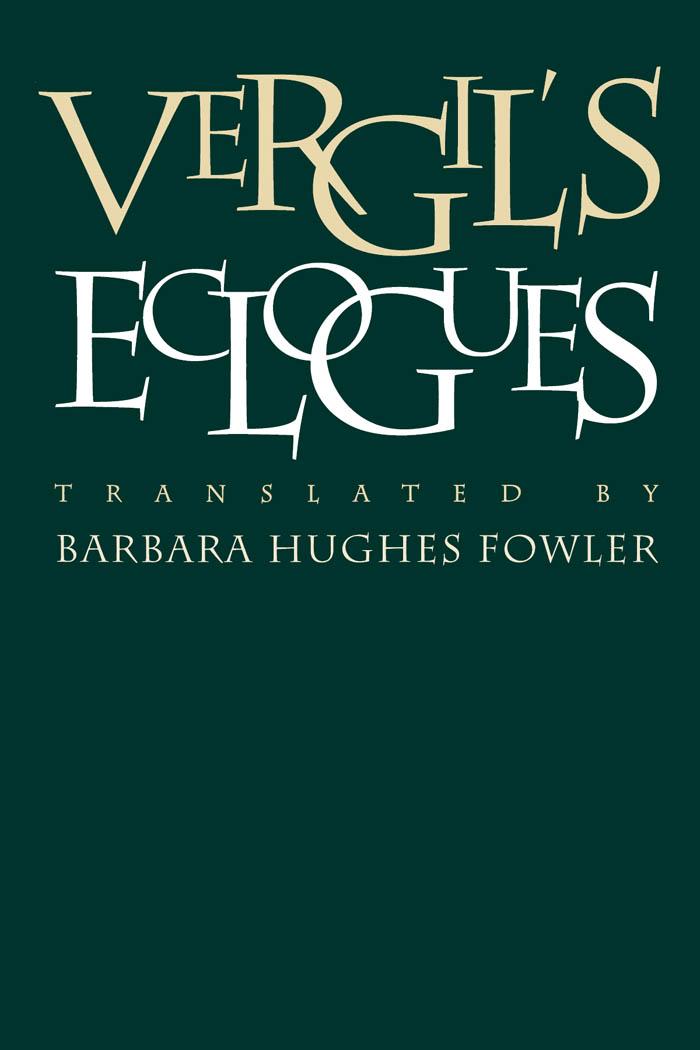
Best remembered for his unfinished epic, the Aeneid, the poet Vergil was celebrated in his time both for the perfection of his art and for the centrality of his ideas to Roman culture. The Eclogues, his earliest confirmed work, were composed in part out of political considerations: when the Roman authorities threatened to seize his family’s land, Vergil’s appeal in the form of Eclogue IX won a stay. Eclogue I appears to be a thank-you for that favor. Barbara Hughes Fowler provides scholars and students with a new American verse translation of Vergil’s Eclogues. An accomplished translator, Fowler renders the poet’s words into an English that is contemporary while remaining close to the spirit of the original. In an introduction to the text, she compares the treatment of the pastoral form by Vergil and Theocritus, illuminating the ways in which Vergil borrowed from and built upon the earlier poet’s work, and thereby moved the genre in a new direction.
Pay easily by card, Klarna, Apple Pay or Google Pay. Not happy? You always have a 14-day money-back guarantee. Read more in our terms. If you have any questions, email us at hello@memmo.org.
Memmo makes studying easier – wherever you are in the world. We bring your course books and smart study tools together in one place: summaries, quizzes, podcasts and flashcards. Plus Ted, your study buddy who answers anything you wonder. Over 50,000 students already study here – built to help you learn faster and stress less.