
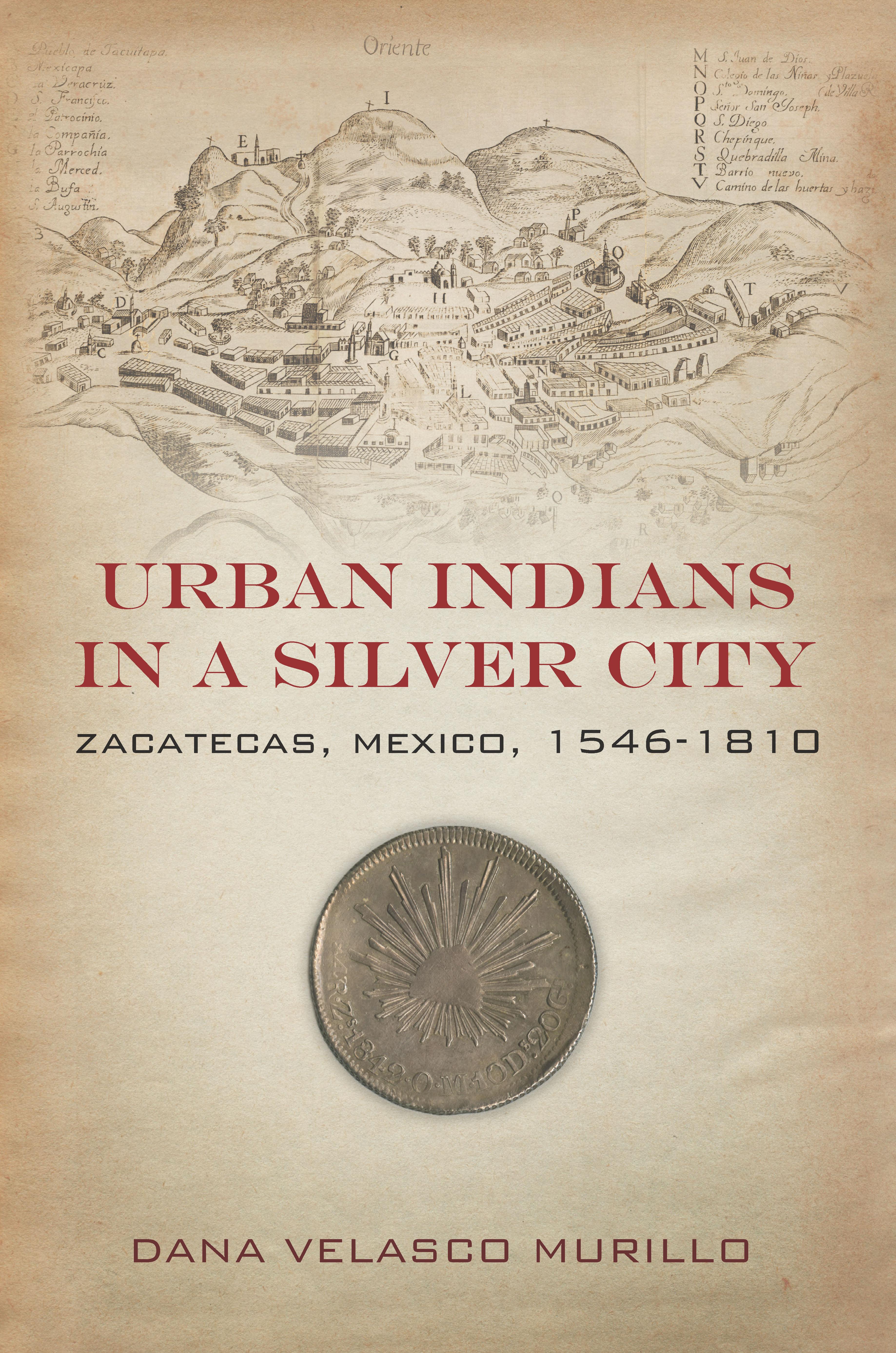
In the sixteenth century, silver mined by native peoples became New Spain's most important export. Silver production served as a catalyst for northern expansion, creating mining towns that led to the development of new industries, markets, population clusters, and frontier institutions. Within these towns, the need for labor, raw materials, resources, and foodstuffs brought together an array of different ethnic and social groups—Spaniards, Indians, Africans, and ethnically mixed individuals or castas. On the northern edge of the empire, 350 miles from Mexico City, sprung up Zacatecas, a silver-mining town that would grow in prominence to become the "Second City of New Spain."
Urban Indians in a Silver City illuminates the social footprint of colonial Mexico's silver mining district. It reveals the men, women, children, and families that shaped indigenous society and shifts the view of indigenous peoples from mere laborers to settlers and vecinos (municipal residents). Dana Velasco Murillo shows how native peoples exploited the urban milieu to create multiple statuses and identities that allowed them to live in Zacatecas as both Indians and vecinos. In reconsidering traditional paradigms about ethnicity and identity among the urban Indian population, she raises larger questions about the nature and rate of cultural change in the Mexican north.
Pay easily by card, Klarna, Apple Pay or Google Pay. Not happy? You always have a 14-day money-back guarantee. Read more in our terms. If you have any questions, email us at hello@memmo.org.
Memmo makes studying easier – wherever you are in the world. We bring your course books and smart study tools together in one place: summaries, quizzes, podcasts and flashcards. Plus Ted, your study buddy who answers anything you wonder. Over 50,000 students already study here – built to help you learn faster and stress less.