
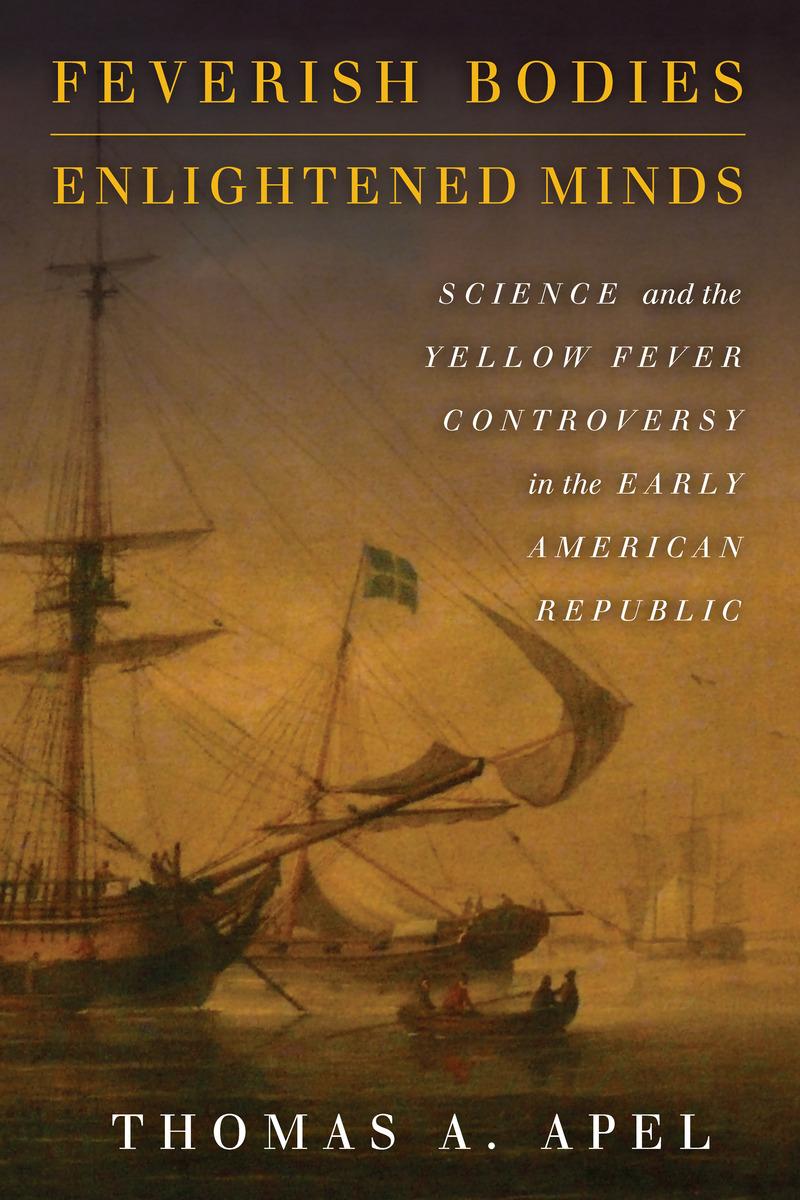
From 1793 to 1805, yellow fever devastated U.S. port cities in a series of terrifying epidemics. The search for the cause and prevention of the disease involved many prominent American intellectuals, including Noah Webster and Benjamin Rush. This investigation produced one of the most substantial and innovative outpourings of scientific thought in early American history. But it also led to a heated and divisive debate—both political and theological—around the place of science in American society.
Feverish Bodies, Enlightened Minds opens an important window onto the conduct of scientific inquiry in the early American republic. The debate between "contagionists," who thought the disease was imported, and "localists," who thought it came from domestic sources, reflected contemporary beliefs about God and creation, the capacities of the human mind, and even the appropriate direction of the new nation. Through this thoughtful investigation of the yellow fever epidemic and engaging examination of natural science in early America, Thomas Apel demonstrates that the scientific imaginations of early republicans were far broader than historians have realized: in order to understand their science, we must understand their ideas about God.
Pay easily by card, Klarna, Apple Pay or Google Pay. Not happy? You always have a 14-day money-back guarantee. Read more in our terms. If you have any questions, email us at hello@memmo.org.
Memmo makes studying easier – wherever you are in the world. We bring your course books and smart study tools together in one place: summaries, quizzes, podcasts and flashcards. Plus Ted, your study buddy who answers anything you wonder. Over 50,000 students already study here – built to help you learn faster and stress less.