
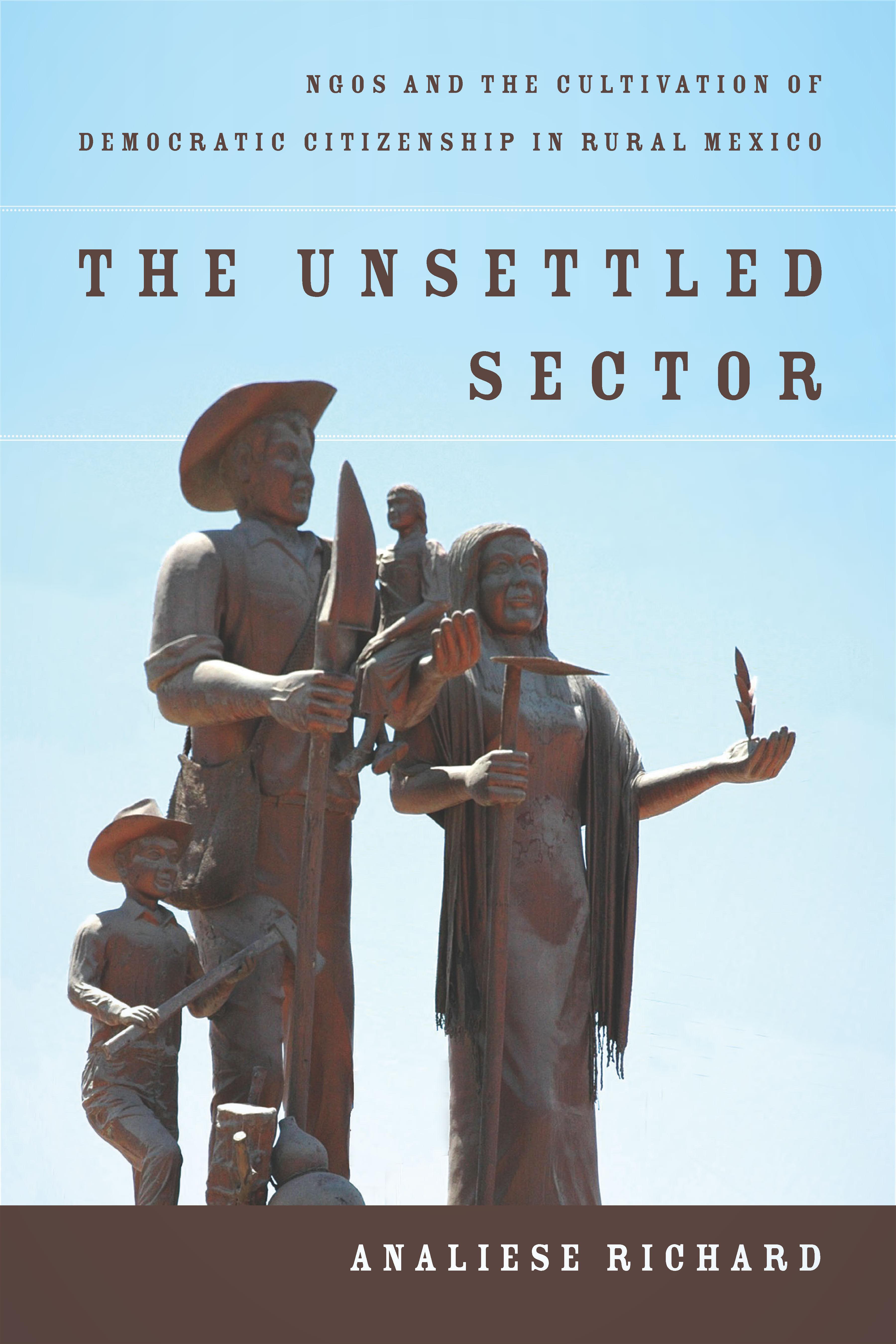
In late twentieth century Mexico, the NGO boom was hailed as an harbinger of social change and democratic transition, with NGOs poised to transform the relationship between states and civil society on a global scale. And yet, great as the expectations were for NGOs to empower the poor and disenfranchised, their work is rooted in much older civic and cultural traditions. Arguably, they are just as much an accomplice in neoliberal governance. Analiese Richard seeks to determine what the growth of NGOs means for the future of citizenship and activism in neoliberal democracies, where a widening chasm between rich and poor threatens democratic ideals and institutions.
Analyzing the growth of NGOs in Tulancingo, Hidalgo, from the 1970s to the present, The Unsettled Sector explores the NGOs' evolving network of relationships with donors, target communities, international partners, state agencies, and political actors. It reaches beyond the campesinos and farmlands of Tulancingo to make sense of the NGO as an institutional form. Richard argues that only if we see NGOs as they are—bridges between formal politics and public morality—can we understand the opportunities and limits for social solidarity and citizenship in an era of neoliberal retrenchment.
Pay easily by card, Klarna, Apple Pay or Google Pay. Not happy? You always have a 14-day money-back guarantee. Read more in our terms. If you have any questions, email us at hello@memmo.org.
Memmo makes studying easier – wherever you are in the world. We bring your course books and smart study tools together in one place: summaries, quizzes, podcasts and flashcards. Plus Ted, your study buddy who answers anything you wonder. Over 50,000 students already study here – built to help you learn faster and stress less.