
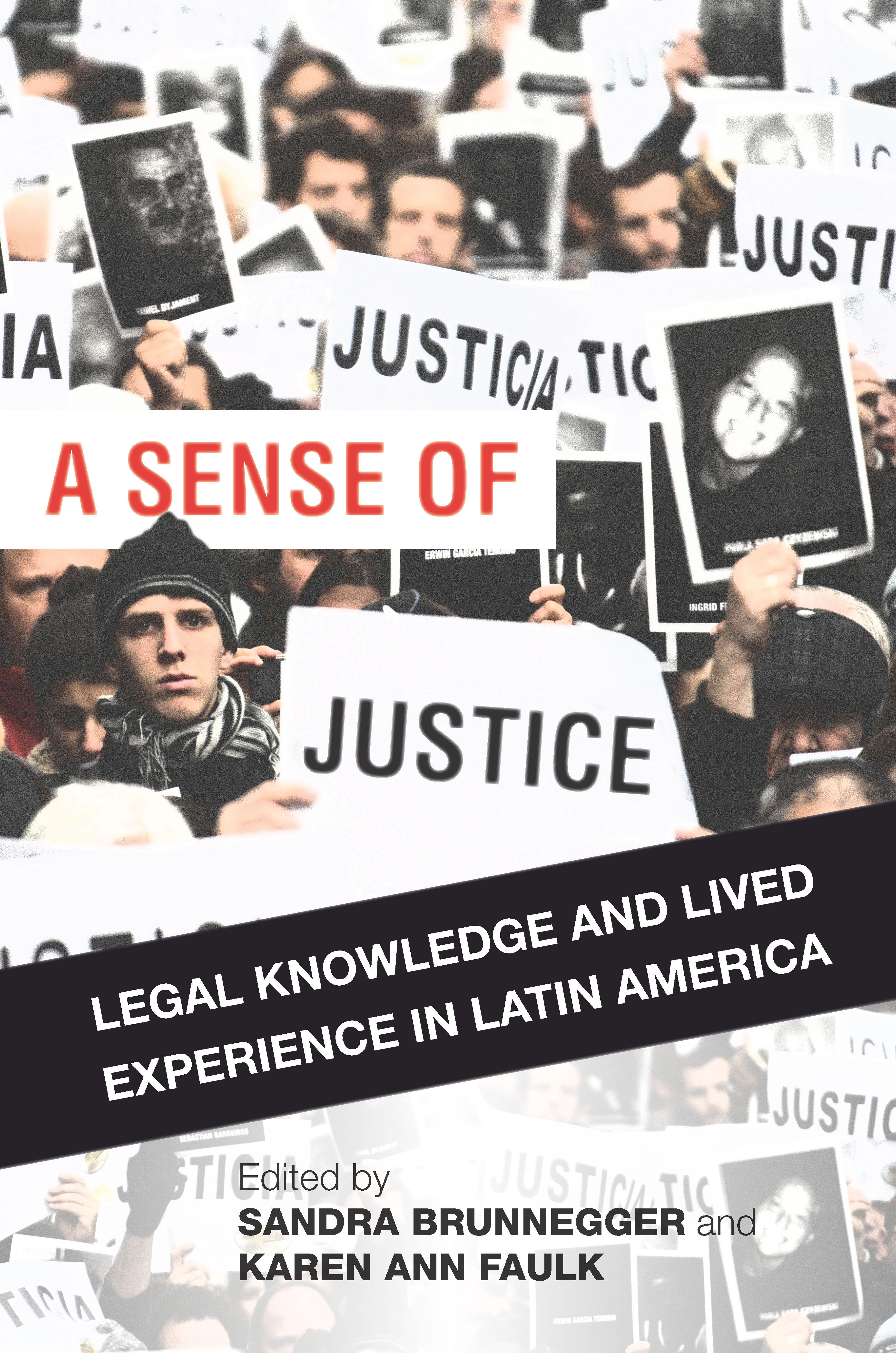
Throughout Latin America, the idea of "justice" serves as the ultimate goal and rationale for a wide variety of actions and causes. In the Chilean Atacama Desert, residents have undertaken a prolonged struggle for their right to groundwater. Family members of bombing victims in Buenos Aires demand that the state provide justice for the attack. In Colombia, some victims of political violence have turned to the courts for resolution, while others reject the state's ability to fairly adjudicate their grievances and have constructed a non-state tribunal. In each of these examples, the protagonists seek one main thing: justice.
A Sense of Justice ethnographically explores the complex dynamics of justice production across Latin America. The chapters examine (in)justice as it is lived and imagined today and what it means for those who claim and regulate its parameters, including the Brazilian police force, the Permanent Peoples' Tribunal in Colombia, and the Argentine Supreme Court. Inextricable as "justice" is from inequality, violence, crime, and corruption, it emerges through memory, in space, and where ideals meet practical limitations. Ultimately, the authors show how understanding the dynamic processes of constructing justice is essential to creating cooperative rather than oppressive forms of law.
Pay easily by card, Klarna, Apple Pay or Google Pay. Not happy? You always have a 14-day money-back guarantee. Read more in our terms. If you have any questions, email us at hello@memmo.org.
Memmo makes studying easier – wherever you are in the world. We bring your course books and smart study tools together in one place: summaries, quizzes, podcasts and flashcards. Plus Ted, your study buddy who answers anything you wonder. Over 50,000 students already study here – built to help you learn faster and stress less.