
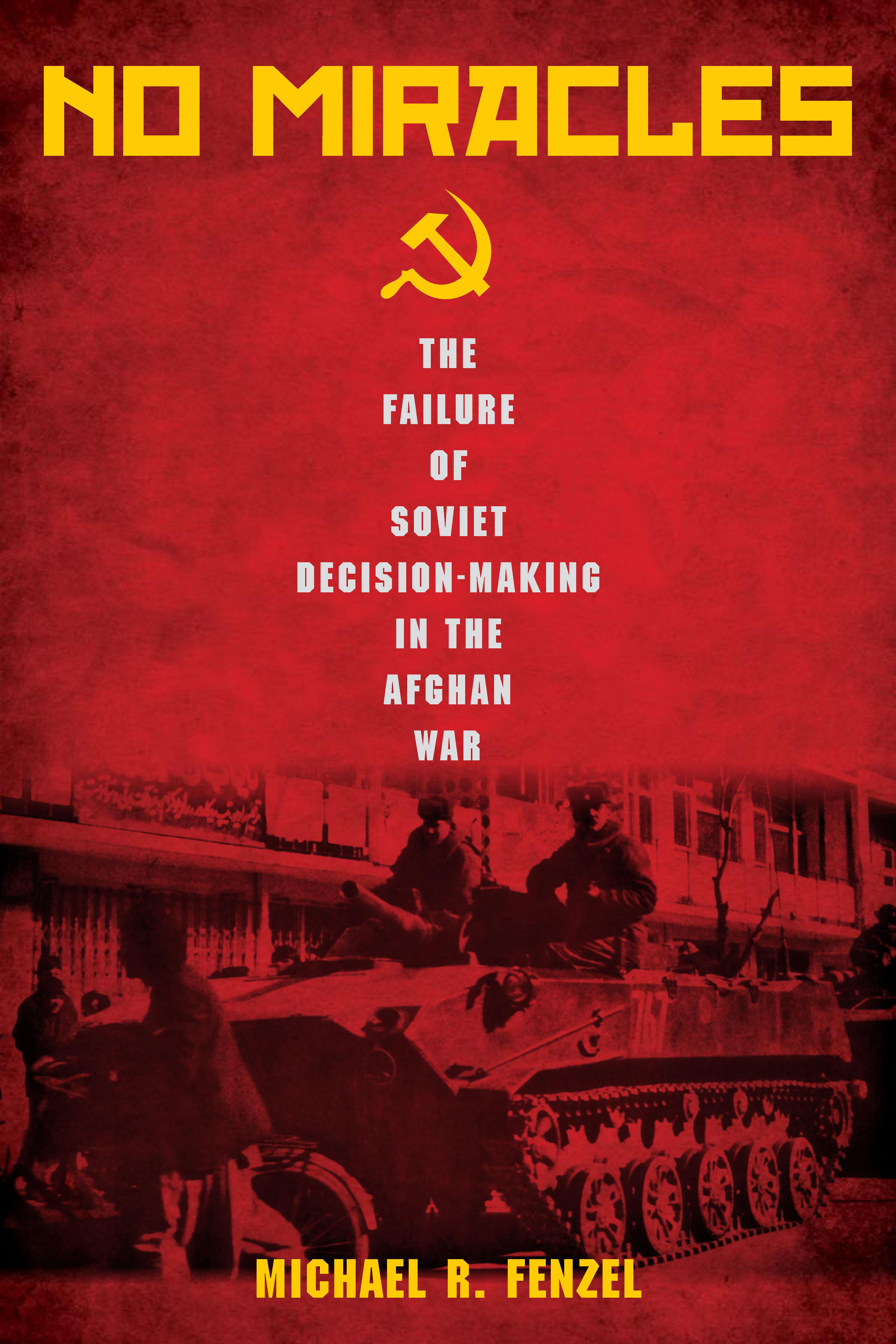
The Soviet experience in Afghanistan provides a compelling perspective on the far-reaching hazards of military intervention. In 1985, Mikhail Gorbachev decided that a withdrawal from Afghanistan should occur as soon as possible. The Soviet Union's senior leadership had become aware that their strategy was unraveling, their operational and tactical methods were not working, and the sacrifices they were demanding from the Soviet people and military were unlikely to produce the forecasted results. Despite this state of affairs, operations in Afghanistan persisted and four more years passed before the Soviets finally withdrew their military forces.
In No Miracles, Michael Fenzel explains why and how that happened, as viewed from the center of the Soviet state. From that perspective, three sources of failure stand out: poor civil-military relations, repeated and rapid turnover of Soviet leadership, and the perception that Soviet global prestige and influence were inexorably tied to the success of the Afghan mission. Fenzel enumerates the series of misperceptions and misjudgments that led to the Soviet invasion of Afghanistan, tracing the hazards of their military intervention and occupation. Ultimately, he offers a cautionary tale to nation states and policymakers considering military intervention and the use of force.
Pay easily by card, Klarna, Apple Pay or Google Pay. Not happy? You always have a 14-day money-back guarantee. Read more in our terms. If you have any questions, email us at hello@memmo.org.
Memmo makes studying easier – wherever you are in the world. We bring your course books and smart study tools together in one place: summaries, quizzes, podcasts and flashcards. Plus Ted, your study buddy who answers anything you wonder. Over 50,000 students already study here – built to help you learn faster and stress less.