
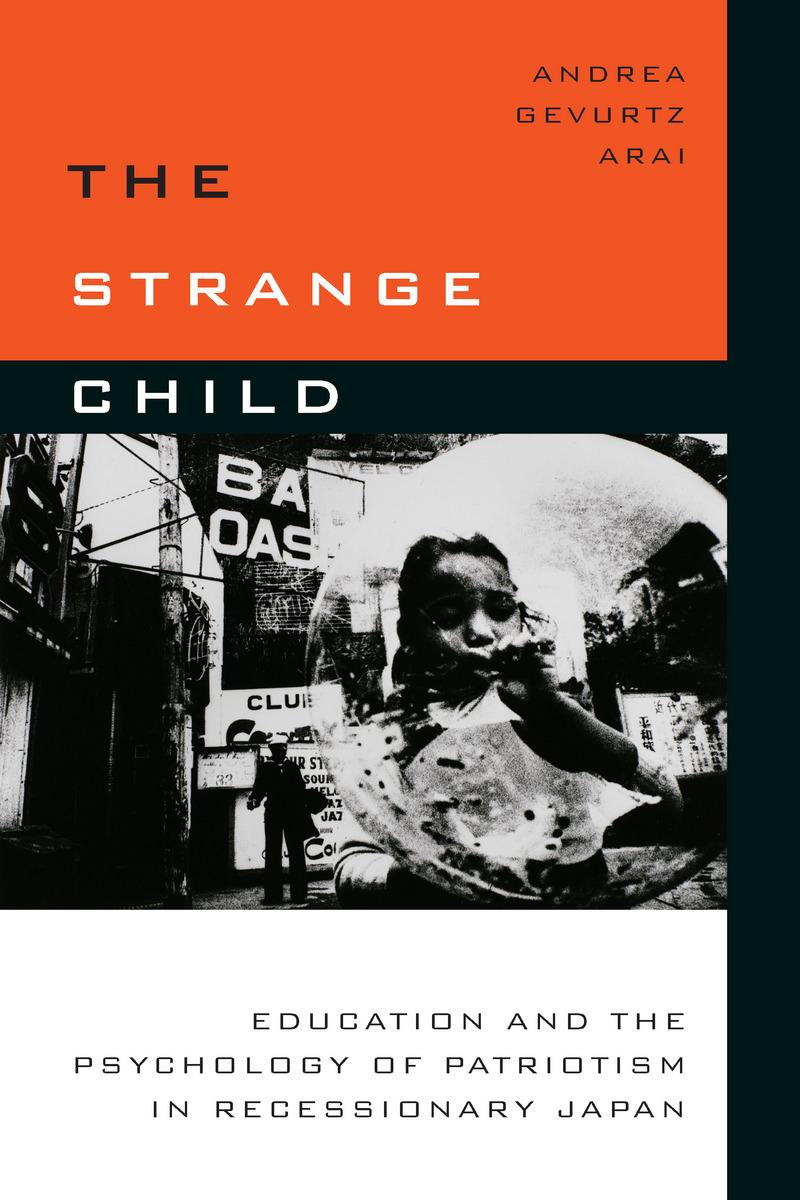
The Strange Child examines how the Japanese financial crisis of the 1990s gave rise to "the child problem," a powerful discourse of social anxiety that refocused concerns about precarious economic futures and shifting ideologies of national identity onto the young.
Andrea Gevurtz Arai's ethnography details the different forms of social and cultural dislocation that erupted in Japan starting in the late 1990s. Arai reveals the effects of shifting educational practices; increased privatization of social services; recessionary vocabulary of self-development and independence; and the neoliberalization of patriotism. Arai argues that the child problem and the social unease out of which it emerged provided a rationale for reimagining governance in education, liberalizing the job market, and a new role for psychology in the overturning of national-cultural ideologies. The Strange Child uncovers the state of nationalism in contemporary Japan, the politics of distraction around the child, and the altered life conditions of—and alternatives created by—the recessionary generation.
Pay easily by card, Klarna, Apple Pay or Google Pay. Not happy? You always have a 14-day money-back guarantee. Read more in our terms. If you have any questions, email us at hello@memmo.org.
Memmo makes studying easier – wherever you are in the world. We bring your course books and smart study tools together in one place: summaries, quizzes, podcasts and flashcards. Plus Ted, your study buddy who answers anything you wonder. Over 50,000 students already study here – built to help you learn faster and stress less.