
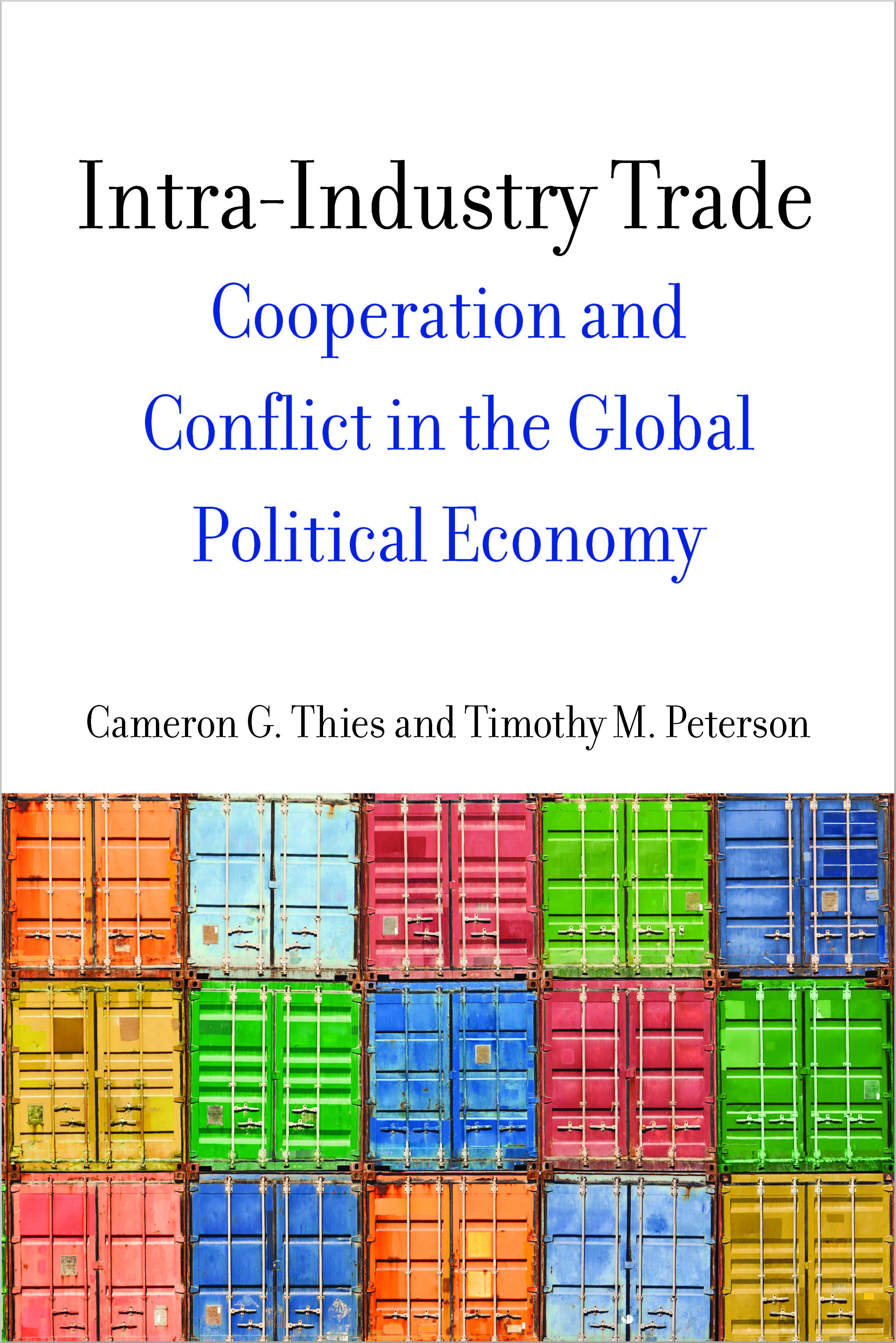
Intra-Industry Trade calls for us to rethink what trade most often looks like and how it shapes global institutions, fostering peace among states. Cameron G. Thies and Timothy M. Peterson argue that our understanding of trade has not kept pace with its changing nature in the 21st century; existing models, rooted in Ricardo's theories, regard trade uniformly as taking place between entities and countries that offer different commodities and operate according to the logic of comparative advantage. Though this type of exchange does take place, intra-industry trade—international trade of the same or similar commodities, in which foreign and domestic brands compete—is increasingly prevalent. The authors argue that our current academic and policymaking focus on the total volume of trade, rather than its composition, is misplaced. Trade composition matters, not just because it gives us a fuller understanding of how trade works, but also because intra-industry trade increases the likelihood of positive institutional relations and cooperation between states. To illustrate their point, the authors examine the effects that intra-industry trade has on Preferential Trade Agreement formation, its tendency to lessen World Trade Organization disputes and militarized conflict, and its ability to pave the way for new and fortified alliances.
Pay easily by card, Klarna, Apple Pay or Google Pay. Not happy? You always have a 14-day money-back guarantee. Read more in our terms. If you have any questions, email us at hello@memmo.org.
Memmo makes studying easier – wherever you are in the world. We bring your course books and smart study tools together in one place: summaries, quizzes, podcasts and flashcards. Plus Ted, your study buddy who answers anything you wonder. Over 50,000 students already study here – built to help you learn faster and stress less.