
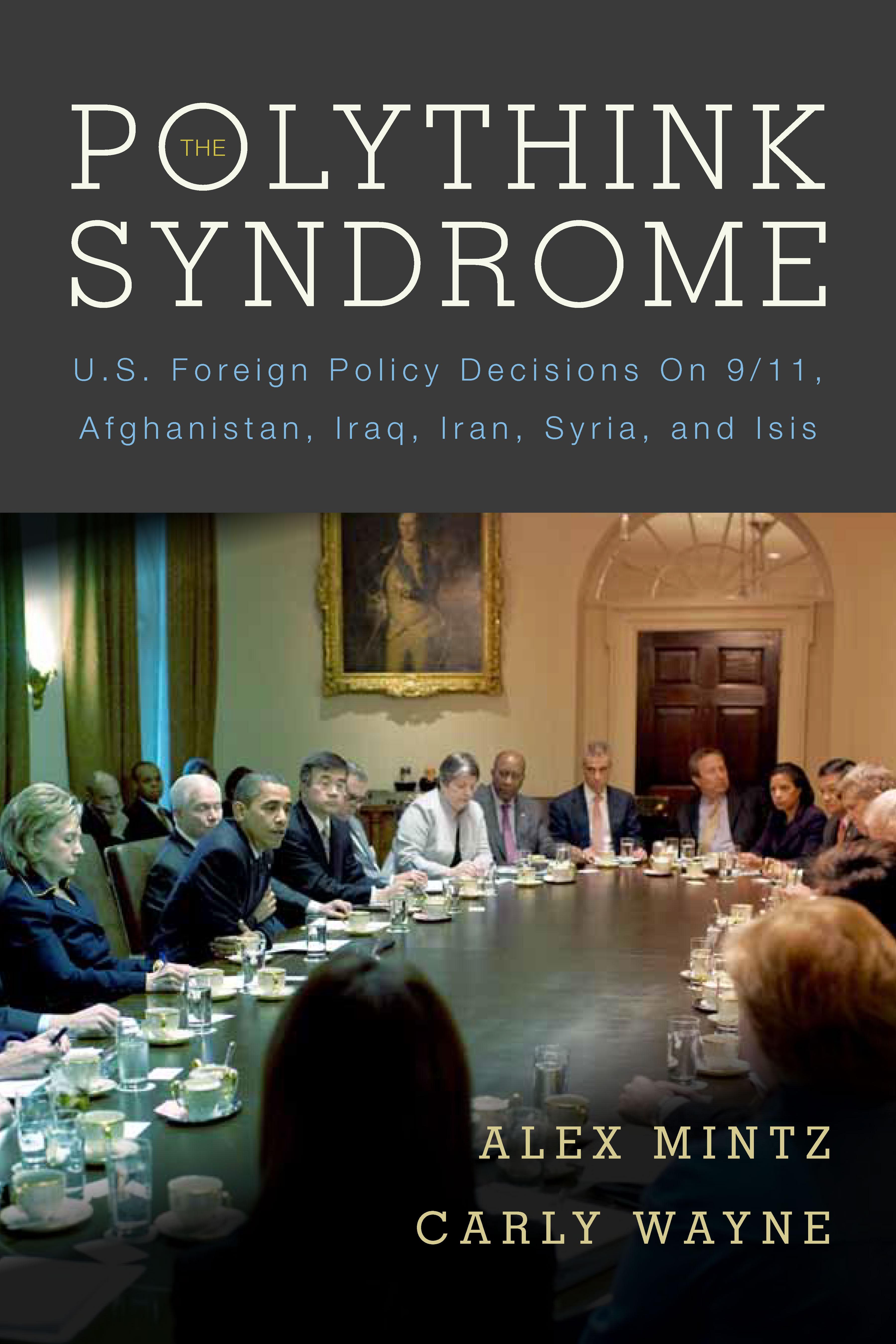
Why do presidents and their advisors often make sub-optimal decisions on military intervention, escalation, de-escalation, and termination of conflicts?
The leading concept of group dynamics, groupthink, offers one explanation: policy-making groups make sub-optimal decisions due to their desire for conformity and uniformity over dissent, leading to a failure to consider other relevant possibilities. But presidential advisory groups are often fragmented and divisive. This book therefore scrutinizes polythink, a group decision-making dynamic whereby different members in a decision-making unit espouse a plurality of opinions and divergent policy prescriptions, resulting in a disjointed decision-making process or even decision paralysis.
The book analyzes eleven national security decisions, including the national security policy designed prior to the terrorist attacks of 9/11, the decisions to enter into and withdraw from Afghanistan and Iraq, the 2007 "surge" decision, the crisis over the Iranian nuclear program, the UN Security Council decision on the Syrian Civil War, the faltering Kerry Peace Process in the Middle East, and the U.S. decision on military operations against ISIS.
Based on the analysis of these case studies, the authors address implications of the polythink phenomenon, including prescriptions for avoiding and/or overcoming it, and develop strategies and tools for what they call Productive Polythink. The authors also show the applicability of polythink to business, industry, and everyday decisions.
Pay easily by card, Klarna, Apple Pay or Google Pay. Not happy? You always have a 14-day money-back guarantee. Read more in our terms. If you have any questions, email us at hello@memmo.org.
Memmo makes studying easier – wherever you are in the world. We bring your course books and smart study tools together in one place: summaries, quizzes, podcasts and flashcards. Plus Ted, your study buddy who answers anything you wonder. Over 50,000 students already study here – built to help you learn faster and stress less.