
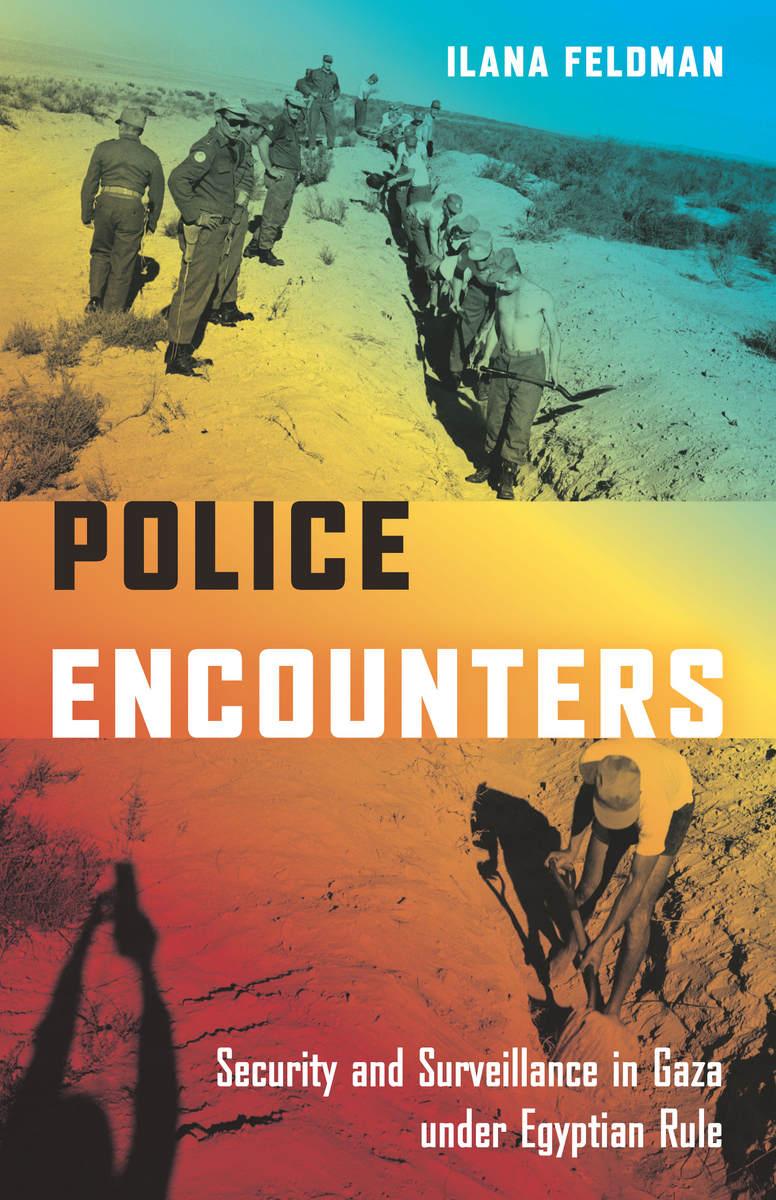
Egypt came to govern Gaza as a result of a war, a failed effort to maintain Arab Palestine. Throughout the twenty years of its administration (1948–1967), Egyptian policing of Gaza concerned itself not only with crime and politics, but also with control of social and moral order. Through surveillance, interrogation, and a network of local informants, the police extended their reach across the public domain and into private life, seeing Palestinians as both security threats and vulnerable subjects who needed protection. Security practices produced suspicion and safety simultaneously.
Police Encounters explores the paradox of Egyptian rule. Drawing on a rich and detailed archive of daily police records, the book describes an extensive security apparatus guided by intersecting concerns about national interest, social propriety, and everyday illegality. In pursuit of security, Egyptian policing established a relatively safe society, but also one that blocked independent political activity. The repressive aspects of the security society that developed in Gaza under Egyptian rule are beyond dispute. But repression does not tell the entire story about its impact on Gaza. Policing also provided opportunities for people to make claims of government, influence their neighbors, and protect their families.
Pay easily by card, Klarna, Apple Pay or Google Pay. Not happy? You always have a 14-day money-back guarantee. Read more in our terms. If you have any questions, email us at hello@memmo.org.
Memmo makes studying easier – wherever you are in the world. We bring your course books and smart study tools together in one place: summaries, quizzes, podcasts and flashcards. Plus Ted, your study buddy who answers anything you wonder. Over 50,000 students already study here – built to help you learn faster and stress less.