
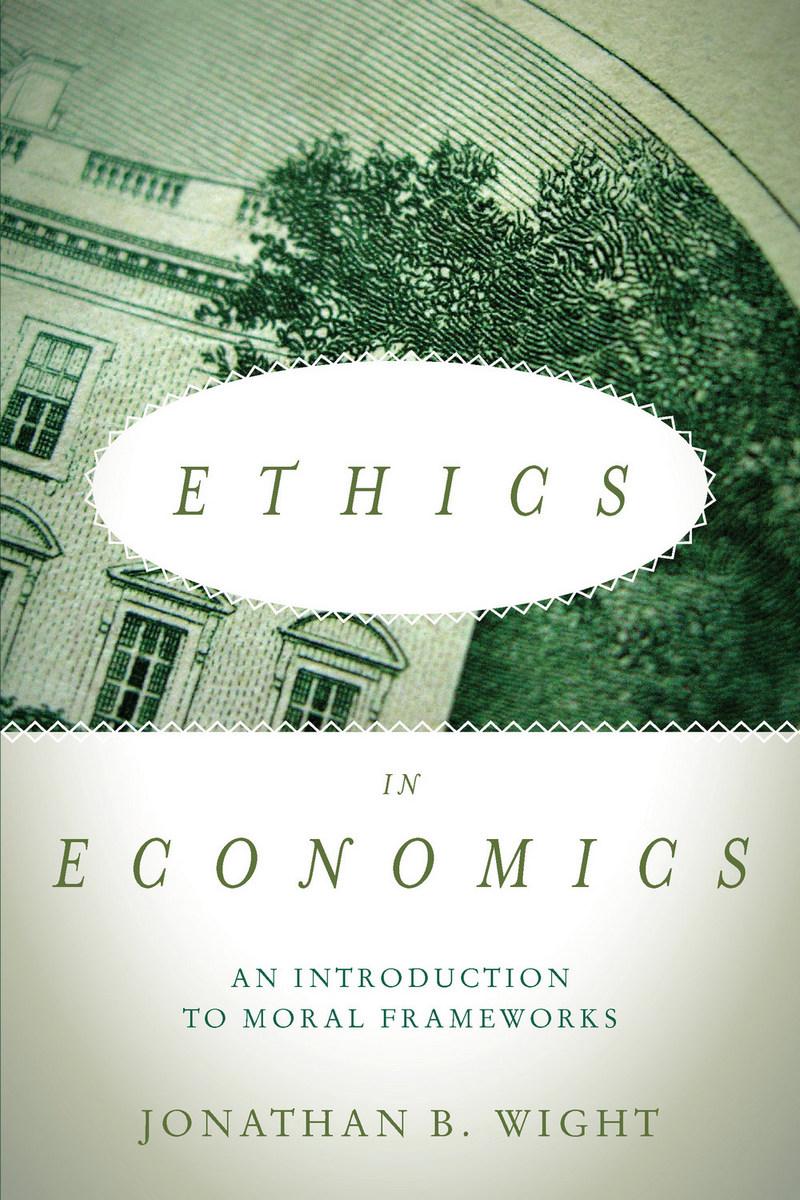
In Ethics in Economics , Jonathan B. Wight provides an overview of the role that ethical considerations play in economic debates. Whereas much of the field tends to focus on welfare outcomes, Wight calls for a deeper examination of the origin and evolution of our moral norms. He argues that economic life relies on three interrelated ethical systems: outcome-based, duty- and rule-based, and virtue-based. Integrating contemporary theoretical and applied research on ethics within a historical framework, Wight provides a thorough and accessible outline of all three schools, explaining how they fit or contrast with the economic welfare model. The book then uses these conceptual underpinnings to examine a range of contemporary topics, such as the 2008 financial crisis, the moral limits to markets, the findings of experimental economics, and the nature of economic justice. Wight's analysis is guided by the innovative concept of ethical pluralism—the recognition that each system has appropriate applications, and that no one prevails. He makes the case that considering a wider moral framework, rather than concentrating on utility maximization, can lead to a richer understanding of human behavior and better policy decisions. An incisive overview in a blossoming area of interest within Economics, this book is ideal for undergraduates or uninitiated readers who seek an introduction to this topic.
Pay easily by card, Klarna, Apple Pay or Google Pay. Not happy? You always have a 14-day money-back guarantee. Read more in our terms. If you have any questions, email us at hello@memmo.org.
Memmo makes studying easier – wherever you are in the world. We bring your course books and smart study tools together in one place: summaries, quizzes, podcasts and flashcards. Plus Ted, your study buddy who answers anything you wonder. Over 50,000 students already study here – built to help you learn faster and stress less.