
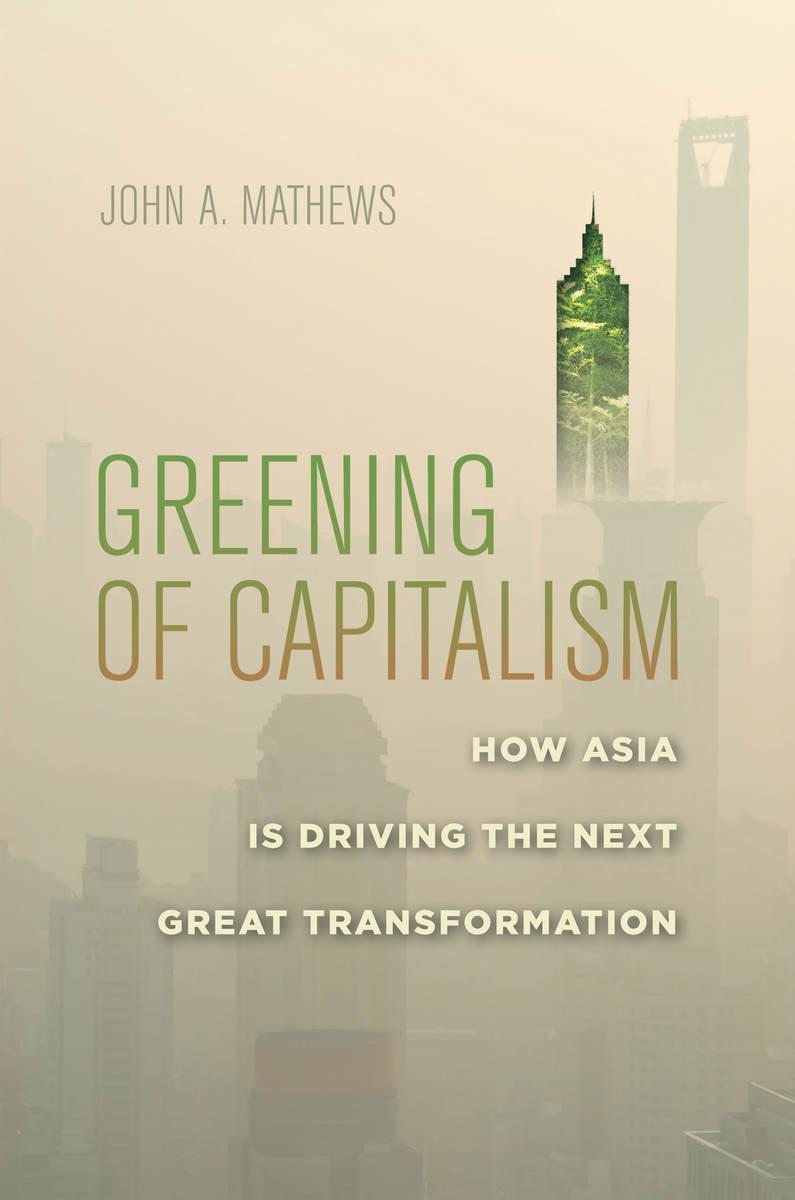
As China, India, and other industrializing giants grow, they are confronted with an inconvenient truth: They cannot rely on the conventions of capitalism as we know them today. Western industrialism has achieved miracles, promoting unprecedented levels of prosperity and raising hundreds of millions out of poverty. Yet, if allowed to proceed unencumbered, this paradigm will do irreversible harm to the planet.
By necessity, a new approach to environmentally conscious development is already emerging in the East, with China leading the way. Positioning its argument against zero-growth advocates and free-market environmentalists, Greening of Capitalism charts this transformation and sketches out a framework for more sustainable capitalism.
State-mandated changes in energy use (as opposed to carbon taxes), a circular flow of resources (as opposed to emissions standards), and the introduction of new financial instruments that support green growth are cornerstones of China's framework. John A. Mathews argues that these tenets will be emulated around the world—first in India and Brazil. In light of this emerging shift, Mathews considers core debates over national security, international relations, and economic policy, ultimately addressing the question of whether these measures will be far-reaching or timely enough to prevent further damage.
Pay easily by card, Klarna, Apple Pay or Google Pay. Not happy? You always have a 14-day money-back guarantee. Read more in our terms. If you have any questions, email us at hello@memmo.org.
Memmo makes studying easier – wherever you are in the world. We bring your course books and smart study tools together in one place: summaries, quizzes, podcasts and flashcards. Plus Ted, your study buddy who answers anything you wonder. Over 50,000 students already study here – built to help you learn faster and stress less.