
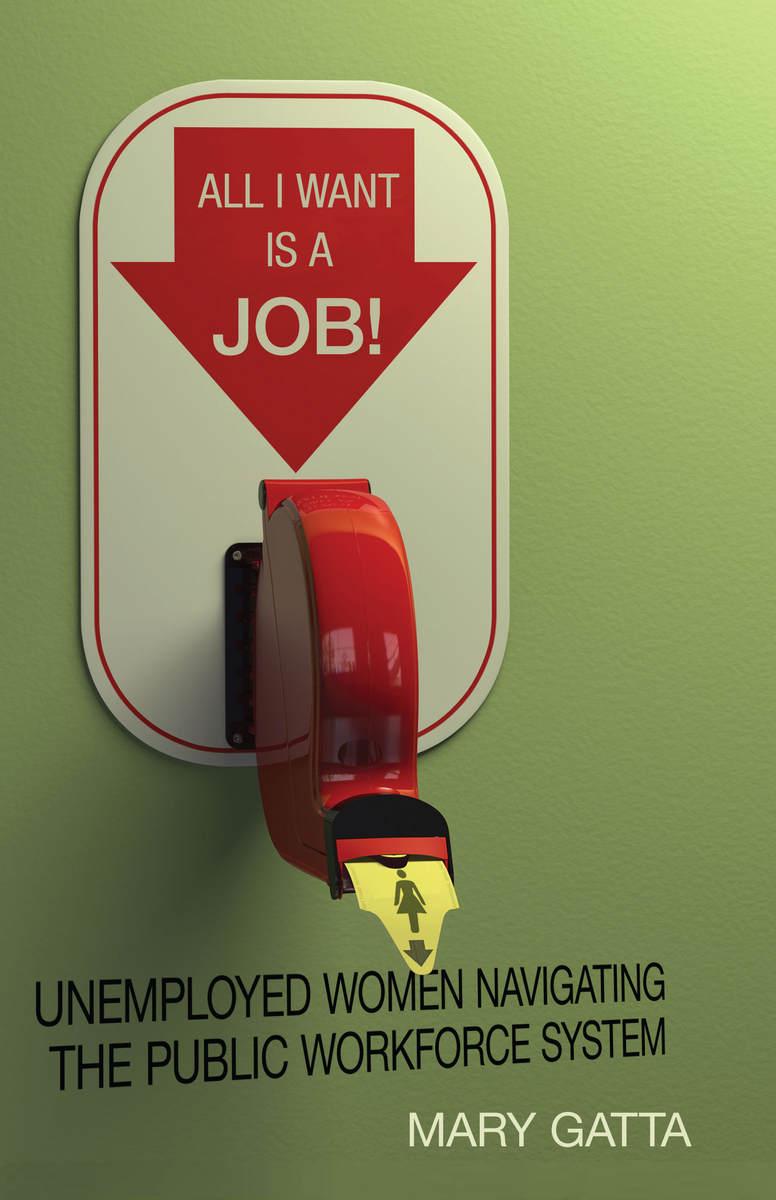
In All I Want Is a Job!, Mary Gatta puts a human face on workforce development policy. An ethnographic sociologist, Gatta went undercover, posing as a client in a New Jersey One-Stop Career Center. One-Stop Centers, developed as part of the federal Workforce Investment Act, are supposed to be an unemployed worker's go-to resource on the way to re-employment. But, how well do these centers function? With swarms of new clients coming through their doors, are they fit for the task of pairing America's workforce with new jobs?
Weaving together her own account with interviews of jobless women and caseworkers, Gatta offers a revealing glimpse of the toll that unemployment takes and the realities of social policy. Women—both educated and unskilled—are particularly vulnerable in the current economy. Since they are routinely paid less than their male counterparts, economic security is even harder for them to grasp. And, women are more easily tracked into available, low-wage work in sectors such as retail or food service.
Originally designed to pair job-ready workers with available openings, the current system is ill fitted for diverse clients who are seeking gainful employment. Even if One-Stops were better suited to the needs of these workers, good jobs are scarce in the wake of the Great Recession. In spite of these pitfalls, Gatta saw hope and a sense of empowerment in clients who got intensive career counseling, new jobs, and social support.
Drawing together tales from the frontlines, she highlights the promise and weaknesses of One-Stop Career Centers, recommending key shifts in workforce policy. America deserves a system that is less discriminatory, more human, and better able to assist women and their families in particular. The employed and unemployed alike would be better served by such a system—one that would meaningfully contribute to our economic recovery and future prosperity.
Pay easily by card, Klarna, Apple Pay or Google Pay. Not happy? You always have a 14-day money-back guarantee. Read more in our terms. If you have any questions, email us at hello@memmo.org.
Memmo makes studying easier – wherever you are in the world. We bring your course books and smart study tools together in one place: summaries, quizzes, podcasts and flashcards. Plus Ted, your study buddy who answers anything you wonder. Over 50,000 students already study here – built to help you learn faster and stress less.