
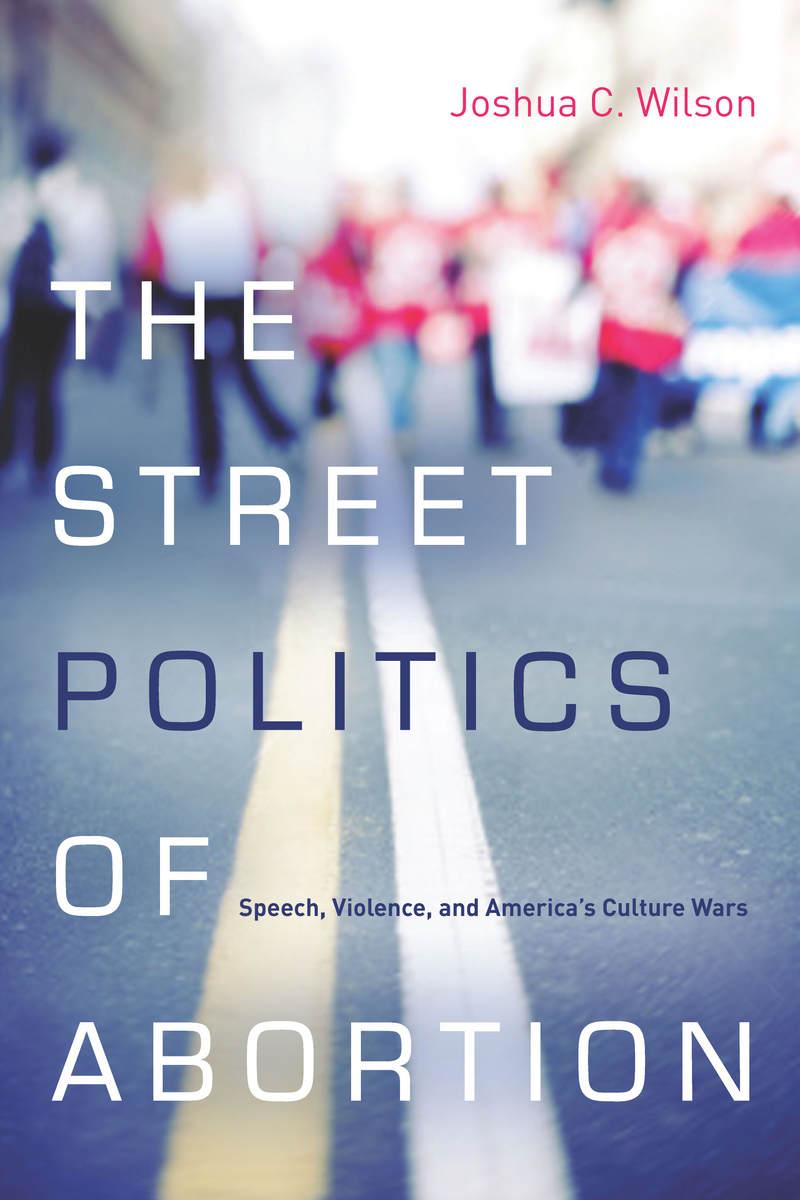
The U.S. Supreme Court decision in Roe v. Wade stands as a historic victory for abortion-rights activists. But rather than serving as the coda to what had been a comparatively low-profile social conflict, the decision mobilized a wave of anti-abortion protests and ignited a heated struggle that continues to this day.
Picking up the story in the contentious decades that followed Roe, The Street Politics of Abortion is the first book to consider the rise and fall of clinic-front protests through the 1980s and 1990s, the most visible and contentious period in U.S. reproductive politics. Joshua Wilson considers how street level protests lead to three seminal Court decisions—Planned Parenthood v. Williams, Schenck v. Pro-Choice Network of Western N.Y., and Hill v. Colorado. The eventual demise of street protests via these cases taught anti-abortion activists the value of incremental institutional strategies that could produce concrete policy gains without drawing the public's attention. Activists on both sides ultimately moved—often literally—from the streets to fight in state legislative halls and courtrooms.
At its core, the story of clinic-front protests is the story of the Christian Right's mercurial assent as a force in American politics. As the conflict moved from the street, to the courts, and eventually to legislative halls, the competing sides came to rely on a network of lawyers and professionals to champion their causes. New Christian Right institutions—including Pat Robertson's American Center for Law and Justice and the Regent University Law School, and Jerry Falwell's Liberty University School of Law—trained elite activists for their "front line" battles in government. Wilson demonstrates how the abortion-rights movement, despite its initial success with Roe, has since faced continuous challenges and difficulties, while the anti-abortion movement continues to gain strength in spite of its losses.
Pay easily by card, Klarna, Apple Pay or Google Pay. Not happy? You always have a 14-day money-back guarantee. Read more in our terms. If you have any questions, email us at hello@memmo.org.
Memmo makes studying easier – wherever you are in the world. We bring your course books and smart study tools together in one place: summaries, quizzes, podcasts and flashcards. Plus Ted, your study buddy who answers anything you wonder. Over 50,000 students already study here – built to help you learn faster and stress less.