
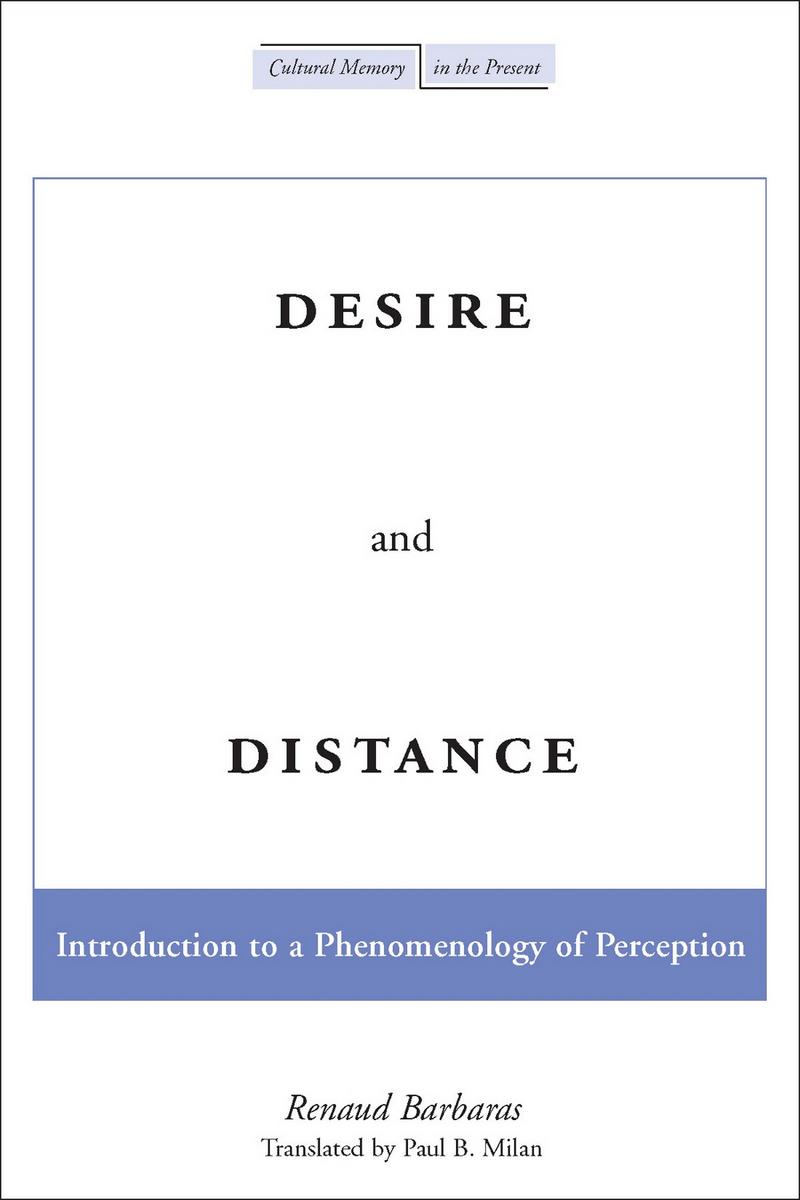
Desire and Distance constitutes an important new departure in contemporary phenomenological thought, a rethinking and critique of basic philosophical positions concerning the concept of perception presented by Husserl and Merleau-Ponty, though it departs in significant and original ways from their work. Barbaras's overall goal is to develop a philosophy of what "life" is—one that would do justice to the question of embodiment and its role in perception and the formation of the human subject. Barbaras posits that desire and distance inform the concept of "life." Levinas identified a similar structure in Descartes's notion of the infinite. For Barbaras, desire and distance are anchored not in meaning, but in a rethinking of the philosophy of biology and, in consequence, cosmology.
Barbaras elaborates and extends the formal structure of desire and distance by drawing on motifs as yet unexplored in the French phenomenological tradition, especially the notions of "life" and the "life-world," which are prominent in the later Husserl but also appear in non-phenomenological thinkers such as Bergson. Barbaras then filters these notions (especially "life") through Merleau-Ponty.
Pay easily by card, Klarna, Apple Pay or Google Pay. Not happy? You always have a 14-day money-back guarantee. Read more in our terms. If you have any questions, email us at hello@memmo.org.
Memmo makes studying easier – wherever you are in the world. We bring your course books and smart study tools together in one place: summaries, quizzes, podcasts and flashcards. Plus Ted, your study buddy who answers anything you wonder. Over 50,000 students already study here – built to help you learn faster and stress less.