
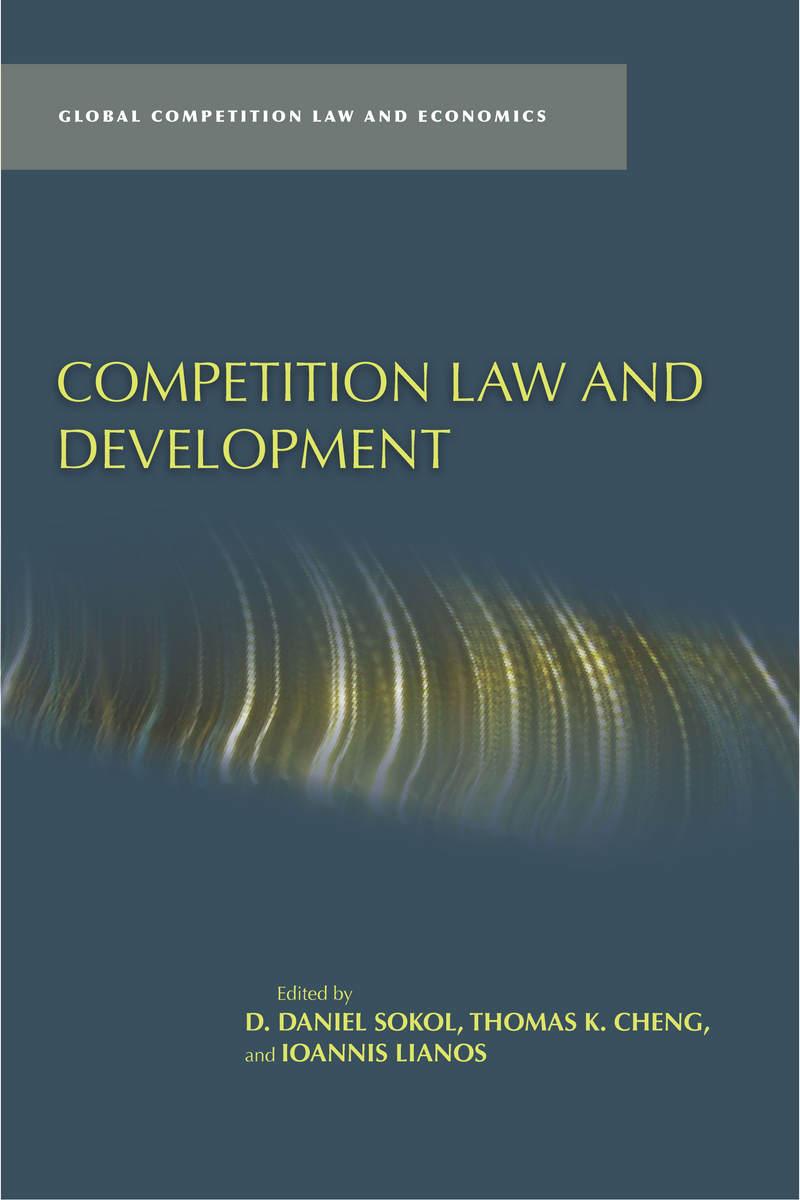
The vast majority of the countries in the world are developing countries—there are only thirty-four OECD (Organisation for Economic Co-operation and Development) countries—and yet there is a serious dearth of attention to developing countries in the international and comparative law scholarship, which has been preoccupied with the United States and the European Union. Competition Law and Development investigates whether or not the competition law and policy transplanted from Europe and the United States can be successfully implemented in the developing world or whether the developing-world experience suggests a need for a different analytical framework. The political and economic environment of developing countries often differs significantly from that of developed countries in ways that may have serious implications for competition law enforcement.
The need to devote greater attention to developing countries is also justified by the changing global economic reality in which developing countries—especially China, India, and Brazil—have emerged as economic powerhouses. Together with Russia, the so-called BRIC countries have accounted for thirty percent of global economic growth since the term was coined in 2001. In this sense, developing countries deserve more attention not because of any justifiable differences from developed countries in competition law enforcement, either in theoretical or practical terms, but because of their sheer economic heft. This book, the second in the Global Competition Law and Economics series, provides a number of viewpoints of what competition law and policy mean both in theory and practice in a development context.
Pay easily by card, Klarna, Apple Pay or Google Pay. Not happy? You always have a 14-day money-back guarantee. Read more in our terms. If you have any questions, email us at hello@memmo.org.
Memmo makes studying easier – wherever you are in the world. We bring your course books and smart study tools together in one place: summaries, quizzes, podcasts and flashcards. Plus Ted, your study buddy who answers anything you wonder. Over 50,000 students already study here – built to help you learn faster and stress less.