
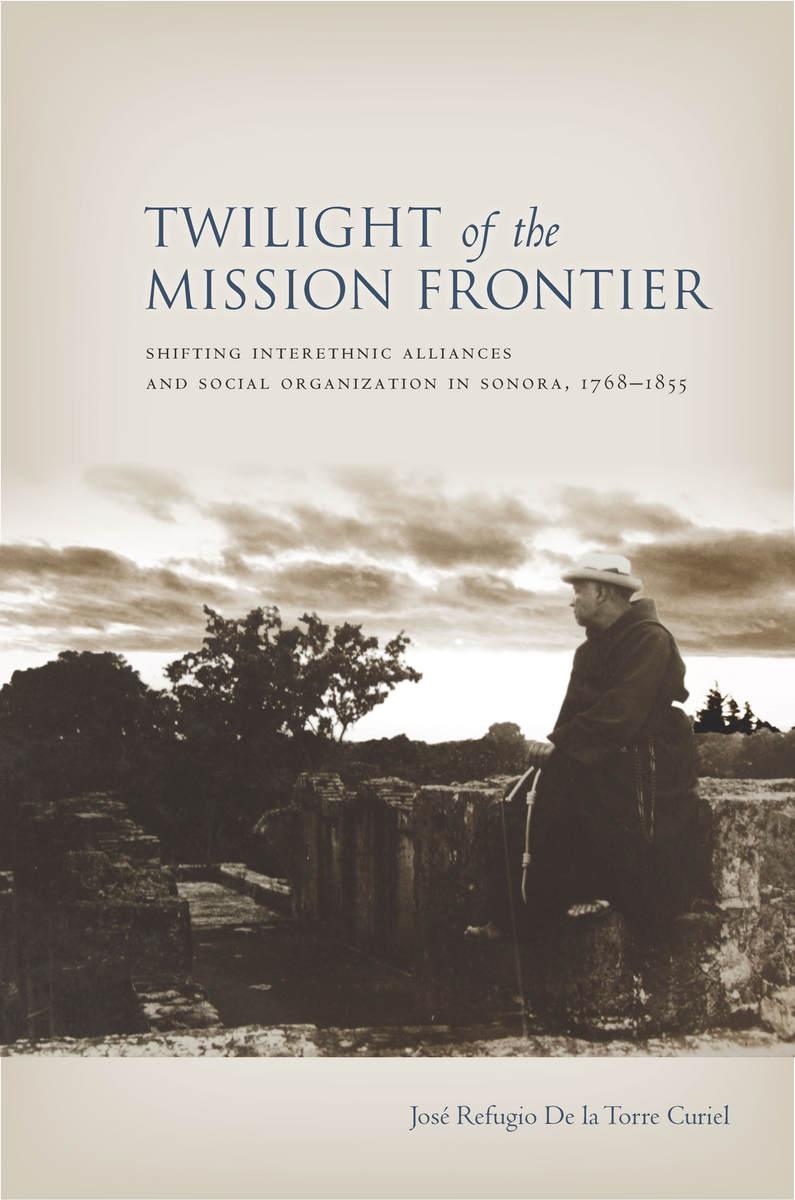
Twilight of the Mission Frontier examines the long process of mission decline in Sonora, Mexico after the Jesuit expulsion in 1767. By reassessing the mission crisis paradigm—which speaks of a growing internal crisis leading to the secularization of the missions in the early nineteenth century—new light is shed on how demographic, cultural, economic, and institutional variables modified life in the Franciscan missions in Sonora.
During the late eighteenth century, forms of interaction between Sonoran indigenous groups and Spanish settlers grew in complexity and intensity, due in part to the implementation of reform-minded Bourbon policies which envisioned a more secular, productive, and modern society. At the same time, new forms of what this book identifies as pluriethnic mobility also emerged. Franciscan missionaries and mission residents deployed diverse strategies to cope with these changes and results varied from region to region, depending on such factors as the missionaries' backgrounds, Indian responses to mission life, local economic arrangements, and cultural exchanges between Indians and Spaniards.
Pay easily by card, Klarna, Apple Pay or Google Pay. Not happy? You always have a 14-day money-back guarantee. Read more in our terms. If you have any questions, email us at hello@memmo.org.
Memmo makes studying easier – wherever you are in the world. We bring your course books and smart study tools together in one place: summaries, quizzes, podcasts and flashcards. Plus Ted, your study buddy who answers anything you wonder. Over 50,000 students already study here – built to help you learn faster and stress less.