
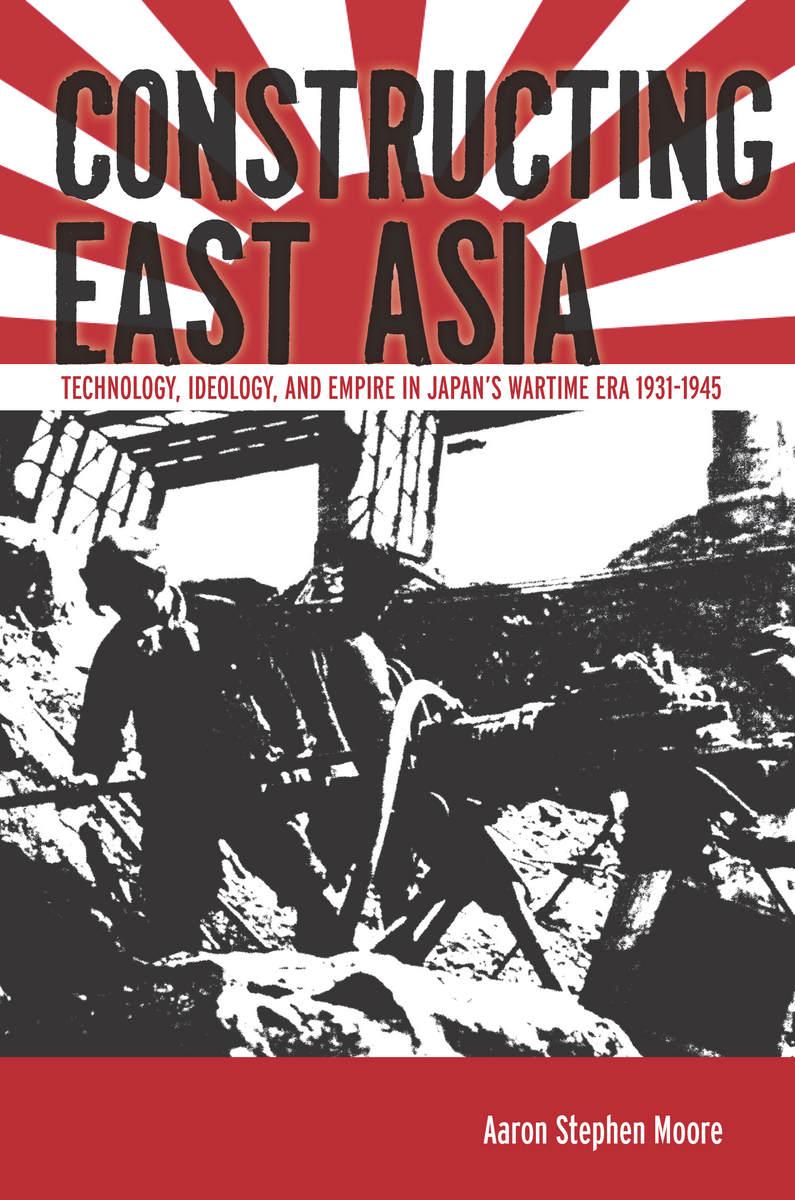
The conventional understanding of Japanese wartime ideology has for years been summed up by just a few words: anti-modern, spiritualist, and irrational. Yet such a cut-and-dried picture is not at all reflective of the principles that guided national policy from 1931–1945. Challenging the status quo, Constructing East Asia examines how Japanese intellectuals, bureaucrats, and engineers used technology as a system of power and mobilization—what historian Aaron Moore terms a "technological imaginary"—to rally people in Japan and its expanding empire. By analyzing how these different actors defined technology in public discourse, national policies, and large-scale infrastructure projects, Moore reveals wartime elites as far more calculated in thought and action than previous scholarship allows. Moreover, Moore positions the wartime origins of technology deployment as an essential part of the country's national policy and identity, upending another predominant narrative—namely, that technology did not play a modernizing role in Japan until the "economic miracle" of the postwar years.
Pay easily by card, Klarna, Apple Pay or Google Pay. Not happy? You always have a 14-day money-back guarantee. Read more in our terms. If you have any questions, email us at hello@memmo.org.
Memmo makes studying easier – wherever you are in the world. We bring your course books and smart study tools together in one place: summaries, quizzes, podcasts and flashcards. Plus Ted, your study buddy who answers anything you wonder. Over 50,000 students already study here – built to help you learn faster and stress less.