
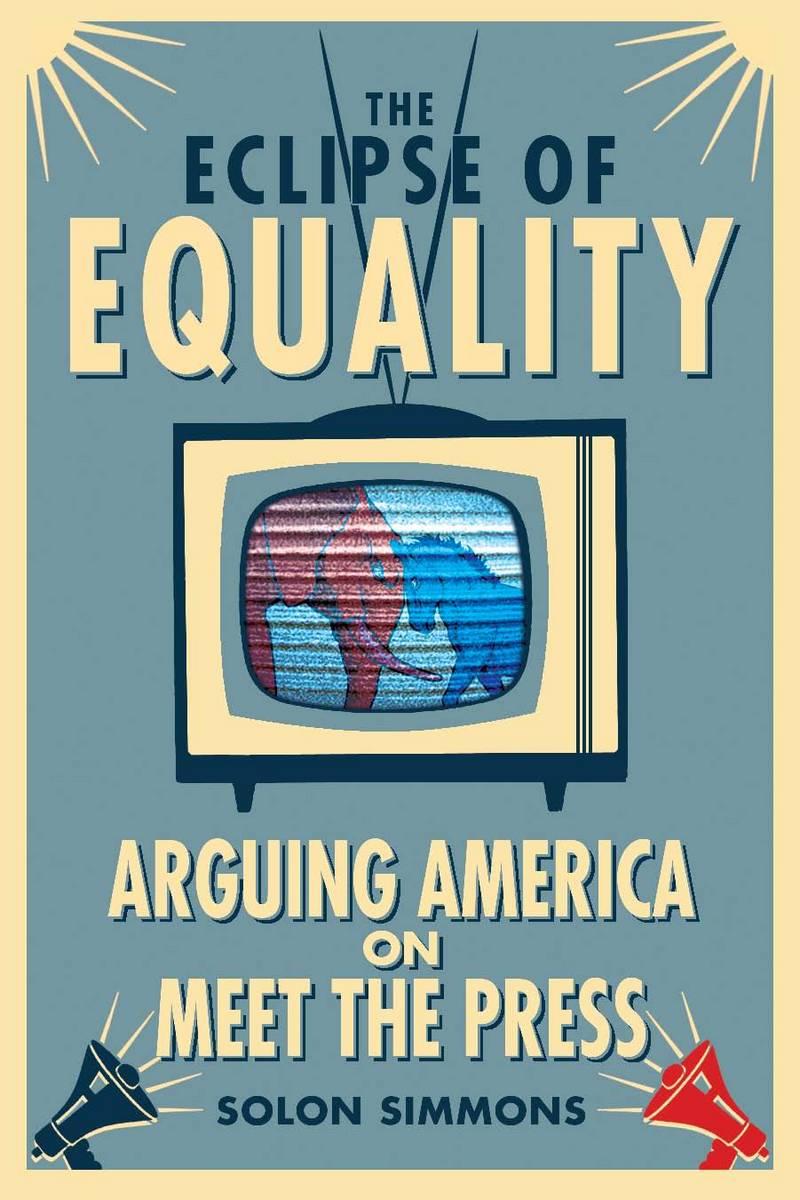
Red state vs. blue state. Republican vs. Democrat. Fox News vs. The Daily Show. The so-called culture wars have become such a fixture of American politics that dividing the country into rival camps seems natural and political gridlock seems inevitable. Entering the fray, Solon Simmons offers an intriguing twist on the debate: Our disagreements come not from unbridgeable divides, but from differing interpretations of a single underlying American tradition—liberalism. Both champions of traditional liberal values, Republicans have become the party of individual freedom while Democrats wear the mantle of tolerance. Lost in this battle of sides is the third pillar of liberalism—equality.
Simmons charts the course of American politics through the episodes of Meet the Press. On the air since 1945, Meet the Press provides an unparalleled record of living conversation about the most pressing issues of the day. In weekly discussions, the people who directly influenced policy and held the reins of power in Washington set the political agenda for the country. Listening to what these people had to say—and importantly how they said it—Meet the Press opens a window on how our political parties have become so divided and how notions of equality were lost in the process.
Telling the story of the American Century, Simmons investigates four themes that have defined politics and, in turn, debate on Meet the Press—war and foreign affairs, debt and taxation, race struggles, and class and labor relations—and demonstrates how political leaders have transformed these important political issues into symbolic pawns as each party advocates for their own understanding of liberty, whether freedom or tolerance. Ultimately, with The Eclipse of Equality, he looks to bring back to the debate the question lurking in the shadows—how can we ensure the protection of a peaceful civil society and equality for all?
Pay easily by card, Klarna, Apple Pay or Google Pay. Not happy? You always have a 14-day money-back guarantee. Read more in our terms. If you have any questions, email us at hello@memmo.org.
Memmo makes studying easier – wherever you are in the world. We bring your course books and smart study tools together in one place: summaries, quizzes, podcasts and flashcards. Plus Ted, your study buddy who answers anything you wonder. Over 50,000 students already study here – built to help you learn faster and stress less.