
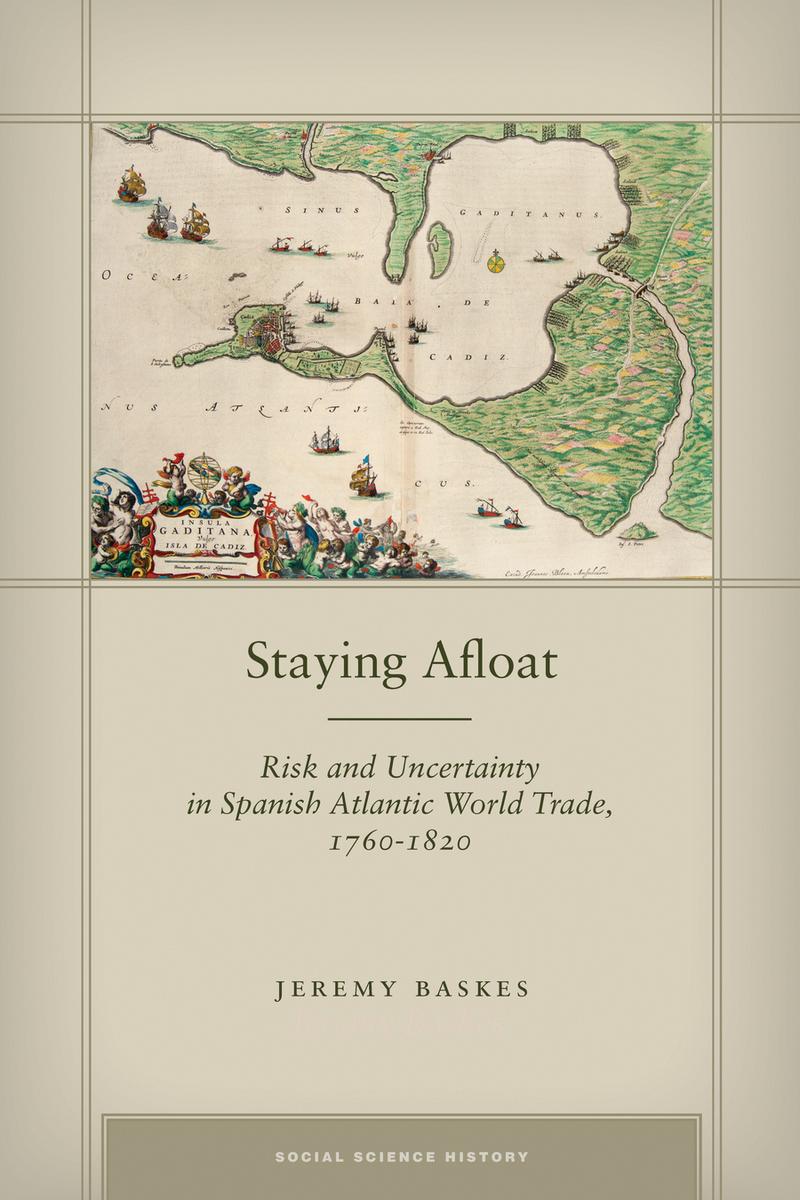
Early modern, long-distance trade was fraught with risk and uncertainty, driving merchants to seek means (that is, institutions) to reduce them. In the traditional historiography on Spanish colonial trade, the role of risk is largely ignored. Instead, the guild merchants are depicted as anti-competitive monopolists who manipulated markets and exploited colonial consumers. Jeremy Baskes argues that much of the commercial behavior interpreted by modern historians as predatory was instead designed to reduce the uncertainty and risk of Atlantic world trade.
This book discusses topics from the development and use of maritime insurance in eighteenth- century Spain to the commercial strategies of Spanish merchants; the traditionally misunderstood effects of the 1778 promulgation of "comercio libre," and the financial chaos and bankruptcies that ensued; the economic rationale for the Spanish flotillas; and the impact of war and privateering on commerce and business decisions. By elevating risk to the center of focus, this multifaceted study makes a number of revisionist contributions to the late colonial economic history of the Spanish empire.
Pay easily by card, Klarna, Apple Pay or Google Pay. Not happy? You always have a 14-day money-back guarantee. Read more in our terms. If you have any questions, email us at hello@memmo.org.
Memmo makes studying easier – wherever you are in the world. We bring your course books and smart study tools together in one place: summaries, quizzes, podcasts and flashcards. Plus Ted, your study buddy who answers anything you wonder. Over 50,000 students already study here – built to help you learn faster and stress less.