
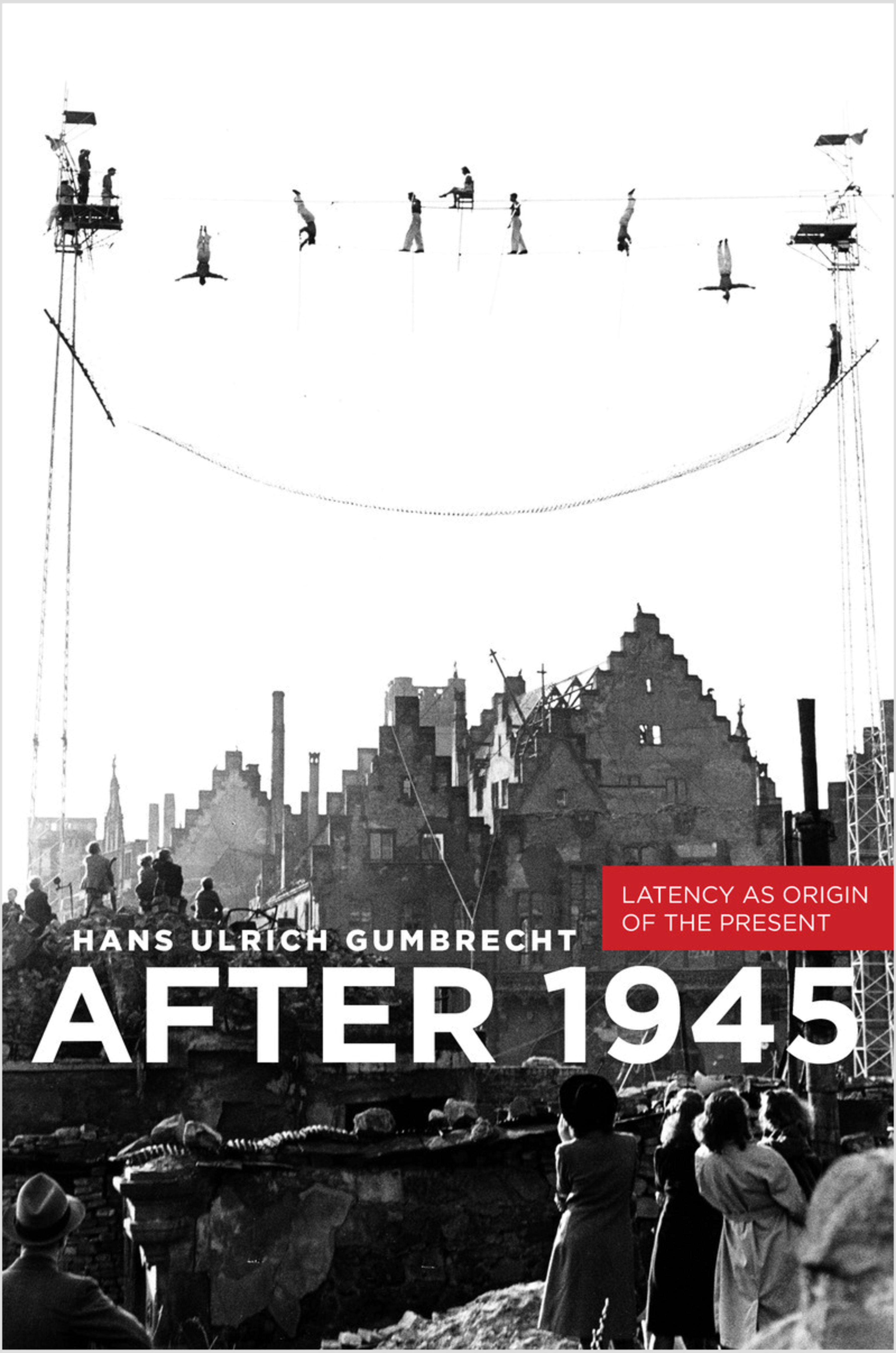
What is it the legacy that humankind has been living with since 1945? We were once convinced that time was the agent of change. But in the past decade or two, our experience of time has been transformed. Technology preserves and inundates us with the past, and we perceive our future as a set of converging and threatening inevitabilities: nuclear annihilation, global warming, overpopulation. Overwhelmed by these horizons, we live in an ever broadening present. In identifying the prevailing mood of the post-World War II decade as that of "latency," Gumbrecht returns to the era when this change in the pace and structure of time emerged and shows how it shaped the trajectory of his own postwar generation.
Those born after 1945, and especially those born in Germany, would have liked nothing more than to put the catastrophic events and explosions of the past behind them, but that possibility remained foreclosed or just out of reach. World literatures and cultures of the postwar years reveal this to have been a broadly shared predicament: they hint at promises unfulfilled and obsess over dishonesty and bad faith; they transmit the sensation of confinement and the inability to advance.
After 1945 belies its theme of entrapment. Gumbrecht has never been limited by narrow disciplinary boundaries, and his latest inquiry is both far-ranging and experimental. It combines autobiography with German history and world-historical analysis, offering insightful reflections on Samuel Beckett and Paul Celan, detailed exegesis of the thought of Martin Heidegger and Jean Paul Sartre, and surprising reflections on cultural phenomena ranging from Edith Piaf to the Kinsey Report. This personal and philosophical take on the last century is of immediate relevance to our identity today.
Pay easily by card, Klarna, Apple Pay or Google Pay. Not happy? You always have a 14-day money-back guarantee. Read more in our terms. If you have any questions, email us at hello@memmo.org.
Memmo makes studying easier – wherever you are in the world. We bring your course books and smart study tools together in one place: summaries, quizzes, podcasts and flashcards. Plus Ted, your study buddy who answers anything you wonder. Over 50,000 students already study here – built to help you learn faster and stress less.