
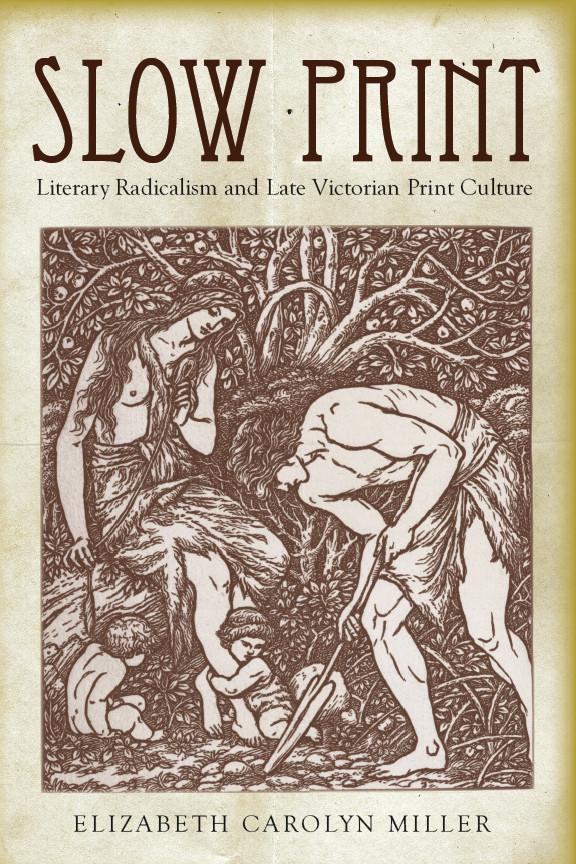
This book explores the literary culture of Britain's radical press from 1880 to 1910, a time that saw a flourishing of radical political activity as well as the emergence of a mass print industry. While Enlightenment radicals and their heirs had seen free print as an agent of revolutionary transformation, socialist, anarchist and other radicals of this later period suspected that a mass public could not exist outside the capitalist system. In response, they purposely reduced the scale of print by appealing to a small, counter-cultural audience. "Slow print," like "slow food" today, actively resisted industrial production and the commercialization of new domains of life.
Drawing on under-studied periodicals and archives, this book uncovers a largely forgotten literary-political context. It looks at the extensive debate within the radical press over how to situate radical values within an evolving media ecology, debates that engaged some of the most famous writers of the era (William Morris and George Bernard Shaw), a host of lesser-known figures (theosophical socialist and birth control reformer Annie Besant, gay rights pioneer Edward Carpenter, and proto-modernist editor Alfred Orage), and countless anonymous others.
Pay easily by card, Klarna, Apple Pay or Google Pay. Not happy? You always have a 14-day money-back guarantee. Read more in our terms. If you have any questions, email us at hello@memmo.org.
Memmo makes studying easier – wherever you are in the world. We bring your course books and smart study tools together in one place: summaries, quizzes, podcasts and flashcards. Plus Ted, your study buddy who answers anything you wonder. Over 50,000 students already study here – built to help you learn faster and stress less.