
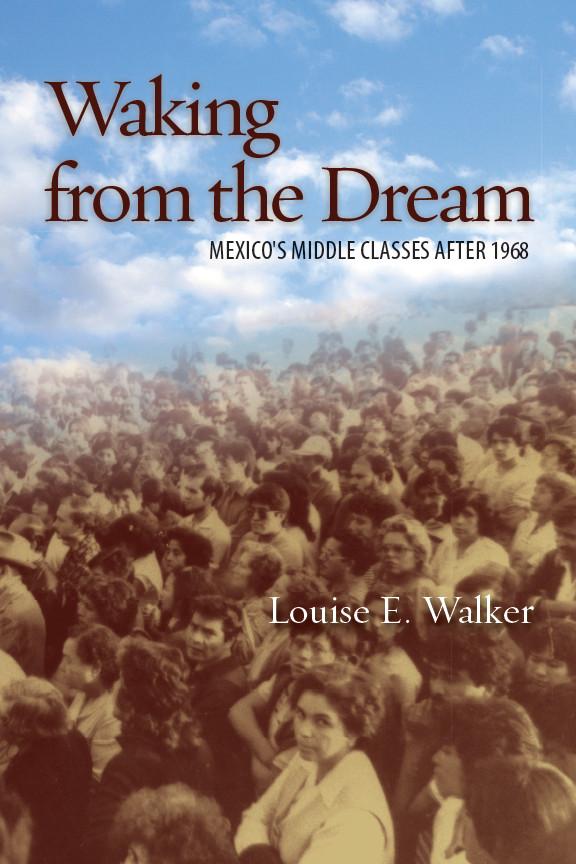
When the postwar boom began to dissipate in the late 1960s, Mexico's middle classes awoke to a new, economically terrifying world. And following massacres of students at peaceful protests in 1968 and 1971, one-party control of Mexican politics dissipated as well. The ruling Institutional Revolutionary Party struggled to recover its legitimacy, but instead saw its support begin to erode. In the following decades, Mexico's middle classes ended up shaping the history of economic and political crisis, facilitating the emergence of neo-liberalism and the transition to democracy.
Waking from the Dream tells the story of this profound change from state-led development to neo-liberalism, and from a one-party state to electoral democracy. It describes the fraught history of these tectonic shifts, as politicians and citizens experimented with different strategies to end a series of crises. In the first study to dig deeply into the drama of the middle classes in this period, Walker shows how the most consequential struggles over Mexico's economy and political system occurred between the middle classes and the ruling party.
Pay easily by card, Klarna, Apple Pay or Google Pay. Not happy? You always have a 14-day money-back guarantee. Read more in our terms. If you have any questions, email us at hello@memmo.org.
Memmo makes studying easier – wherever you are in the world. We bring your course books and smart study tools together in one place: summaries, quizzes, podcasts and flashcards. Plus Ted, your study buddy who answers anything you wonder. Over 50,000 students already study here – built to help you learn faster and stress less.