
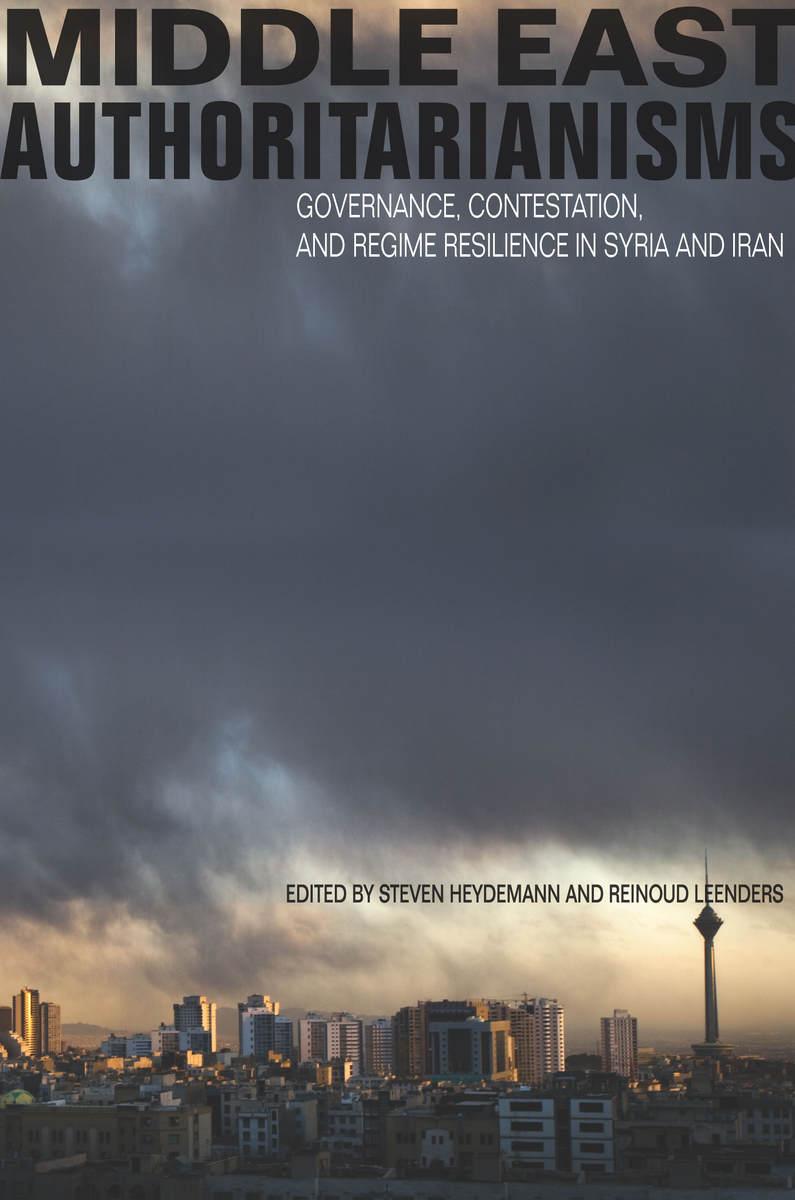
The developments of early 2011 changes the political landscape of the Middle East. But even as urgent struggles continue, it remains clear that authoritarianism will survive this transformational moment. The study of authoritarian governance, therefore, remains essential for our understanding of the political dynamics and inner workings of regimes across the region.
This volume considers the Syrian and Iranian regimes—what they share in common and what distinguishes them. Too frequently, authoritarianism has been assumed to be a generic descriptor of the region and differences among regimes have been overlooked. But as the political trajectories of Middle Eastern states diverge in years ahead, with some perhaps consolidating democratic gains while others remaining under distinct and resilient forms of authoritarian rule, understanding variations in modes of authoritarian governance and the attributes that promote regime resilience becomes an increasingly urgent priority.
Pay easily by card, Klarna, Apple Pay or Google Pay. Not happy? You always have a 14-day money-back guarantee. Read more in our terms. If you have any questions, email us at hello@memmo.org.
Memmo makes studying easier – wherever you are in the world. We bring your course books and smart study tools together in one place: summaries, quizzes, podcasts and flashcards. Plus Ted, your study buddy who answers anything you wonder. Over 50,000 students already study here – built to help you learn faster and stress less.