
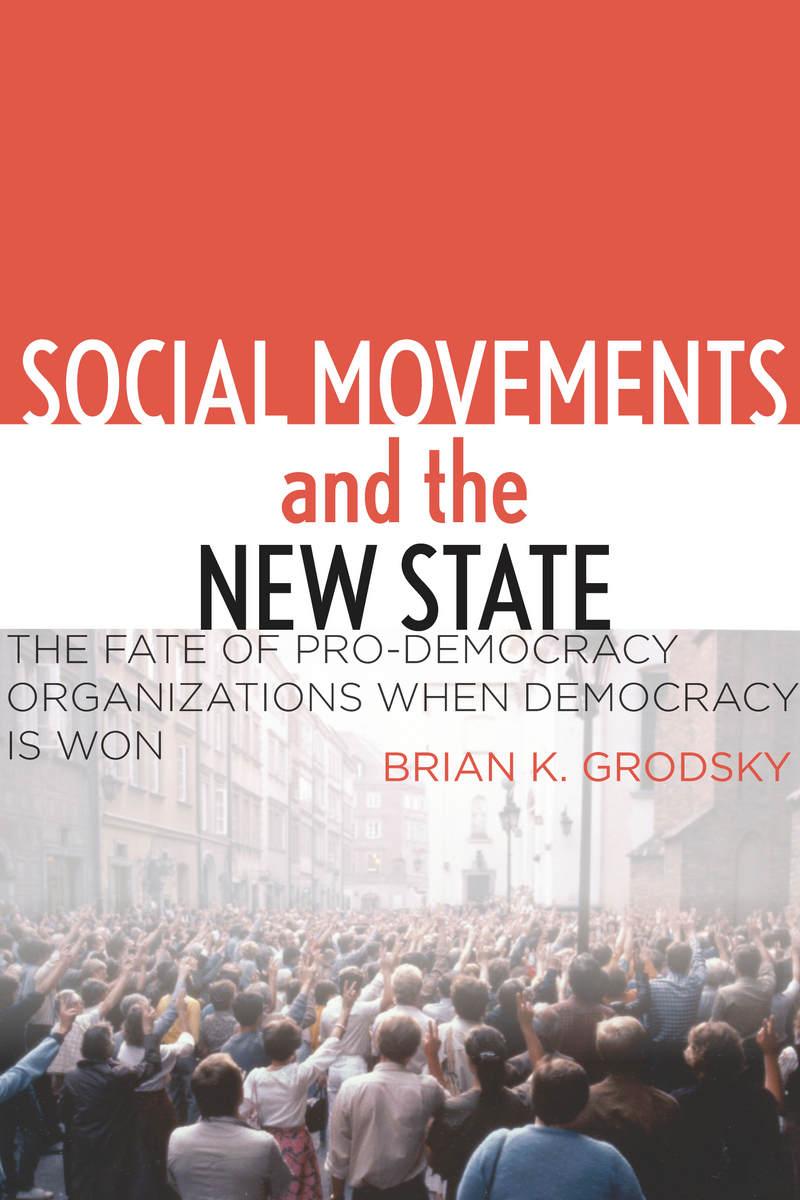
The world's democracies cheered as the social movements of the Arab Spring ended the reigns of longstanding dictators and ushered in the possibility of democracy. Yet these unique transitions also fit into a broader pattern of democratic breakthroughs around the globe, where political leaders emerge from the pro-democracy movement that helped affect change. In Social Movements and the New State, Brian Grodsky examines the relationships between new political elites and the civil society organizations that brought them to power in three culturally and geographically disparate countries—Poland, South Africa, and Georgia.
This book argues that the identities and personal networks developed during the struggle provide "movement activists" with opportunities to influence minor issues, but that new and differing institutional pressures create schisms on broader policy that can turn prior bonds into a liability rather than an asset. Drawing on media analyses and more than 150 elite interviews, Grodsky offers a rare empirical assessment of the degree to which social movement organizations shape activists' beliefs and actions over the long term.
Pay easily by card, Klarna, Apple Pay or Google Pay. Not happy? You always have a 14-day money-back guarantee. Read more in our terms. If you have any questions, email us at hello@memmo.org.
Memmo makes studying easier – wherever you are in the world. We bring your course books and smart study tools together in one place: summaries, quizzes, podcasts and flashcards. Plus Ted, your study buddy who answers anything you wonder. Over 50,000 students already study here – built to help you learn faster and stress less.