
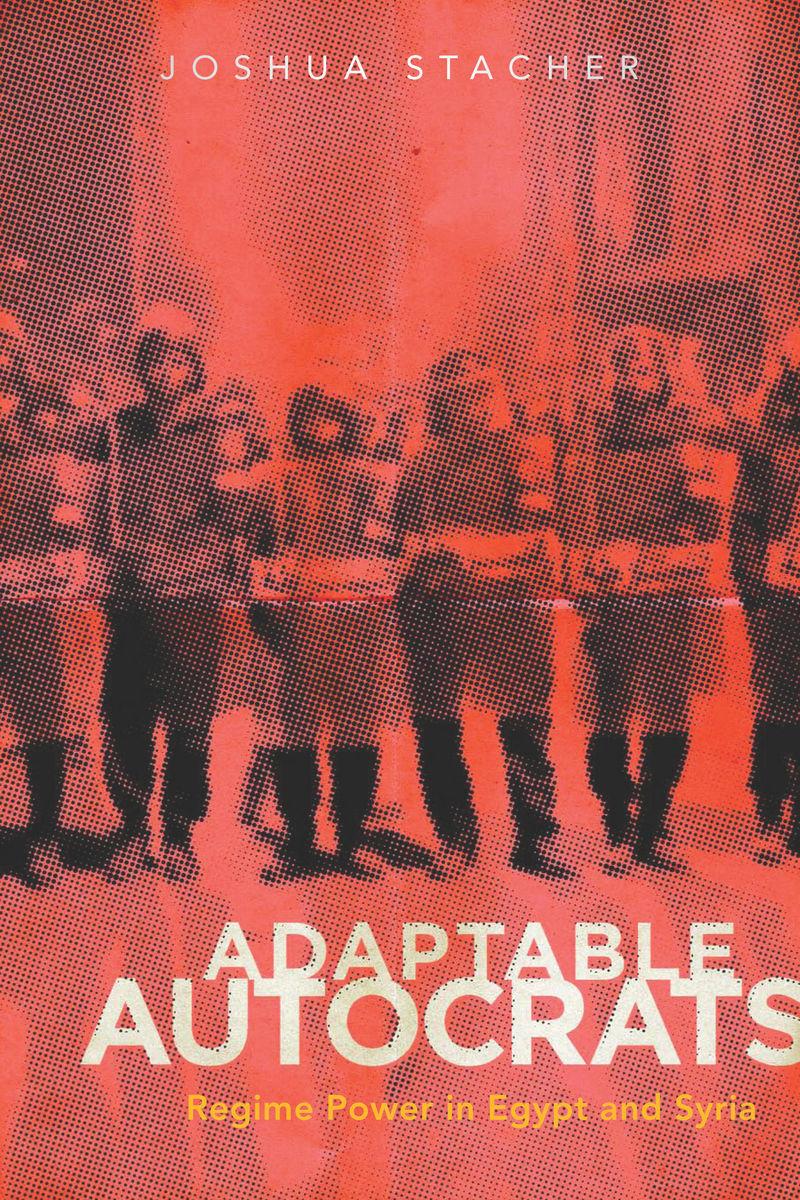
The decades-long resilience of Middle Eastern regimes meant that few anticipated the 2011 Arab Spring. But from the seemingly rapid leadership turnovers in Tunisia and Egypt to the protracted stalemates in Yemen and Syria, there remains a common outcome: ongoing control of the ruling regimes. While some analysts and media outlets rush to look for democratic breakthroughs, autocratic continuity—not wide-ranging political change—remains the hallmark of the region's upheaval.
Contrasting Egypt and Syria, Joshua Stacher examines how executive power is structured in each country to show how these preexisting power configurations shaped the uprisings and, in turn, the outcomes. Presidential power in Egypt was centralized. Even as Mubarak was forced to relinquish the presidency, military generals from the regime were charged with leading the transition. The course of the Syrian uprising reveals a key difference: the decentralized character of Syrian politics. Only time will tell if Asad will survive in office, but for now, the regime continues to unify around him. While debates about election timetables, new laws, and the constitution have come about in Egypt, bloody street confrontations continue to define Syrian politics—the differences in authoritarian rule could not be more stark.
Political structures, elite alliances, state institutions, and governing practices are seldom swept away entirely—even following successful revolutions—so it is vital to examine the various contexts for regime survival. Elections, protests, and political struggles will continue to define the region in the upcoming years. Examining the lead-up to the Egyptian and Syrian uprisings helps us unlock the complexity behind the protests and transitions. Without this understanding, we lack a roadmap to make sense of the Middle East's most important political moment in decades.
Pay easily by card, Klarna, Apple Pay or Google Pay. Not happy? You always have a 14-day money-back guarantee. Read more in our terms. If you have any questions, email us at hello@memmo.org.
Memmo makes studying easier – wherever you are in the world. We bring your course books and smart study tools together in one place: summaries, quizzes, podcasts and flashcards. Plus Ted, your study buddy who answers anything you wonder. Over 50,000 students already study here – built to help you learn faster and stress less.