
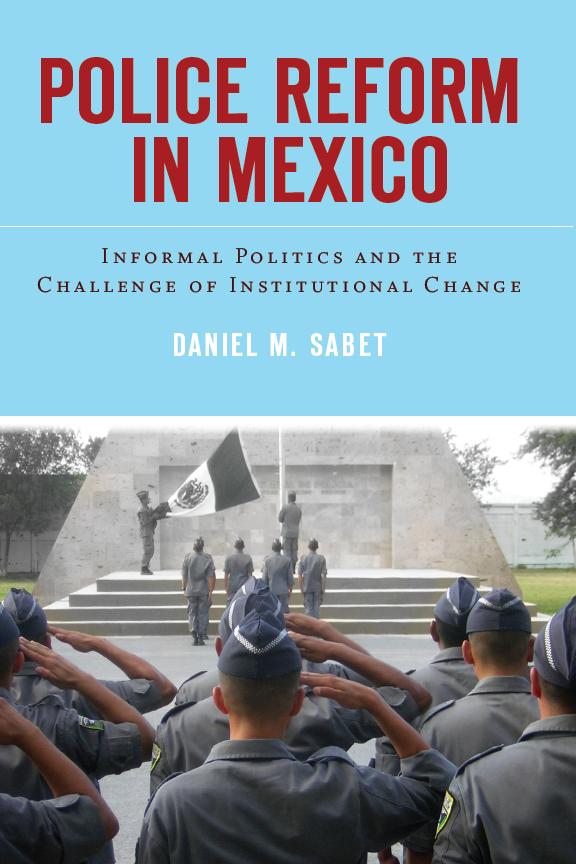
The urgent need to professionalize Mexican police has been recognized since the early 1990s, but despite even the most well-intentioned promises from elected officials and police chiefs, few gains have been made in improving police integrity.
Why have reform efforts in Mexico been largely unsuccessful? This book seeks to answer the question by focusing on Mexico's municipal police, which make up the largest percentage of the country's police forces. Indeed, organized crime presents a major obstacle to institutional change, with criminal groups killing hundreds of local police in recent years. Nonetheless, Daniel Sabet argues that the problems of Mexican policing are really problems of governance. He finds that reform has suffered from a number of policy design and implementation challenges. More importantly, the informal rules of Mexican politics have prevented the continuity of reform efforts across administrations, allowed patronage appointments to persist, and undermined anti-corruption efforts.
Although many advances have been made in Mexican policing, weak horizontal and vertical accountability mechanisms have failed to create sufficient incentives for institutional change. Citizens may represent the best hope for counterbalancing the toxic effects of organized crime and poor governance, but the ambivalent relationship between citizens and their police must be overcome to break the vicious cycle of corruption and ineffectiveness.
Pay easily by card, Klarna, Apple Pay or Google Pay. Not happy? You always have a 14-day money-back guarantee. Read more in our terms. If you have any questions, email us at hello@memmo.org.
Memmo makes studying easier – wherever you are in the world. We bring your course books and smart study tools together in one place: summaries, quizzes, podcasts and flashcards. Plus Ted, your study buddy who answers anything you wonder. Over 50,000 students already study here – built to help you learn faster and stress less.