
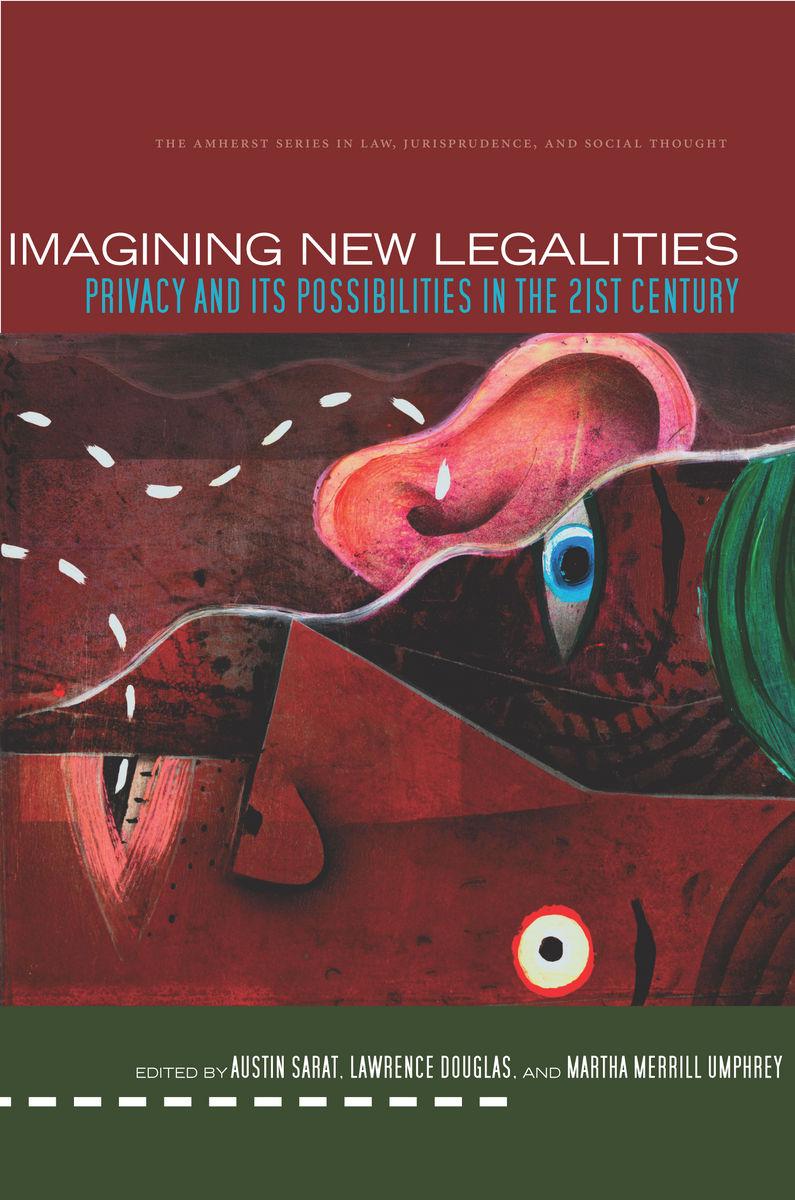
Imagining New Legalities reminds us that examining the right to privacy and the public/private distinction is an important way of mapping the forms and limits of power that can legitimately be exercised by collective bodies over individuals and by governments over their citizens. This book does not seek to provide a comprehensive overview of threats to privacy and rejoinders to them. Instead it considers several different conceptions of privacy and provides examples of legal inventiveness in confronting some contemporary challenges to the public/private distinction.
It provides a context for that consideration by surveying the meanings of privacy in three domains—-the first, involving intimacy and intimate relations; the second, implicating criminal procedure, in particular, the 4th amendment; and the third, addressing control of information in the digital age. The first two provide examples of what are taken to be classic breaches of the public/private distinction, namely instances when government intrudes in an area claimed to be private. The third has to do with voluntary circulation of information and the question of who gets to control what happens to and with that information.
Pay easily by card, Klarna, Apple Pay or Google Pay. Not happy? You always have a 14-day money-back guarantee. Read more in our terms. If you have any questions, email us at hello@memmo.org.
Memmo makes studying easier – wherever you are in the world. We bring your course books and smart study tools together in one place: summaries, quizzes, podcasts and flashcards. Plus Ted, your study buddy who answers anything you wonder. Over 50,000 students already study here – built to help you learn faster and stress less.