
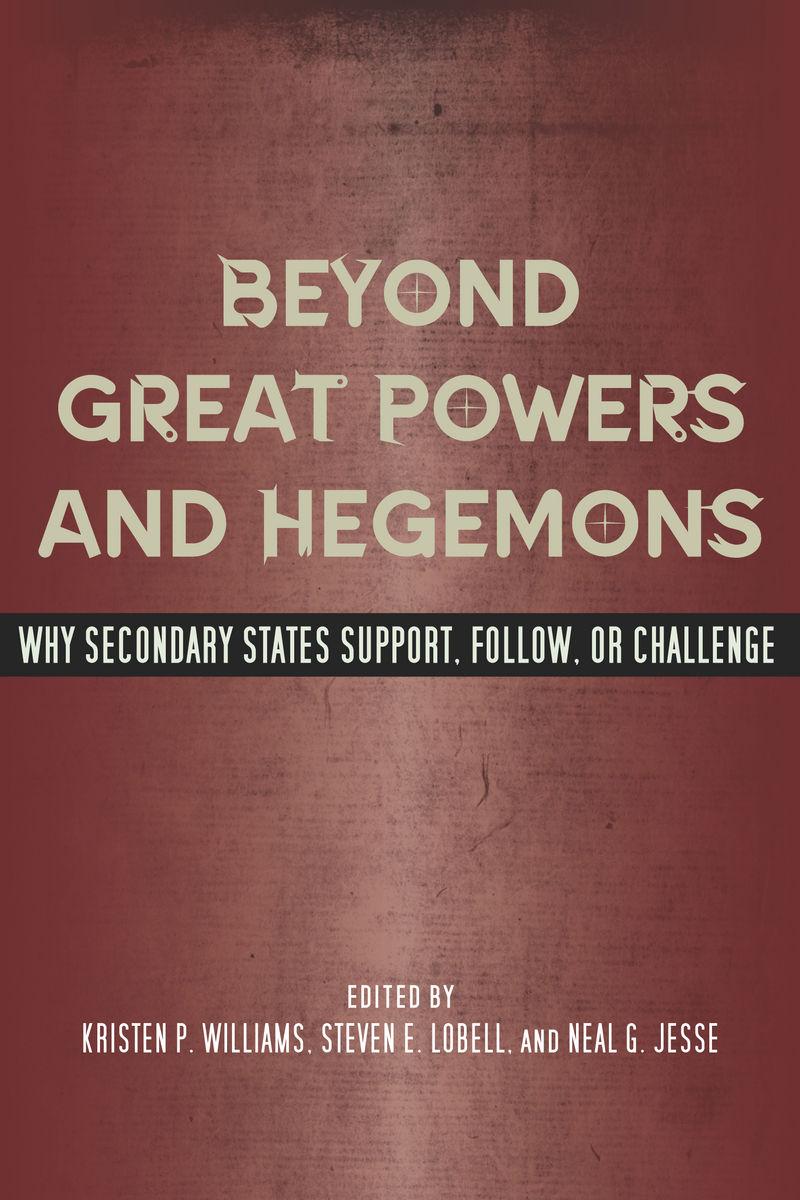
This book adds a new dimension to the discussion of the relationship between the great powers and the weaker states that align with them—or not. Previous studies have focused on the role of the larger (or super) power and how it manages its relationships with other states, or on how great or major powers challenge or balance the hegemonic state. Beyond Great Powers and Hegemons seeks to explain why weaker states follow more powerful global or regional states or tacitly or openly resist their goals, and how they navigate their relationships with the hegemon. The authors explore the interests, motivations, objectives, and strategies of these 'followers'—including whether they can and do challenge the policies and strategies or the core position of the hegemon.
Through the analysis of both historical and contemporary cases that feature global and regional hegemons in Europe, Latin America, the Middle East, Africa, Asia, and South Asia, and that address a range of interest areas—from political, to economic and military—the book reveals the domestic and international factors that account for the motivations and actions of weaker states.
Pay easily by card, Klarna, Apple Pay or Google Pay. Not happy? You always have a 14-day money-back guarantee. Read more in our terms. If you have any questions, email us at hello@memmo.org.
Memmo makes studying easier – wherever you are in the world. We bring your course books and smart study tools together in one place: summaries, quizzes, podcasts and flashcards. Plus Ted, your study buddy who answers anything you wonder. Over 50,000 students already study here – built to help you learn faster and stress less.