
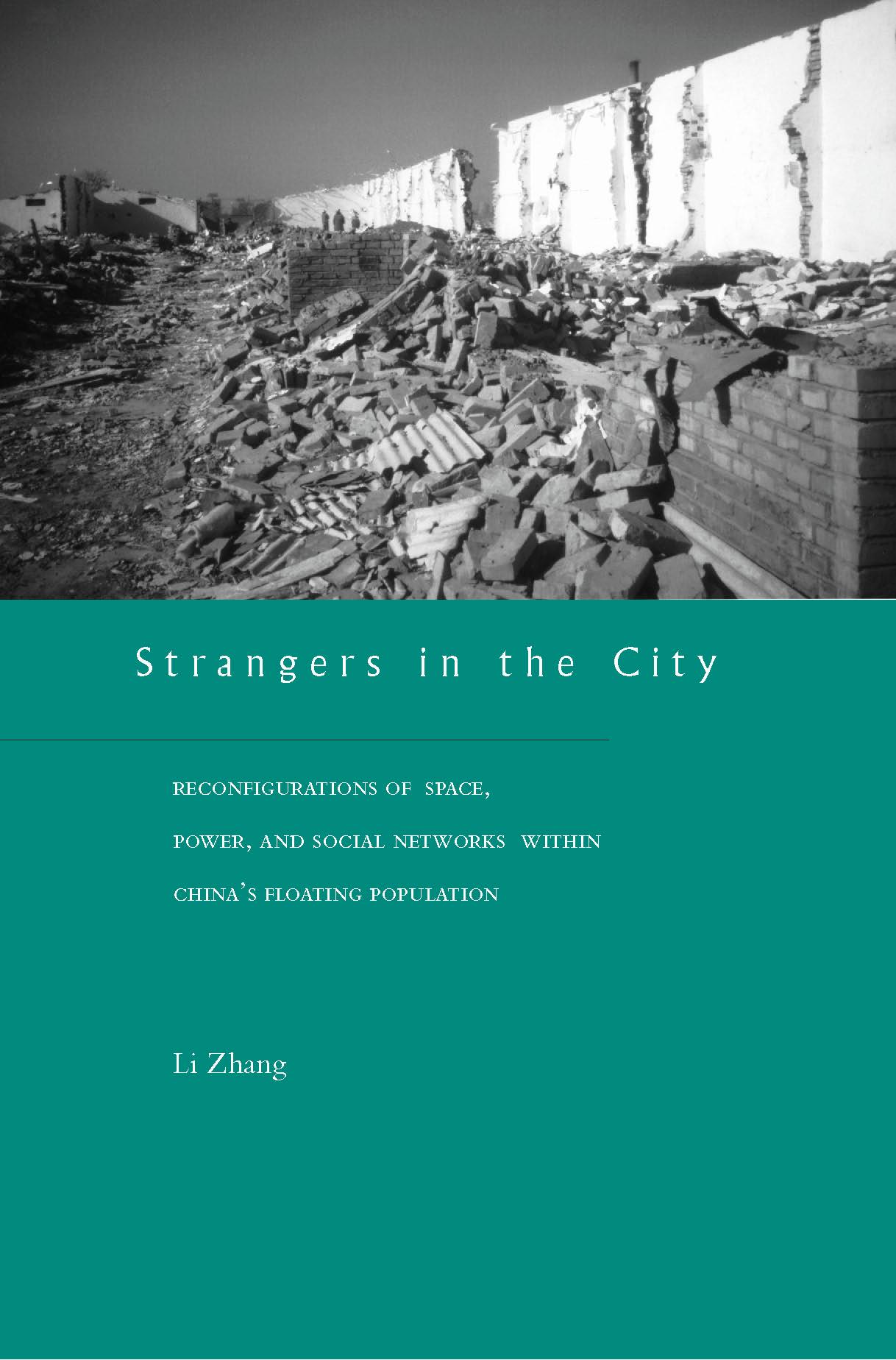
With rapid commercialization, a booming urban economy, and the relaxation of state migration policies, over 100 million peasants, known as China’s “floating population,” have streamed into large cities seeking employment and a better life. This massive flow of rural migrants directly challenges Chinese socialist modes of state control.
This book traces the profound transformations of space, power relations, and social networks within a mobile population that has broken through the constraints of the government’s household registration system. The author explores this important social change through a detailed ethnographic account of the construction, destruction, and eventual reconstruction of the largest migrant community in Beijing. She focuses on the informal privatization of space and power in this community through analyzing the ways migrant leaders build their power base by controlling housing and market spaces and mobilizing social networks.
The author argues that to gain a deeper understanding of recent Chinese social and political transformations, one must examine not only to what extent state power still dominates everyday social life, but also how the aims and methods of late socialist governance change under new social and economic conditions. In revealing the complexities and uncertainties of the shifting power and social relations in post-Mao China, this book challenges the common notion that sees recent changes as an inevitable move toward liberal capitalism and democracy.
Pay easily by card, Klarna, Apple Pay or Google Pay. Not happy? You always have a 14-day money-back guarantee. Read more in our terms. If you have any questions, email us at hello@memmo.org.
Memmo makes studying easier – wherever you are in the world. We bring your course books and smart study tools together in one place: summaries, quizzes, podcasts and flashcards. Plus Ted, your study buddy who answers anything you wonder. Over 50,000 students already study here – built to help you learn faster and stress less.