
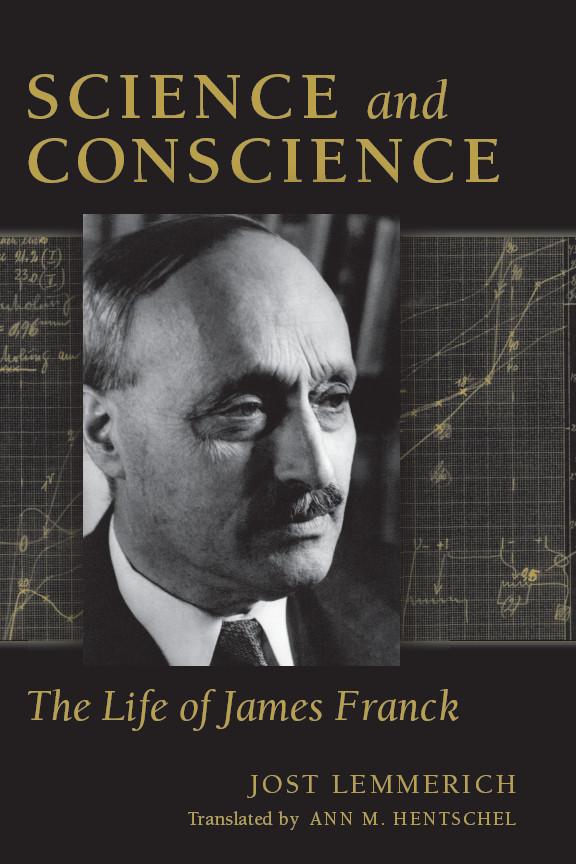
James Franck (1882–1964) was one of the twentieth century's most respected scientists, known both for his contributions to physics and for his moral courage. During the 1920s, Franck was a prominent figure in the German physics community. His research into the structure of the atom earned him the Nobel Prize in Physics in 1925. After the Nazis seized power in 1933, Franck resigned his professorship at Gottingen in protest against anti-Jewish policies. He soon emigrated to the United States, where, at the University of Chicago, he began innovative research into photosynthesis.
When the Second World War began, Franck was recruited for the Manhattan Project. With Enrico Fermi and Leo Szilard, he created a controlled nuclear chain reaction which led to the creation of a nuclear weapon. During the final months of the war, however, Franck grew concerned about the consequences of using such a weapon. He became the principal author of the celebrated "Franck Report," which urged Truman not to use the atomic bomb and warned that a nuclear arms race against the Soviet Union would be an inevitable result. After the War, Franck turned his attention back to photosynthesis; his discoveries influenced chemistry as well as physics.
Pay easily by card, Klarna, Apple Pay or Google Pay. Not happy? You always have a 14-day money-back guarantee. Read more in our terms. If you have any questions, email us at hello@memmo.org.
Memmo makes studying easier – wherever you are in the world. We bring your course books and smart study tools together in one place: summaries, quizzes, podcasts and flashcards. Plus Ted, your study buddy who answers anything you wonder. Over 50,000 students already study here – built to help you learn faster and stress less.