
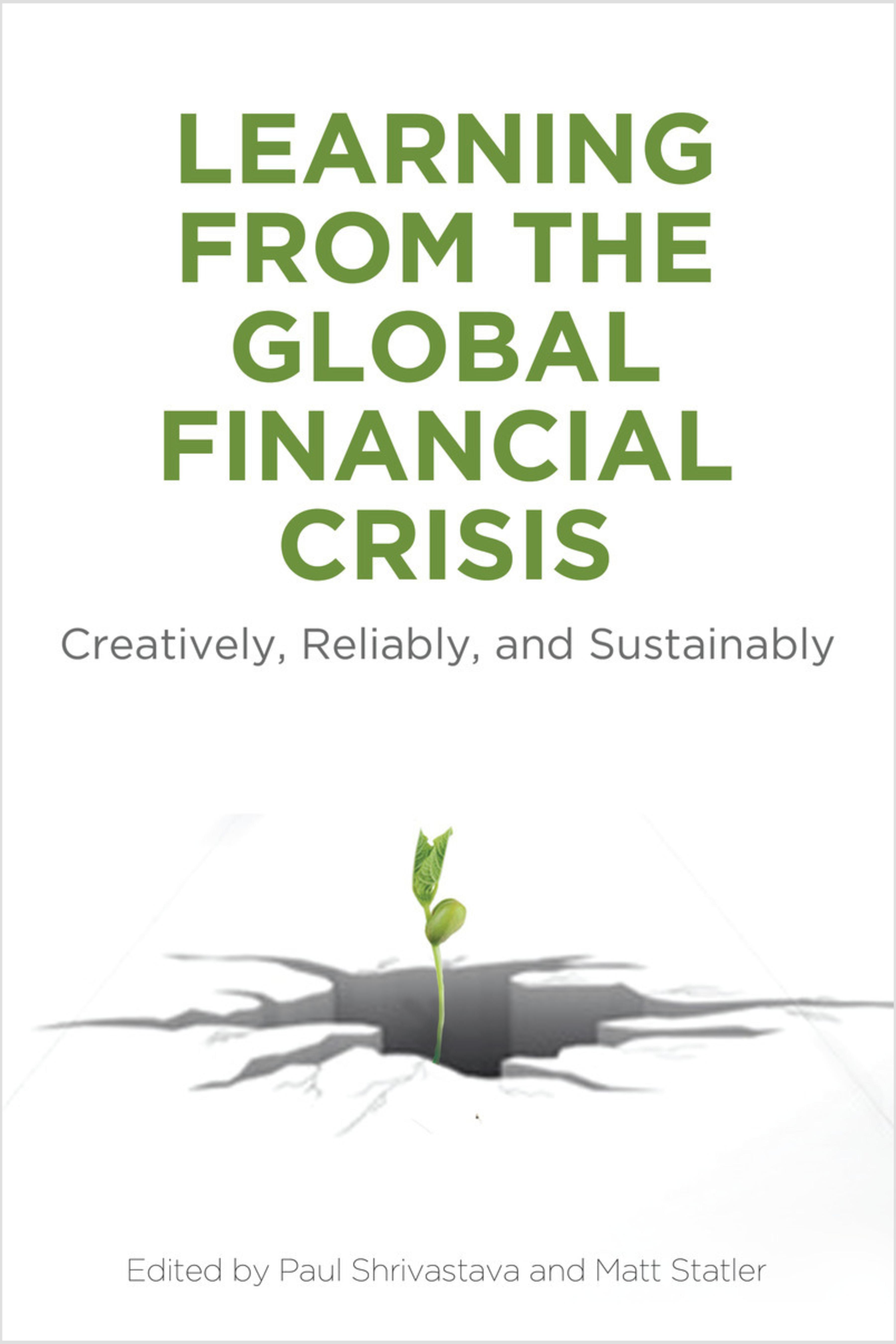
This book is motivated by the simple hope that the cloud of the global financial crisis may yet have a silver lining—that political leaders, economists, and management scholars might seize this opportunity to reflect critically on the assumptions, practices, and infrastructures that have precipitated the crisis and to imagine and create new forms of organization that sustainably enhance the well-being of global stakeholders.
The contributors suggest that aesthetic management, high reliability and crisis management, and sustainability science have much to contribute to the resolution of the collapse that we've witnessed, and to providing enduring lessons for how to structure the institutions of the future. Learning From the Global Financial Crisis devotes a section to each of these areas, offering full-length chapters which explore key issues in depth, as well as shorter commentaries that focus on practical considerations. The chapters progress from micro-level issues that pertain to individuals and teams who act creatively; to the meso-level issues that pertain to the structures, practices, and processes; to the macro-level issues that pertain to the interdependent, ecological systems.
Together, the contributions emphasize the importance of developing holistic responses to the financial crisis. The result is a volume that casts new light on traditional economic and managerial theories and policies and provides fresh ideas to a new generation of scholars and practitioners.
Pay easily by card, Klarna, Apple Pay or Google Pay. Not happy? You always have a 14-day money-back guarantee. Read more in our terms. If you have any questions, email us at hello@memmo.org.
Memmo makes studying easier – wherever you are in the world. We bring your course books and smart study tools together in one place: summaries, quizzes, podcasts and flashcards. Plus Ted, your study buddy who answers anything you wonder. Over 50,000 students already study here – built to help you learn faster and stress less.