
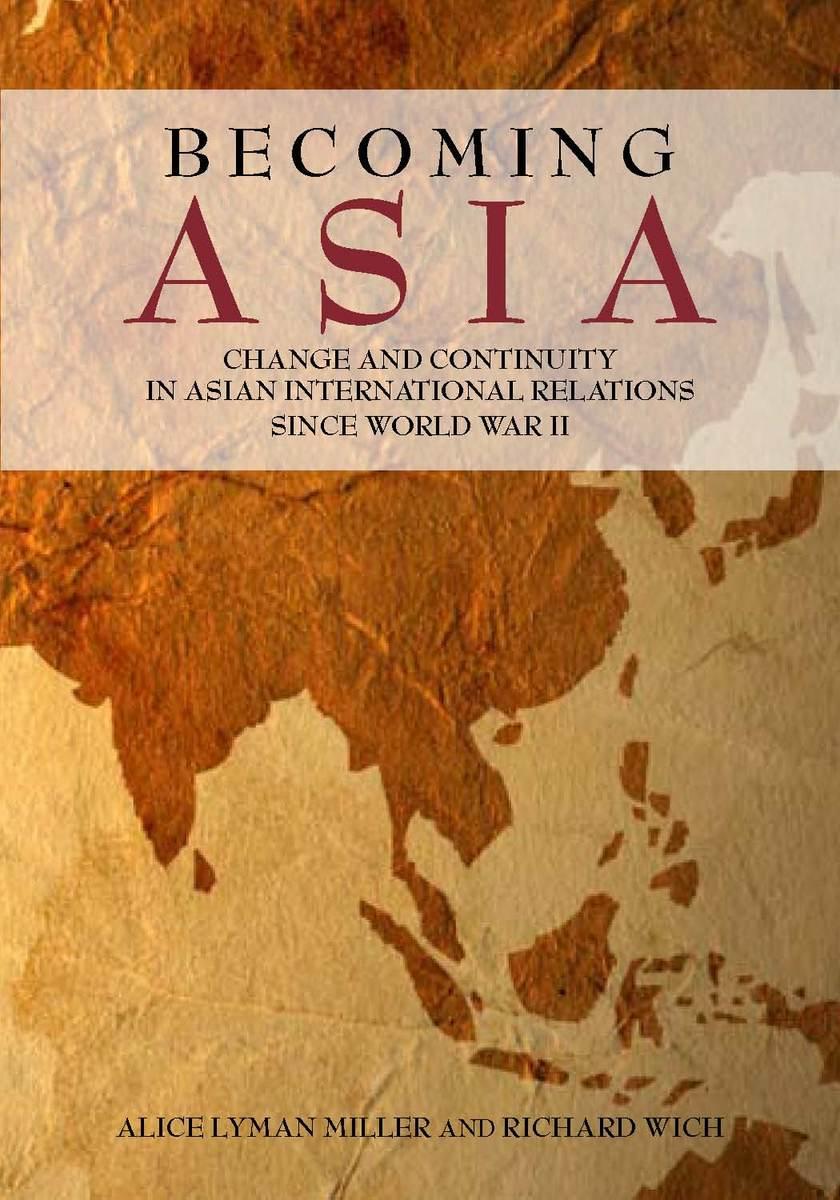
At the conclusion of World War II, Asia was hardly more than a geographic expression. Yet today we recognize Asia as a vibrant and assertive region, fully transformed from the vulnerable nation-states that emerged following the Second World War. The transformation was by no means an inevitable one, but the product of two key themes that have dominated Asia's international relations since 1945: the competition between the United States and the Soviet Union to enlist the region's states as assets in the Cold War, and the struggle of nationalistic Asian leaders to develop the domestic support to maintain power and independence in a dangerous international context.
Becoming Asia provides a comprehensive, systemic account of how these themes played out in Asian affairs during the postwar years, covering not only East Asia, but South and Central Asia as well. In addition to exploring the interplay between nationalism and Cold War bipolarity during the first postwar decades, authors Alice Lyman Miller and Richard Wich chart the rise of largely export-led economies that are increasingly making the region the global center of gravity, and document efforts in the ongoing search for regional integration.
The book also traces the origins and evolution of deep-rooted issues that remain high on the international agenda, such as the Taiwan question, the division of Korea and the threat of nuclear proliferation, the Kashmir issue, and the nuclearized Indian-Pakistani conflict, and offers an account of the rise of China and its implications for regional and global security and prosperity. Primary documents excerpted throughout the text—such as leaders' talks and speeches, international agreements, secret policy assessments—enrich accounts of events, offering readers insight into policymakers' assumptions and perceptions at the time.
Pay easily by card, Klarna, Apple Pay or Google Pay. Not happy? You always have a 14-day money-back guarantee. Read more in our terms. If you have any questions, email us at hello@memmo.org.
Memmo makes studying easier – wherever you are in the world. We bring your course books and smart study tools together in one place: summaries, quizzes, podcasts and flashcards. Plus Ted, your study buddy who answers anything you wonder. Over 50,000 students already study here – built to help you learn faster and stress less.