
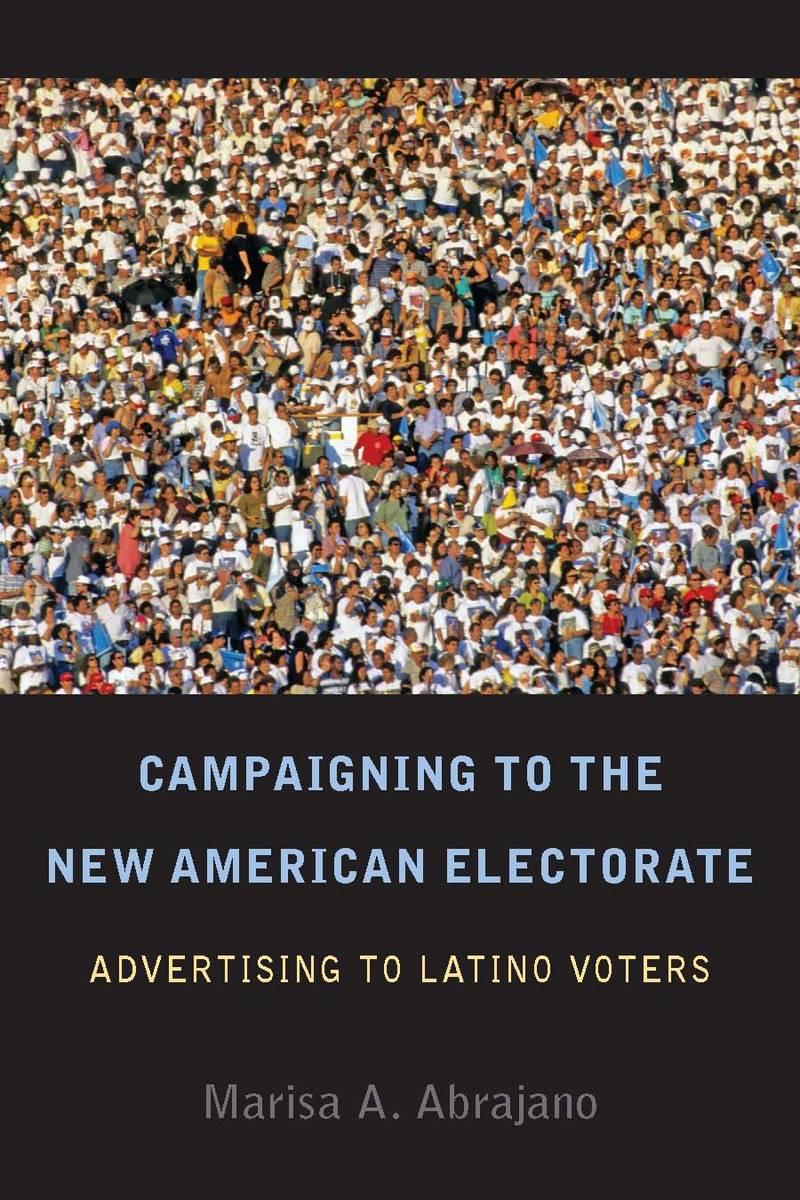
Presuming that a strong relationship exists between one's identity and political behavior, American politicians have long targeted immigrant and ethnic communities based on their shared ethnic or racial identity. But to what extent do political campaign messages impact voters' actual decisions and behaviors?
This new book is one of the first to examine and compare the campaign efforts used to target Latinos with those directed at the rest of the electorate. Specifically, it focuses on televised Spanish and English-language advertising developed for the 2000 and 2004 presidential elections, as well as for dozens of congressional and statewide contests from 2000–2004. Author Marisa Abrajano's research reveals exposure to these televised political ads indeed impacts whether Latinos turn out to vote and, if so, for whom they vote. But the effect of these advertising messages is not uniform across the Latino electorate. Abrajano explores the particular factors that affect Latinos' receptivity to political ads and offers key findings for those interested in understanding how to mobilize this critical swing group in American politics.
Pay easily by card, Klarna, Apple Pay or Google Pay. Not happy? You always have a 14-day money-back guarantee. Read more in our terms. If you have any questions, email us at hello@memmo.org.
Memmo makes studying easier – wherever you are in the world. We bring your course books and smart study tools together in one place: summaries, quizzes, podcasts and flashcards. Plus Ted, your study buddy who answers anything you wonder. Over 50,000 students already study here – built to help you learn faster and stress less.