
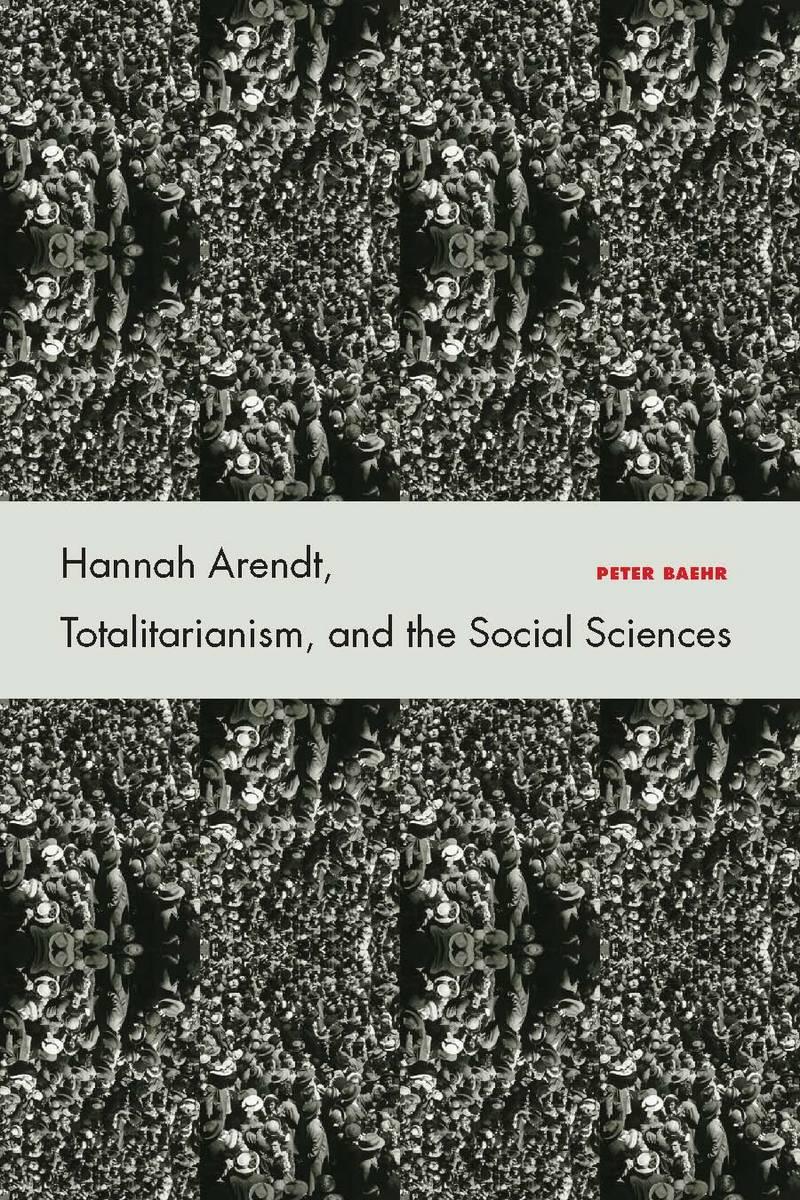
This book examines the nature of totalitarianism as interpreted by some of the finest minds of the twentieth century. It focuses on Hannah Arendt's claim that totalitarianism was an entirely unprecedented regime and that the social sciences had integrally misconstrued it. A sociologist who is a critical admirer of Arendt, Baehr looks sympathetically at Arendt's objections to social science and shows that her complaints were in many respects justified.
Avoiding broad disciplinary endorsements or dismissals, Baehr reconstructs the theoretical and political stakes of Arendt's encounters with prominent social scientists such as David Riesman, Raymond Aron, and Jules Monnerot. In presenting the first systematic appraisal of Arendt's critique of the social sciences, Baehr examines what it means to see an event as unprecedented. Furthermore, he adapts Arendt and Aron's philosophies to shed light on modern Islamist terrorism and to ask whether it should be categorized alongside Stalinism and National Socialism as totalitarian.
Pay easily by card, Klarna, Apple Pay or Google Pay. Not happy? You always have a 14-day money-back guarantee. Read more in our terms. If you have any questions, email us at hello@memmo.org.
Memmo makes studying easier – wherever you are in the world. We bring your course books and smart study tools together in one place: summaries, quizzes, podcasts and flashcards. Plus Ted, your study buddy who answers anything you wonder. Over 50,000 students already study here – built to help you learn faster and stress less.