
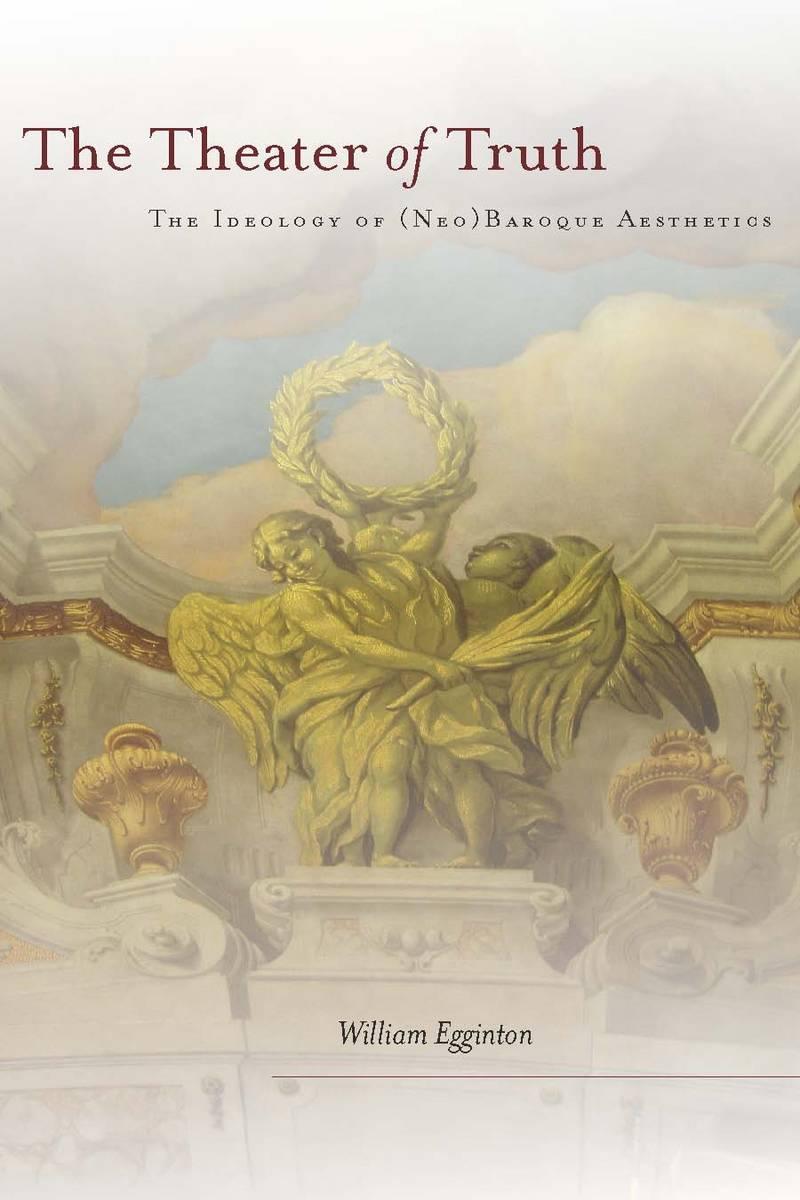
The Theater of Truth argues that seventeenth-century baroque and twentieth-century neobaroque aesthetics have to be understood as part of the same complex. The Neobaroque, rather than being a return to the stylistic practices of a particular time and place, should be described as the continuation of a cultural strategy produced as a response to a specific problem of thought that has beset Europe and the colonial world since early modernity. This problem, in its simplest philosophical form, concerns the paradoxical relation between appearances and what they represent. Egginton explores expressions of this problem in the art and literature of the Hispanic Baroques, new and old. He shows how the strategies of these two Baroques emerged in the political and social world of the Spanish Empire, and how they continue to be deployed in the cultural politics of the present. Further, he offers a unified theory for the relation between the two Baroques and a new vocabulary for distinguishing between their ideological values.
Pay easily by card, Klarna, Apple Pay or Google Pay. Not happy? You always have a 14-day money-back guarantee. Read more in our terms. If you have any questions, email us at hello@memmo.org.
Memmo makes studying easier – wherever you are in the world. We bring your course books and smart study tools together in one place: summaries, quizzes, podcasts and flashcards. Plus Ted, your study buddy who answers anything you wonder. Over 50,000 students already study here – built to help you learn faster and stress less.