
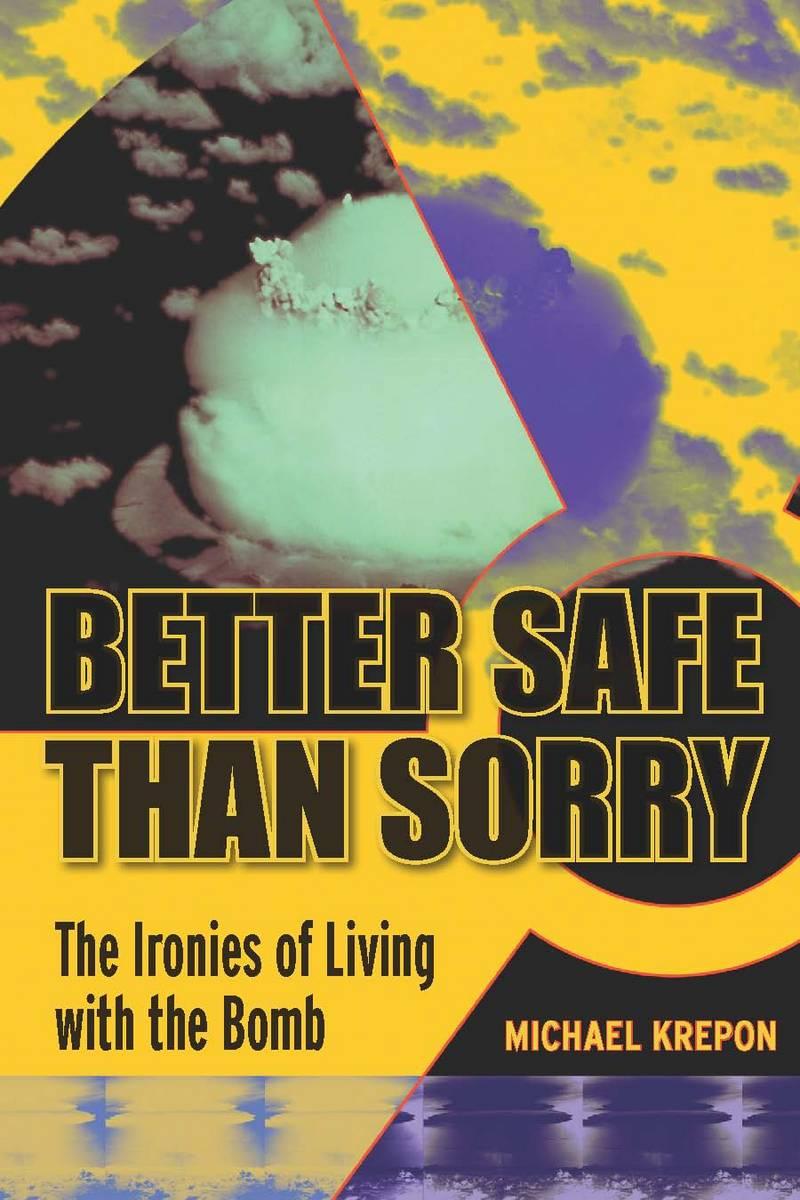
In 2008, the iconic doomsday clock of the Bulletin of the Atomic Scientistswas set at five minutes to midnight—two minutes closer to Armageddon than in 1962, when John F. Kennedy and Nikita Khrushchev went eyeball to eyeball over missiles in Cuba! We still live in an echo chamber of fear, after eight years in which the Bush administration and its harshest critics reinforced each other's worst fears about the Bomb. And yet, there have been no mushroom clouds or acts of nuclear terrorism since the Soviet Union dissolved, let alone since 9/11.
Our worst fears still could be realized at any time, but Michael Krepon argues that the United States has never possessed more tools and capacity to reduce nuclear dangers than it does today - from containment and deterrence to diplomacy, military strength, and arms control. The bloated nuclear arsenals of the Cold War years have been greatly reduced, nuclear weapon testing has almost ended, and all but eight countries have pledged not to acquire the Bomb. Major powers have less use for the Bomb than at any time in the past. Thus, despite wars, crises, and Murphy's Law, the dark shadows cast by nuclear weapons can continue to recede.
Krepon believes that positive trends can continue, even in the face of the twin threats of nuclear terrorism and proliferation that have been exacerbated by the Bush administration's pursuit of a war of choice in Iraq based on false assumptions. Krepon advocates a "back to basics" approach to reducing nuclear dangers, reversing the Bush administration's denigration of diplomacy, deterrence, containment, and arms control. As he sees it, "The United States has stumbled before, but America has also made it through hard times and rebounded. With wisdom, persistence, and luck, another dark passage can be successfully navigated."
Pay easily by card, Klarna, Apple Pay or Google Pay. Not happy? You always have a 14-day money-back guarantee. Read more in our terms. If you have any questions, email us at hello@memmo.org.
Memmo makes studying easier – wherever you are in the world. We bring your course books and smart study tools together in one place: summaries, quizzes, podcasts and flashcards. Plus Ted, your study buddy who answers anything you wonder. Over 50,000 students already study here – built to help you learn faster and stress less.