
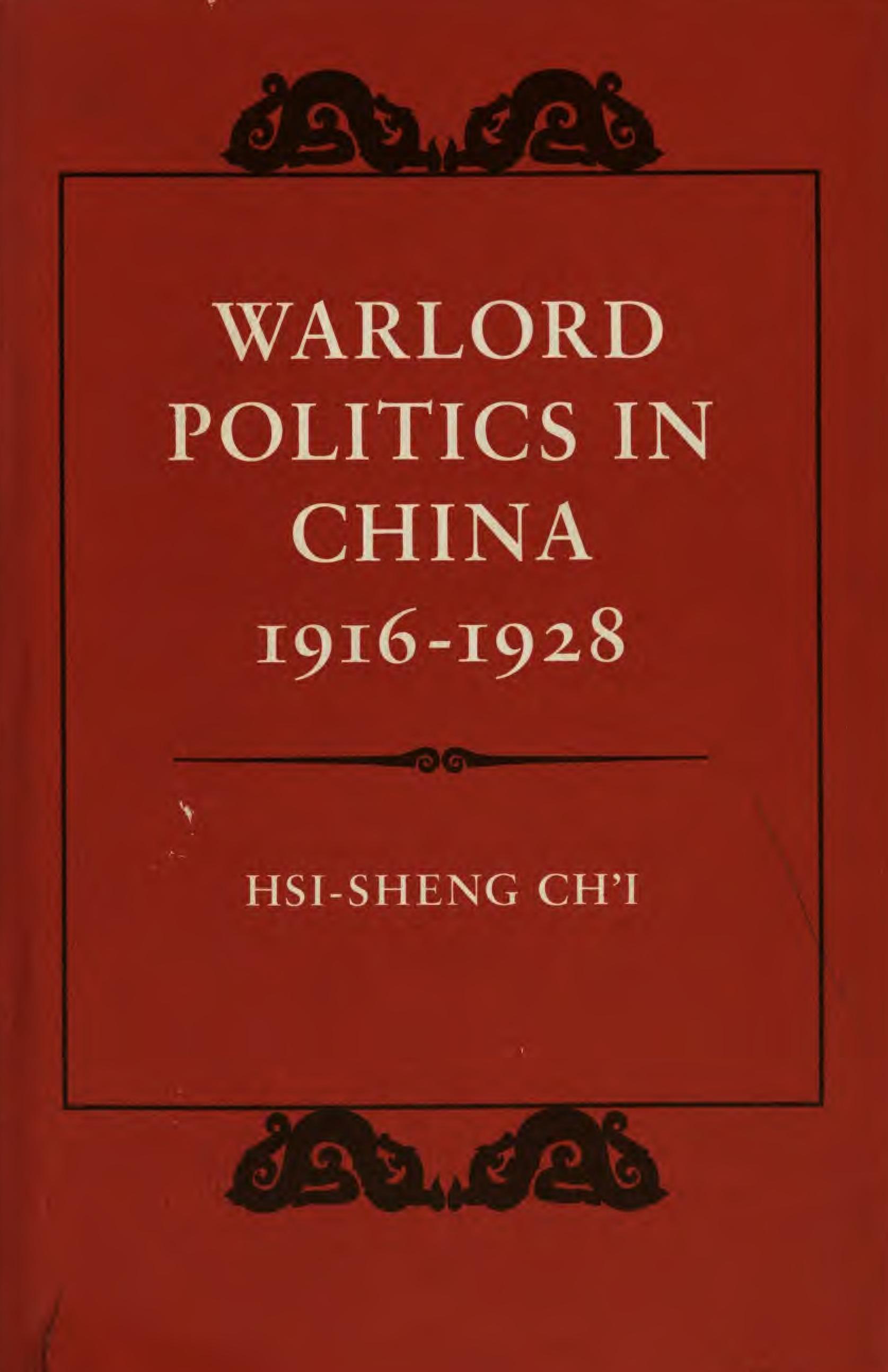
The first comprehensive analytical treatment of warlordism in twentieth-century China, this book approaches regional militarism as a generic phenomenon of Chinese politics in the most complex and chaotic era of recent Chinese history.
After describing the emergence of militarist regimes after the death of Yuan Shih-k'ai in 1916, the author analyzes their membership, goals, capabilities, and sources of cohesion, in the process presenting new information on their organization, methods of recruitment, quality of training, types of weapons, tactical and strategic concepts, and means of financing. On the strength of this information, he offers a convincing explanation I balance-of-power terms for the baffling advances, retreats, clashes, and changes of allegiance that have puzzled students of the era.
His analysis makes clear how the leading warlords viewed the state, themselves, and each other. A concluding chapter presents an explanation based on systems theory for the Kuomintang's triumph over the warlords who had sought to confine its domain to Kwangtung.
Included as appendixes are a chronology of events and lists of national leaders and provincial military authorities from 1916 to 1928.
Pay easily by card, Klarna, Apple Pay or Google Pay. Not happy? You always have a 14-day money-back guarantee. Read more in our terms. If you have any questions, email us at hello@memmo.org.
Memmo makes studying easier – wherever you are in the world. We bring your course books and smart study tools together in one place: summaries, quizzes, podcasts and flashcards. Plus Ted, your study buddy who answers anything you wonder. Over 50,000 students already study here – built to help you learn faster and stress less.
You might also like
Buy the book0