
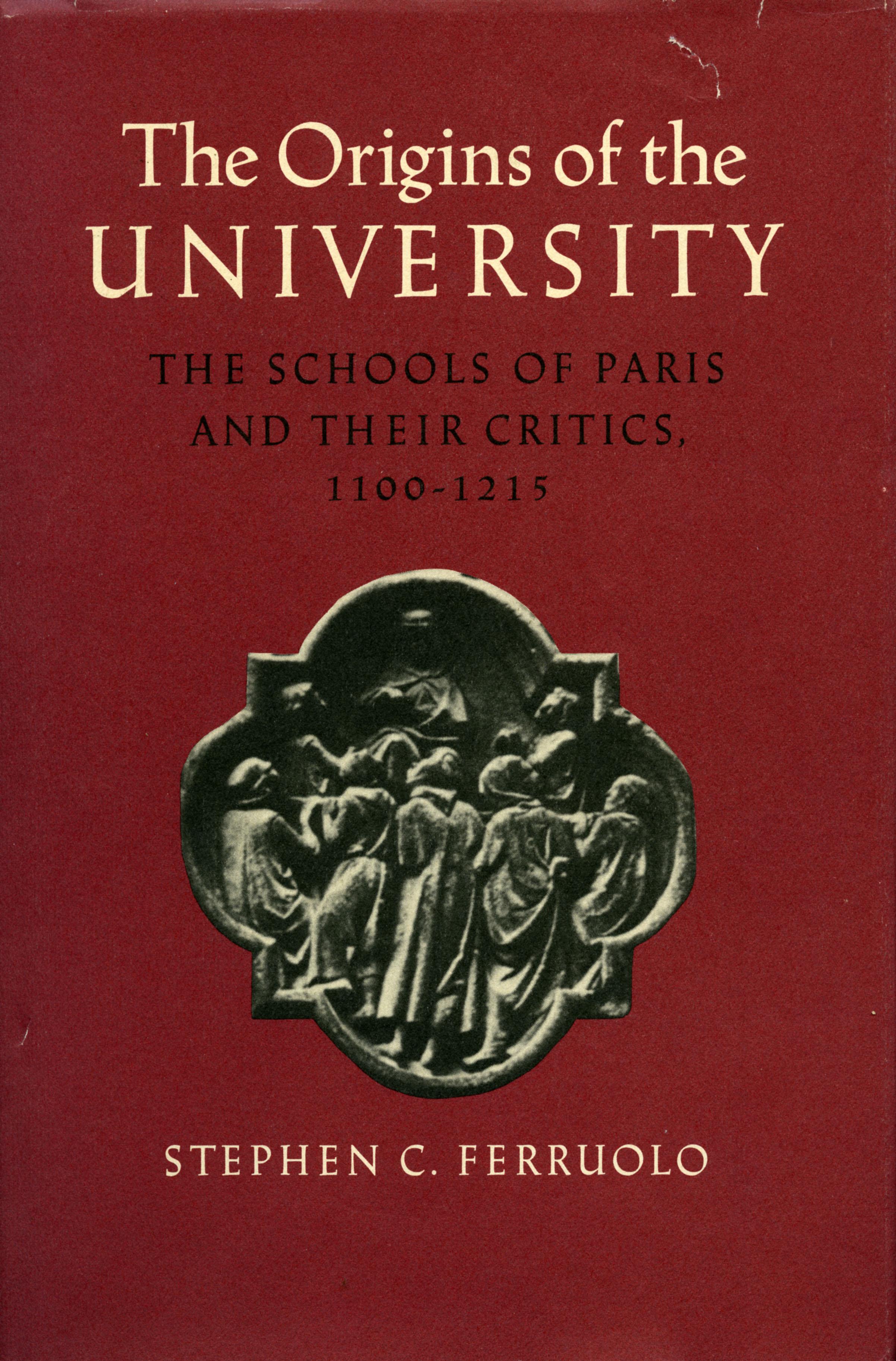
The University of Paris is generally regarded as the first true university, the model for others not only in France but throughout Europe, including Oxford and Cambridge. This book challenges two prevailing myths about the university's origins: first, that the university naturally developed to meet the utilitarian and professional needs of European society in the late Middle Ages, and second, that it was the product of the struggle by scholars to gain freedom and autonomy from external authorities, most notably church officials.
In the twelfth century, Paris was the educational center of Europe, with a large number of schools and masters attracting and competing for students. Over the decades, the schools of Paris had many critics—monastic reformers, humanists, satirists, and moralists—and the focus of this book is the role such critics played in developing the schools into a university. Ferruolo argues that it was the educational values and ideas promoted by the critics—ideas of the unity of knowledge, the need to share learning freely and willingly, and the higher purposes and social importance of education—that first inspired the scholars of Paris to join together to form a single guild. Their programs for educational reforms can be seen in the first set of statues promulgated for the nascent University of Paris in 1215.
Pay easily by card, Klarna, Apple Pay or Google Pay. Not happy? You always have a 14-day money-back guarantee. Read more in our terms. If you have any questions, email us at hello@memmo.org.
Memmo makes studying easier – wherever you are in the world. We bring your course books and smart study tools together in one place: summaries, quizzes, podcasts and flashcards. Plus Ted, your study buddy who answers anything you wonder. Over 50,000 students already study here – built to help you learn faster and stress less.
You might also like
Buy the book0