
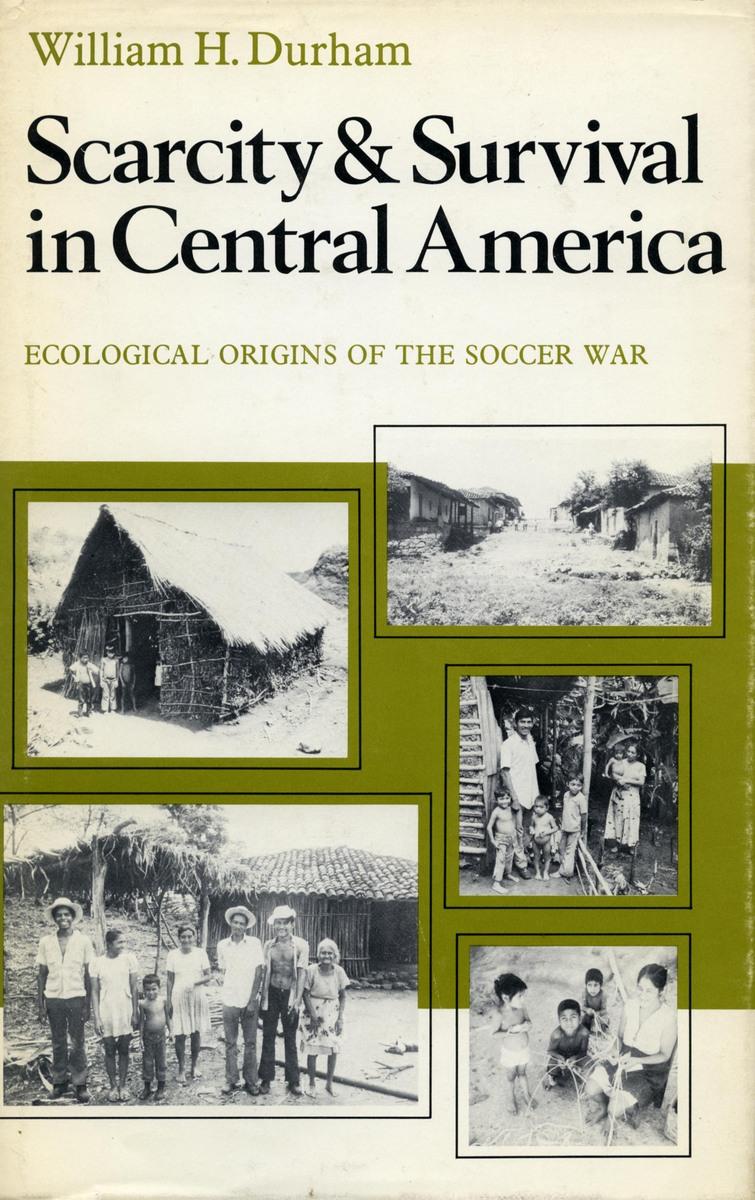
Looking at both population and land tenure dynamics in their historical context, this study challenges the view that the 1969 conflict between El Salvador and Honduras was primarily a response to population pressure. The author demonstrates that land scarcity, a principal cause of the war, was largely a product of the concentration of landholdings.
The analysis focuses on the emigration of 300,000 Salvadoreans to Honduras in the years before the war, inquiring into the reasons for the emigration, its impact on local agricultural economies, and its relation to the conflict. Answers to these questions are based on a new interpretation of national statistics and on original survey research in peasant communities. The author has used an interdisciplinary approach, drawing on the perspectives of anthropology, ecology, history, demography, and geography.
In addition to its value as a case study in human ecology, this book gives a clear account of the nature and origins of ecological pressures in rural Central America. The book is illustrated with 21 photographs and 7 maps.
Pay easily by card, Klarna, Apple Pay or Google Pay. Not happy? You always have a 14-day money-back guarantee. Read more in our terms. If you have any questions, email us at hello@memmo.org.
Memmo makes studying easier – wherever you are in the world. We bring your course books and smart study tools together in one place: summaries, quizzes, podcasts and flashcards. Plus Ted, your study buddy who answers anything you wonder. Over 50,000 students already study here – built to help you learn faster and stress less.